Garlic can make a pot of beans, a tomato sauce, or a tray of vegetables taste considerably more inviting. That may be its most dependable everyday health contribution: helping people enjoy useful foods enough to cook them regularly. It also attracts stronger claims about cholesterol, blood pressure, immunity, and infection. Some of those topics have been studied, but the preparation and the size of the effect matter.
A clove in dinner, an aged garlic extract, and a concentrated capsule are not interchangeable. They can differ in composition and exposure, so evidence about one cannot simply be assigned to all of them. A careful explanation leaves room for garlic as a valuable cooking ingredient while avoiding the suggestion that it is an antibiotic, a replacement for cardiovascular treatment, or a universal protection against illness.
What the cardiovascular evidence suggests
The NCCIH overview of garlic reports that garlic supplements may produce small reductions in total and LDL cholesterol in people with high cholesterol. Limited evidence also suggests modest effects on blood pressure in people with hypertension. These findings concern particular products and conditions; they do not establish that adding extra cloves to every meal has the same effect.
Small improvements can be scientifically interesting without being sufficient treatment. If you have a cardiovascular condition, continue the monitoring and care recommended for you. Discuss a supplement before using it as part of a treatment plan. For ordinary cooking, enjoy garlic for flavour and do not feel compelled to eat a difficult amount because a headline has converted a modest research finding into a dramatic promise.
Immunity and infection claims are often overstated
Garlic has a long history of traditional use, but history alone does not prove effectiveness for a specific illness. NCCIH notes that research on immune-related benefits is limited and includes small studies with weaknesses. That is not a sound basis for promising that garlic prevents colds, treats influenza, or replaces an antibiotic when one is medically indicated.
It is also important not to apply raw garlic to the skin as a home treatment. Raw garlic can cause irritation and chemical burns. A substance’s use in food does not mean every route of application is safe. If a skin problem or infection needs treatment, seek appropriate advice rather than assuming an intense sensation means a natural remedy is working.
Learn how preparation changes the flavour
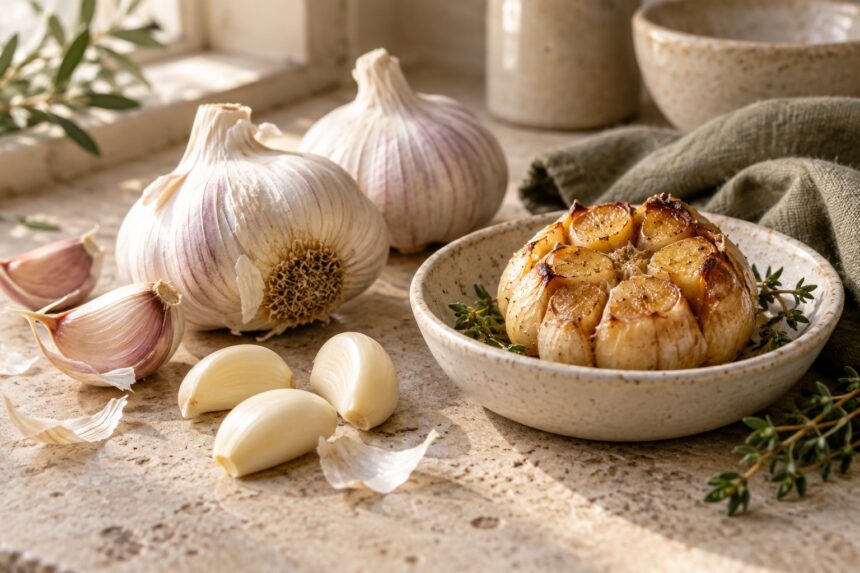
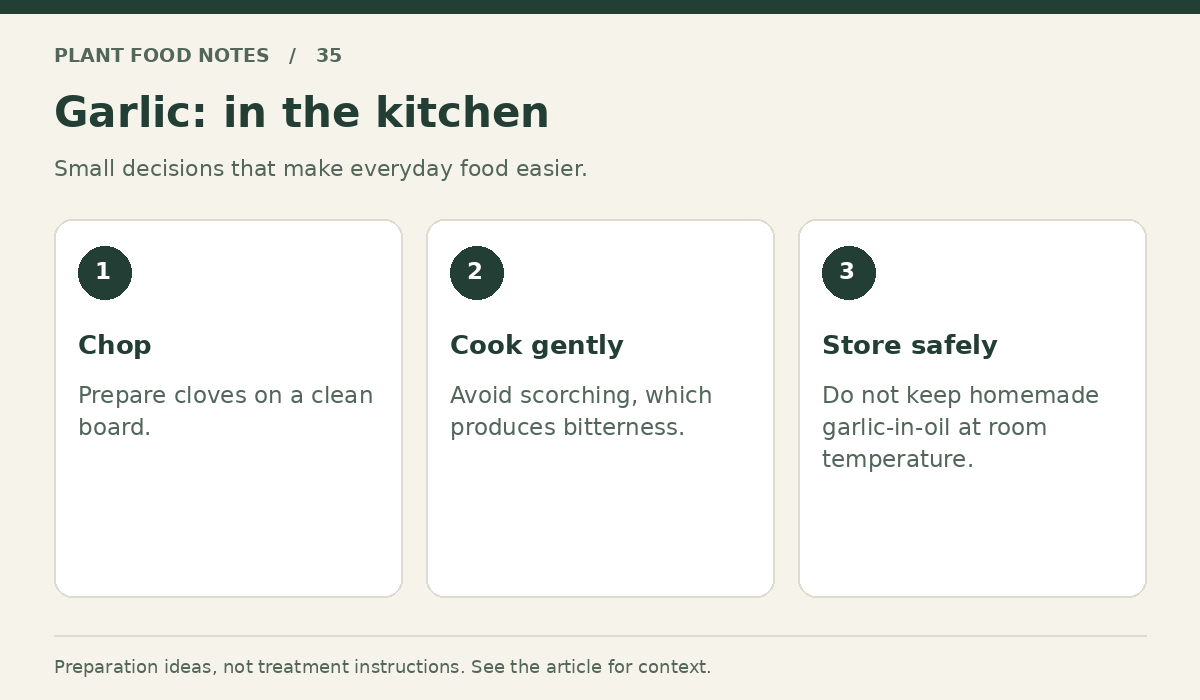
Finely crushed or chopped garlic can taste more assertive than a whole clove cooked gently in a dish. Roasting produces a softer, milder result that can be spread or mixed into food. These differences offer useful choices for the kitchen. You do not have to tolerate a harsh raw flavour in order to include garlic in a meal.
When sautéing, watch closely because small pieces can burn quickly. Add garlic at the stage suited to the recipe rather than leaving it alone in a very hot pan. If you are new to cooking with it, begin with a modest amount and adjust in the next meal. Flavour should support the food, not become a test of how much pungency you can endure.
Use garlic to make beans and vegetables appealing
For a simple bean dish, soften onion if tolerated, add garlic briefly, then stir in cooked beans and tomatoes or another suitable liquid. Simmer until the flavours come together and serve with a staple and vegetables. The beans provide much of the dish’s protein and fibre; garlic helps make the combination enjoyable. Both roles matter, but they should not be confused.
Garlic can also be used in a dressing, a yogurt sauce, or roasted vegetables. Pair it with herbs and acidity so the flavour feels balanced. There is no requirement to add large amounts of salt to make it work. At the same time, a garlicky sauce can still contain substantial salt from other ingredients, so taste the complete mixture before adding more seasoning.
Garlic in oil needs safe handling
Homemade garlic-in-oil mixtures should not be left at room temperature. The CDC guidance on preventing botulism includes specific advice about garlic and herb oils. Use a tested storage method and follow the relevant time and refrigeration instructions. Do not assume that covering fresh garlic with oil preserves it safely on the kitchen counter.
Commercial products may have been prepared differently, so follow their labels rather than transferring their shelf life to a homemade mixture. If you are uncertain how an oil was made or stored, do not taste it to determine safety. This is one area where a precise food-safety instruction is more useful than a general belief that homemade or plant-based products are automatically safe.
Digestive tolerance may change your options
Some people with irritable bowel syndrome find garlic triggers symptoms because it contains fructans. Monash University’s explanation of onion, garlic, and infused oils discusses why these carbohydrates matter for sensitive individuals. This does not mean garlic is unhealthy for everyone, or that every digestive symptom should lead to a permanent restriction.
If you are following a low-FODMAP approach, obtain appropriate guidance and use suitable alternatives where needed. A commercially prepared garlic-infused oil may offer flavour in some circumstances, but the product and its ingredients matter. Do not force garlic into meals because of its reputation, and do not improvise unsafe oil storage in an attempt to make a digestive workaround at home.
Supplements deserve a separate decision
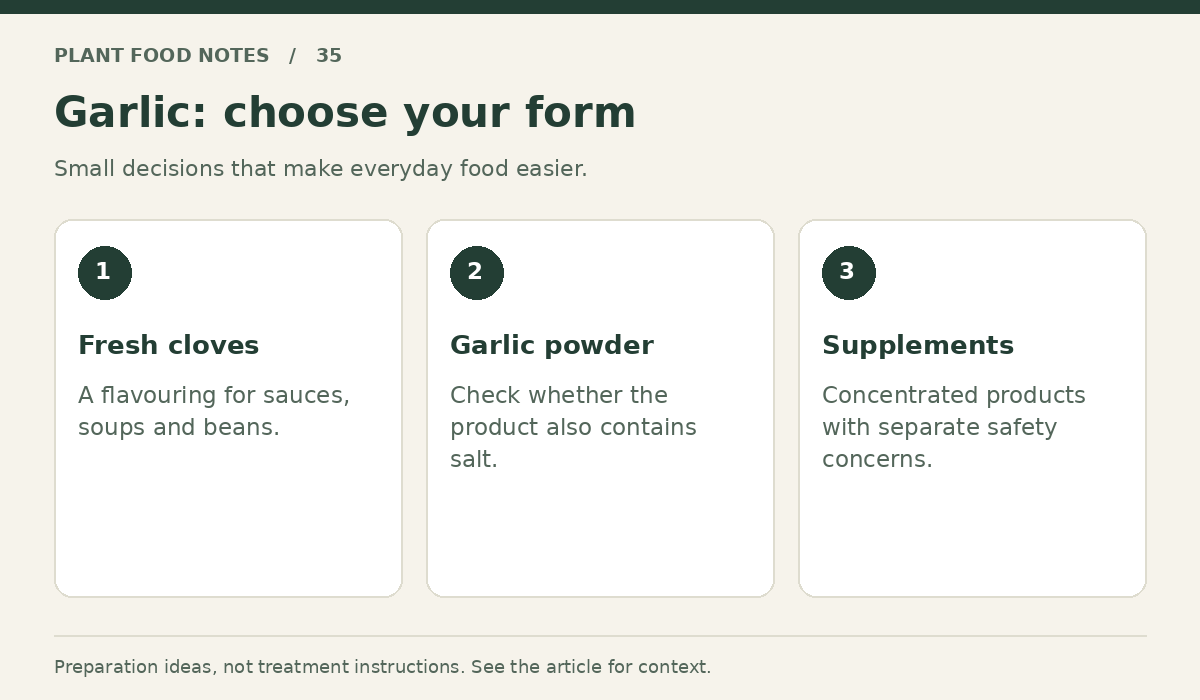
Garlic supplements may increase bleeding risk, particularly around surgery or with medicines that affect bleeding. Tell your clinician or pharmacist about any product you use, including its ingredients and dose. Pregnancy and breastfeeding also call for individual advice before taking amounts beyond ordinary food use. The word natural does not remove the possibility of side effects or interactions.
For most kitchens, a bulb of garlic needs no medical justification. Buy an amount you will use, store it appropriately, and learn a preparation that suits your taste and digestion. Its most reliable contribution is making varied meals more enjoyable, with research on certain supplements offering limited, specific findings. Keep those two stories separate and garlic can remain a useful ingredient without becoming an exaggerated health promise.
General nutrition information; not personalised medical advice. Sources checked on 16 September 2026.