A can of chickpeas is a useful answer to the question, “What turns these vegetables into lunch?” Their firm texture and mild flavour work with a sharp dressing, a spicy sauce, or a creamy mash. They are convenient enough for a workday and adaptable enough for a shared family meal. Their nutritional benefits come from the whole food: carbohydrate, fibre, plant protein, and micronutrients packaged together, rather than a single exotic compound that needs to be extracted and sold separately.
Chickpeas are also called garbanzo beans. Whether you buy a familiar supermarket variety or smaller, darker chickpeas from another food tradition, the important decisions are practical: how you will cook them, what you will eat with them, and whether the portion agrees with your digestion. A regular, enjoyable meal is a better goal than trying to eat the largest possible amount.
Why chickpeas can make a meal more satisfying
The Harvard chickpea guide describes their fibre, protein, and mineral content. These characteristics make chickpeas a useful alternative to a meal consisting mostly of refined starch. They also contain fermentable carbohydrates, which help explain both interest in their relationship with gut bacteria and the gas some people notice after a large serving.
It is tempting to turn this into a promise that chickpeas keep everyone full for a fixed number of hours. That is not how appetite works. A small scoop on a sparse salad may not be enough lunch for an active person. A larger meal with bread, vegetables, and a dressing may work better. Adjust the complete meal rather than expecting one ingredient to manage appetite on its own.
Blood sugar: better questions than “good or bad”
Chickpeas contain carbohydrate, so they are not a carbohydrate-free food. Their structure and fibre make them different from a sugary drink, but amount and preparation still matter. Someone managing diabetes should account for the actual portion and the rest of the plate. A chickpea curry accompanied by rice and bread is a different carbohydrate load from a small chickpea salad.
Evidence about legumes is broader than evidence about a particular hummus brand. The Nutrition Source’s review of pulses supports including these foods in varied eating patterns. It does not make every chickpea snack a treatment. “Made with chickpeas” can describe anything from plain cooked pulses to salty, highly seasoned crisps, so the full label remains relevant.
Canned chickpeas are a legitimate shortcut
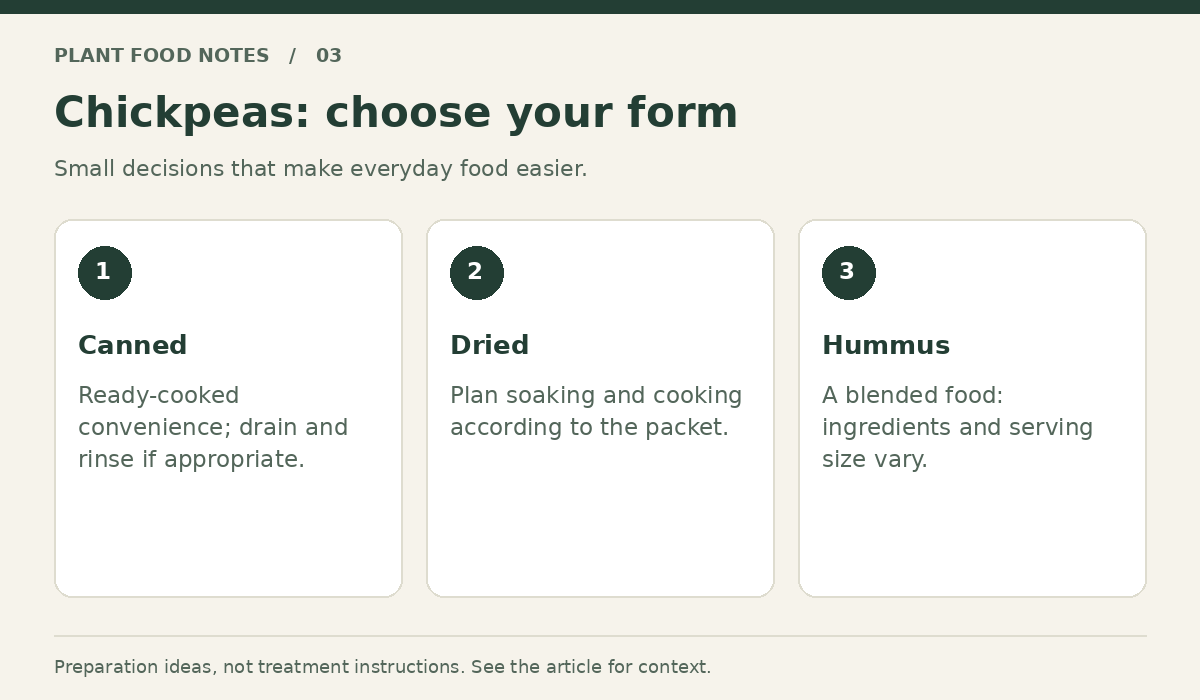
The most useful chickpeas are often the ones you have time to prepare. Canned versions are already cooked. Drain them, rinse if appropriate, and use them in a meal. Compare no-added-salt or lower-salt options when sodium intake matters to you. There is no need to spend a busy evening cooking from dry merely to qualify the meal as homemade.
Dried chickpeas offer control over texture and may be economical when you cook in batches. Follow the package’s soaking and cooking instructions and make sure they become properly tender. Avoid treating half-cooked hardness as an attractive “al dente” effect. Keep your first batch simple so you learn how the chickpeas behave before combining them with a complicated sauce or several unfamiliar ingredients.
Turn one can into two different lunches
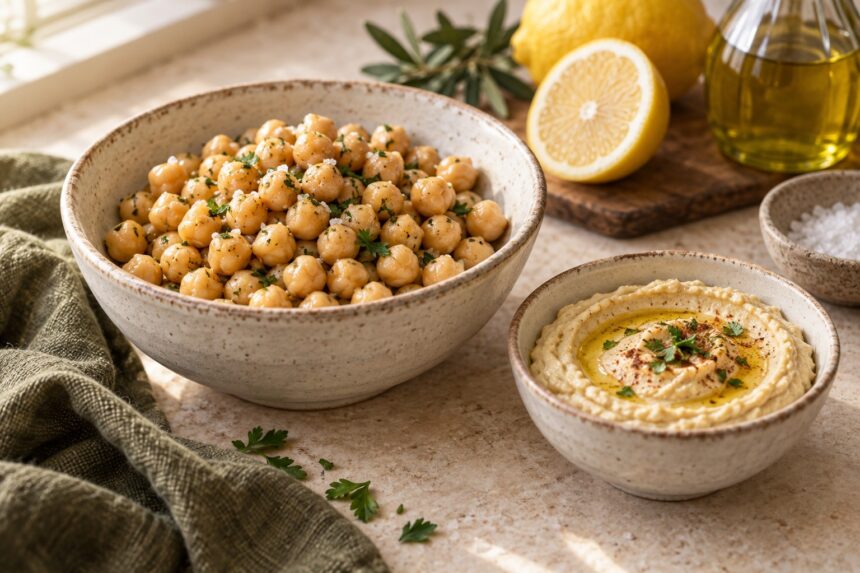
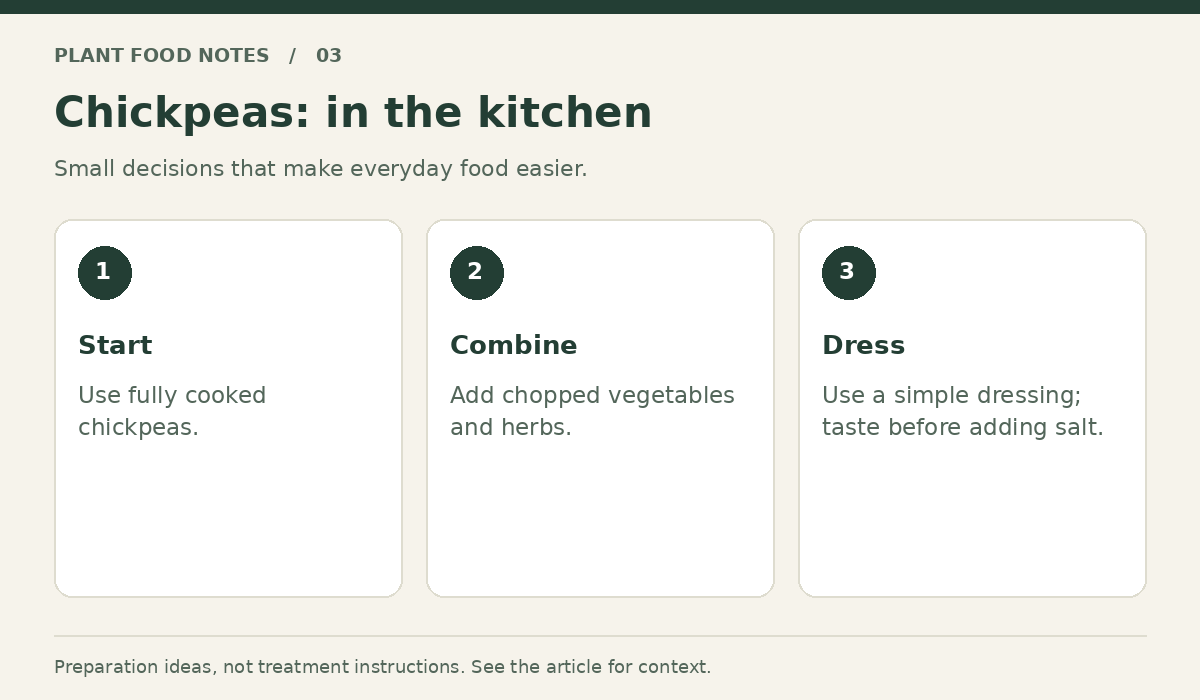
For a crisp salad, combine cooked chickpeas with chopped cucumber, tomato, parsley, and lemon. Add a little olive oil and season to taste. Serve it with a suitable bread or grain if you need a larger meal. For a different texture, mash another portion with a fork, add finely chopped celery and a spoon of plain yogurt or an appropriate plant alternative, and use it as a sandwich filling.
These two dishes solve different problems. The salad is quick when you have fresh vegetables to use. The mash is convenient when you need a filling that stays inside bread. Neither requires a blender or a collection of supplements. Change the seasoning to suit what is already in your cupboard: smoked paprika, curry spices, fresh herbs, or a little chilli can all work.
Hummus is useful, but read it as a recipe
Hummus brings chickpeas together with ingredients such as tahini, lemon, oil, and garlic. It can be an enjoyable spread or dip. Its nutritional profile depends on the recipe and the amount eaten. A thin layer in a vegetable sandwich is not the same serving as a whole container with a large bag of crisps.
If you make it at home, blend cooked chickpeas with lemon and enough water to reach the texture you like, then add tahini and seasonings gradually. Taste before adding more salt. This lets you tailor the flavour without pretending there is one medically perfect recipe. Tahini contains sesame, so check allergies when serving it to others. Commercial versions may also include ingredients that are not obvious from the product name.
Fibre benefits do not mean unlimited portions
A sudden jump from almost no pulses to several large servings can be uncomfortable. Begin with an amount that fits your meal and tolerance. Some people find smaller portions of drained canned chickpeas easier to incorporate, but responses vary. If you have a diagnosed digestive condition, use the individual advice you have been given rather than a universal recommendation from a blog.
Chickpeas also contribute iron, but they should not be presented as a stand-alone anaemia treatment. Pairing plant iron with a vitamin-C-containing food is one useful meal principle described in the NIH iron fact sheet. Persistent tiredness has many possible causes and should not automatically be attributed to needing more chickpeas.
Shop for the meal, not the marketing
Before buying chickpea pasta, flour, roasted snacks, and canned chickpeas at once, decide which product solves an actual kitchen problem. A can might help you assemble lunch; flour might be useful if you already enjoy savoury pancakes. Buying every version because the ingredient is fashionable is more likely to create clutter than a sustainable habit.
Start with one meal you genuinely want to repeat. Notice flavour, convenience, digestive comfort, and cost. Keep the version that works, and change it with seasonal vegetables or a different dressing. Chickpeas deserve attention because they are a versatile, nourishing staple. They do not need a promise of rapid weight loss or disease reversal to be worth eating.
General nutrition information; not personalised medical advice. Sources checked on 15 September 2026.