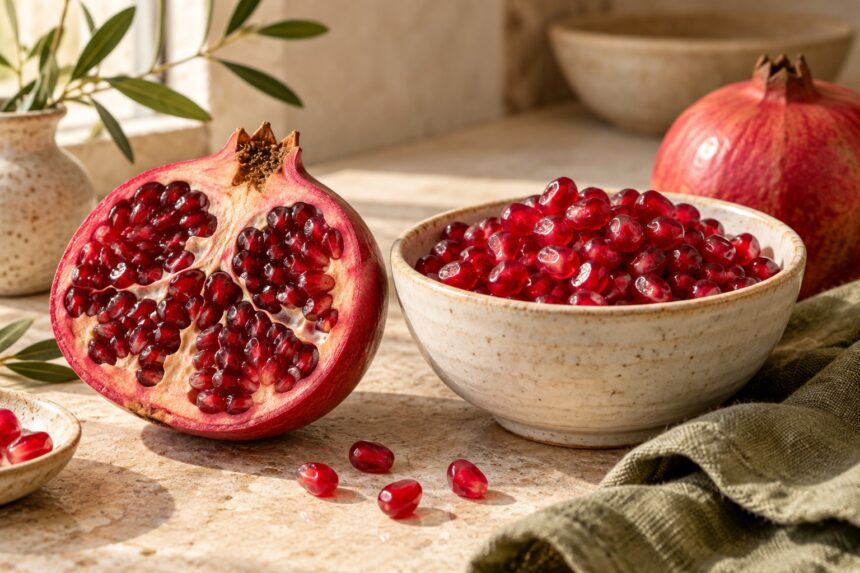
Pomegranate can make an ordinary dish feel special with only a small amount. Its ruby arils add a sharp burst of juice to a salad, grain bowl, or plain yogurt. The fruit also has a strong health reputation, particularly around blood pressure, antioxidants, and heart disease. Those topics deserve a closer look because the evidence often concerns juice or extracts rather than the small scattering of arils on a meal.
- Blood-pressure findings are promising but incomplete
- Antioxidant language can hide important details
- Arils, juice, and molasses are different foods
- Open the fruit with a plan
- Use pomegranate in a substantial salad
- Breakfast and snacks offer another route
- Plant parts and supplements are not kitchen shortcuts
- Keep the benefit proportionate to the food
There is no need to settle that scientific debate before enjoying the fruit. The practical questions are whether you like it, can afford it, and have a use for it that avoids waste. Understanding the difference between the edible arils, juice, molasses, and supplements helps keep expectations realistic. A food can be interesting and enjoyable without becoming a daily treatment or an essential purchase.
Blood-pressure findings are promising but incomplete
The NCCIH overview of pomegranate reports that juice or extract may help reduce blood pressure, while additional research is needed to confirm the effect. It also notes that clear effects on cholesterol have not been demonstrated. This is a more limited conclusion than the common claim that pomegranate cleans arteries or reliably prevents heart disease.
The preparation matters. A trial of a defined juice or extract does not establish the same result from a few arils, and a promising average result does not guarantee an individual response. If you have high blood pressure, use appropriate monitoring and treatment. Pomegranate can remain a food choice without becoming a reason to change medicines or postpone medical advice.
Antioxidant language can hide important details
Pomegranate contains plant compounds that attract scientific interest, but antioxidant activity measured in a laboratory is not a direct scoreboard of health outcomes in people. Digestion, metabolism, and the complete diet influence what happens after a food is eaten. A high number in a test does not prove that one fruit prevents more disease than another in everyday life.
The NCCIH explanation of antioxidant supplements helps distinguish biological ideas from demonstrated benefits of concentrated products. For shopping, a more useful question is whether the fruit adds enjoyable variety. There is no obligation to replace affordable local fruit with pomegranate because its colour or marketing sounds more powerful.
Arils, juice, and molasses are different foods
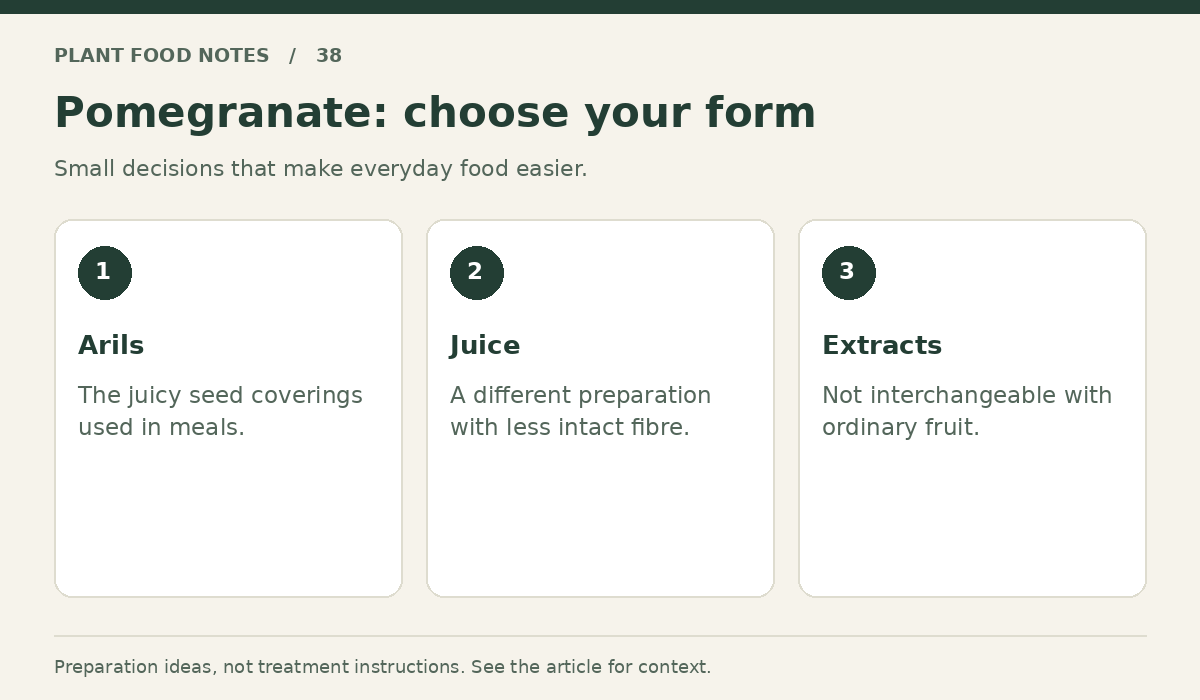
The edible arils contain juicy pulp around seeds and provide a different eating experience from filtered juice. They can add texture and some fibre to a meal. Juice is easier to drink quickly and does not necessarily provide the same fibre contribution. Check the product label rather than assuming every bottle represents the whole fruit in liquid form.
Pomegranate molasses is a concentrated culinary ingredient, often used for acidity and depth of flavour. Products vary, including whether sugar is added. A small amount can work well in a dressing, but it should not be treated as interchangeable with a portion of fresh fruit. Likewise, a supplement capsule is a separate product with its own composition and safety questions.
Open the fruit with a plan
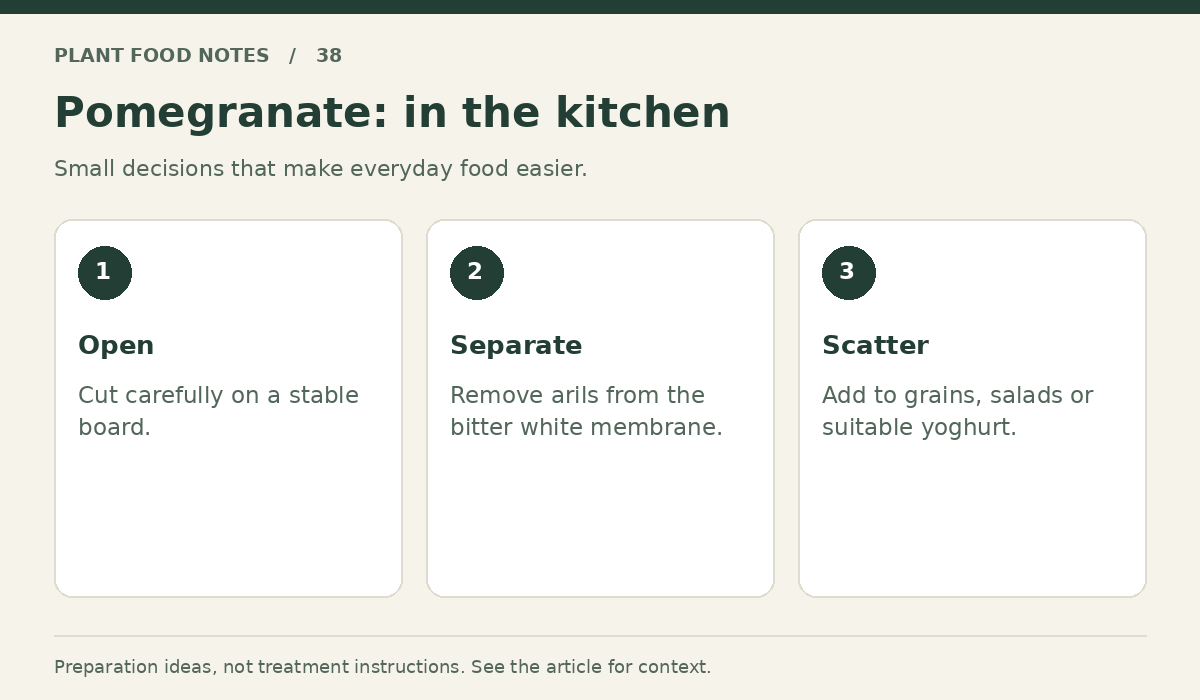
Wash the exterior, use a stable surface, and cut carefully enough to separate the fruit into manageable sections. Release the arils and remove the pale membrane. Work over a bowl to contain the juice, and protect surfaces or clothing if staining is a concern. There are several workable methods; choose one that feels controlled rather than trying to copy a fast demonstration with an unfamiliar knife technique.
If preparation is the main barrier, a small container of ready-prepared arils may be convenient, provided it is stored and used according to the label. Compare the price and the amount you will actually eat. A whole fruit is not automatically better value if much of it is wasted, while a prepared pack may be too large for a single planned garnish.
Use pomegranate in a substantial salad
Combine cooked lentils or beans with chopped vegetables and herbs, then add a modest amount of arils for contrast. Use a dressing that complements their sharpness rather than overwhelming it. The legumes provide much of the meal’s substance, while the pomegranate adds a distinct texture and flavour. This makes the fruit useful without asking it to provide everything nutritionally.
For a grain bowl, pair the arils with roasted vegetables and an appropriate protein source. You do not need a complicated collection of exotic ingredients. Pomegranate works best when it has a clear role in a familiar meal. If the dish becomes too sharp, adjust the other flavours or use less next time rather than assuming a stronger taste means a greater health benefit.
Breakfast and snacks offer another route
Arils can be scattered over plain yogurt, porridge, or a suitable alternative. They can also be eaten as fruit alongside another snack component if you need more substance. Consider the overall amount and the gap until the next meal. A decorative spoonful on a very small breakfast does not make the breakfast adequate simply because the topping has a strong reputation.
If you enjoy pomegranate juice, decide on a serving deliberately and check the ingredients. A sweetened mixed drink with a little pomegranate is different from pure juice, and neither should be assumed to provide the same experience as whole fruit. Enjoyment is a valid reason to choose a drink, but claims about blood pressure should remain tied to the specific research rather than the product’s name.
Plant parts and supplements are not kitchen shortcuts
NCCIH cautions that large amounts of pomegranate root, stem, or peel may be unsafe. Do not turn discarded parts into a medicinal tea simply because the edible fruit is familiar. The safety of eating arils does not establish the safety of concentrated preparations from every part of the plant. A social-media recipe is not a substitute for evidence about those exposures.
If you take medicines or are considering a concentrated supplement during pregnancy or breastfeeding, seek individual advice. Bring the actual product label so the discussion concerns its ingredients. Digestive symptoms and allergic reactions are also possible. Pomegranate is optional, and another fruit can be suitable if it does not agree with you.
Keep the benefit proportionate to the food
Store prepared arils safely, plan more than one use if you open a large fruit, and buy an amount that fits your household. A topping for one dinner and breakfast the next day may be enough to make the purchase worthwhile. There is no need to establish a daily quota or buy an expensive extract to justify enjoying the fruit.
Pomegranate’s everyday strengths are flavour, texture, and fruit variety, with interesting but incomplete evidence around particular juice and extract preparations. Keep those findings in perspective, distinguish the different products, and use the edible fruit in meals you enjoy. That approach preserves its appeal without turning a colourful ingredient into an unsupported promise of disease prevention.
General nutrition information; not personalised medical advice. Sources checked on 16 September 2026.