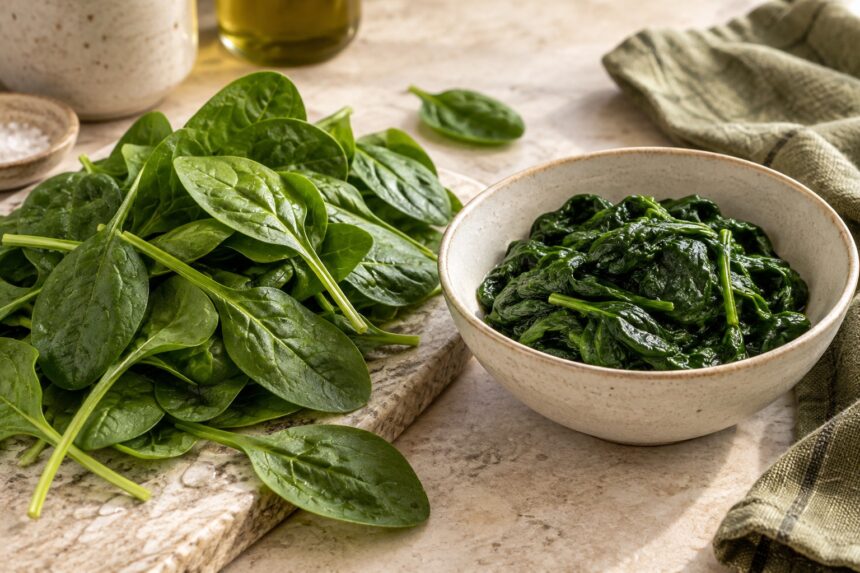
Spinach carries a reputation for strength that can obscure its actual nutritional role. It contributes useful nutrients and is remarkably easy to add to many dishes, but it is not a stand-alone answer to tiredness or iron deficiency. Its most practical feature may be how quickly it changes form: a large handful of leaves can wilt into a small amount of cooked food, making it easy to include greens in soup, eggs, beans, or pasta.
That change in volume also explains why comparisons can be confusing. A cup of loose raw leaves and a cup of densely cooked spinach represent different amounts of plant material. Before accepting a striking nutrient claim, check what portion was measured. More concentrated per cup does not mean cooking created nutrients from nothing.
What spinach contributes well
Spinach is a leafy vegetable containing folate, vitamin K, and carotenoids, among other nutrients. Folate is involved in making DNA and in normal cell division. The NIH folate fact sheet explains its role and why needs vary by life stage. Eating folate-containing vegetables is useful, but it does not replace specifically recommended folic acid supplementation around pregnancy.
Vitamin K contributes to normal blood clotting and bone-related processes. That makes spinach nutritionally relevant, but it also makes consistency important for some people taking anticoagulant medicine. Nutrients can be beneficial and medically relevant at the same time. A blanket message to eat unlimited greens misses that individual context.
Iron: a contributor, not a cure
Spinach contains non-haem iron, but the amount present in a food is not the same as the amount absorbed. The NIH iron guide explains that plant iron is absorbed differently from haem iron and that the meal affects absorption. Spinach can contribute to intake, yet relying on it alone to correct deficiency is not a sound plan.
If tiredness is persistent, do not diagnose yourself from a food list. Iron deficiency has causes that may need investigation, and fatigue can arise for many other reasons. A clinician may recommend testing and treatment. Adding spinach to dinner can be reasonable while still being insufficient to address the underlying problem. These two ideas do not conflict.
Raw and cooked spinach serve different purposes
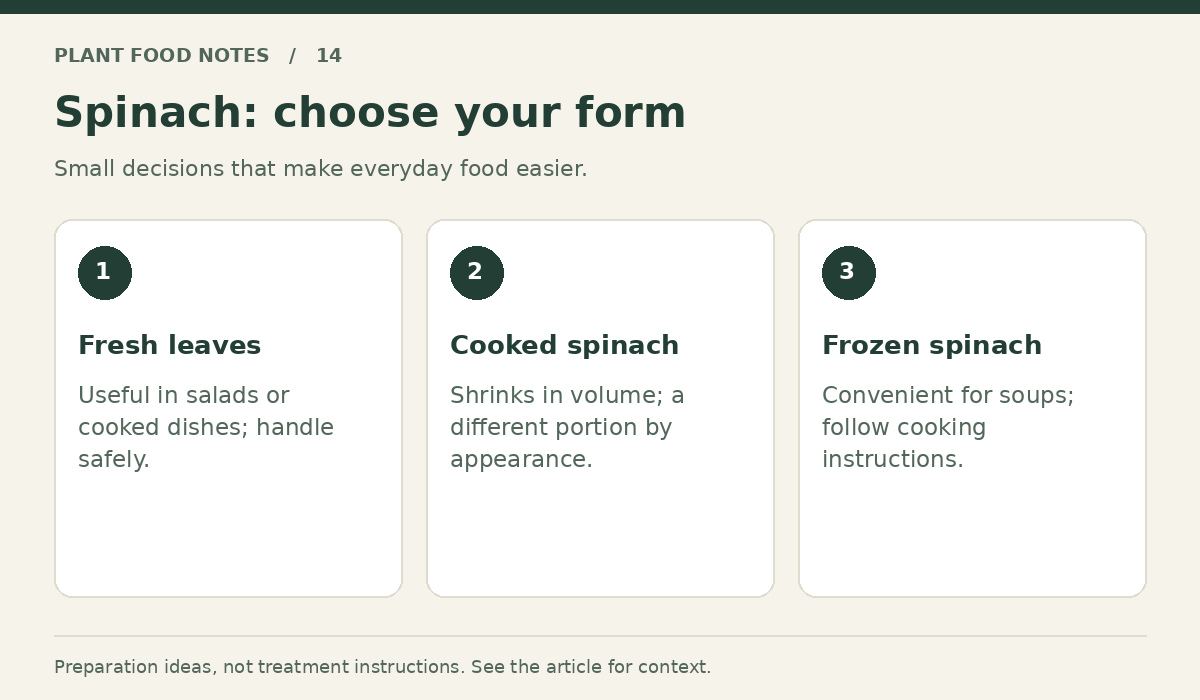
Tender raw leaves work well in a mixed salad or sandwich. Cooked spinach fits a warm dish and takes up less space. The choice can depend on taste, chewing comfort, and the recipe. There is no need to describe one form as pure and the other as nutritionally ruined. Preparation changes several properties at once, and a varied routine can include both.
For a warm dish, add washed leaves near the point in cooking when you want them to wilt, or use frozen spinach according to the packet. Avoid flooding a finished dish with excess water. If using a thawed frozen product in a filling, squeeze or drain as the recipe requires. Managing moisture can be the difference between an enjoyable pie or omelette and a watery one.
A quick spinach-and-bean meal
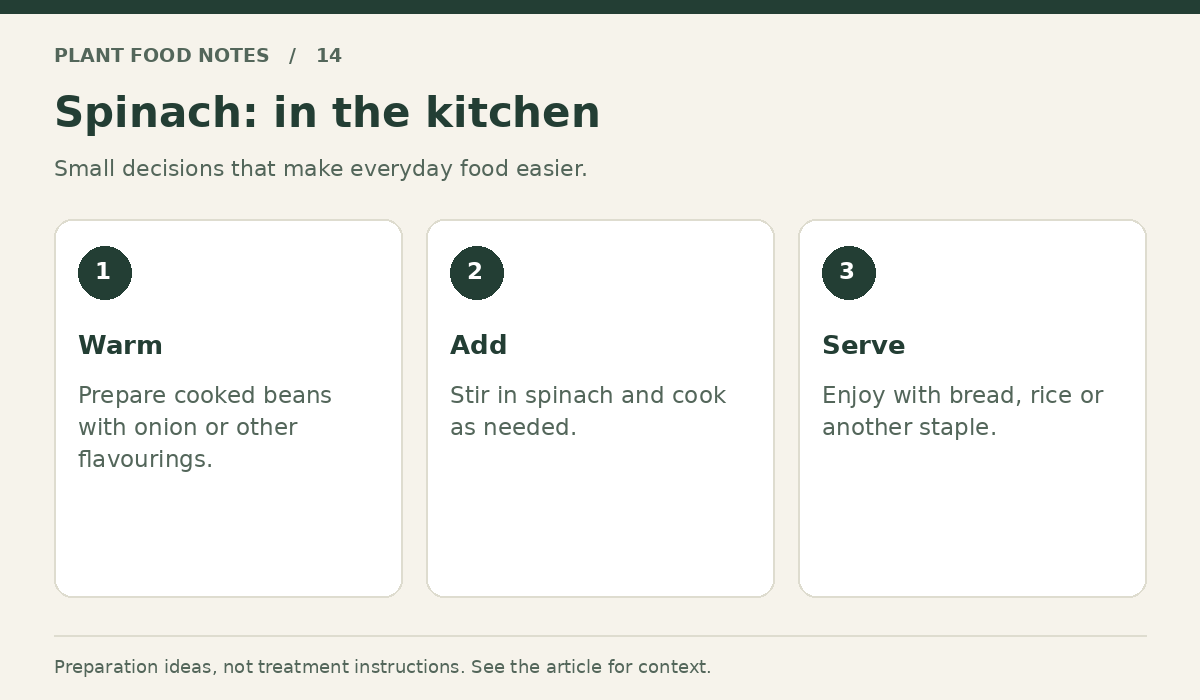
Warm cooked beans in a pan with chopped tomato and your preferred herbs. Add spinach and cook until the leaves or frozen portions are fully prepared. Finish with a small amount of oil and an acidic ingredient if you enjoy it, then serve with bread, rice, or another staple. The beans make the dish more substantial while the spinach adds a leafy component.
You can change the flavour direction without changing the basic method. Use cumin and coriander for one version, or thyme and black pepper for another. Keep chilli separate for a shared meal. This kind of flexible preparation is useful because the goal is regular access to vegetables, not faithfully repeating a single recipe associated with a health claim.
Be careful with the giant smoothie approach
Blending makes it easy to consume a large amount of leaves quickly. That is not automatically dangerous, but it can be a substantial departure from your usual intake, especially if repeated daily. A smoothie also includes whatever fruit, juice, powders, or sweeteners go into it. Its green colour does not provide a complete nutritional assessment.
Spinach is high in oxalate, which is relevant for some people prone to calcium oxalate kidney stones. Such readers should follow their own stone-prevention plan rather than begin large daily spinach drinks. Restrictions depend on the type of stone and individual circumstances; not everyone should avoid spinach. The useful response is tailored advice, not a new universal rule.
Warfarin and consistency
The NIH vitamin K fact sheet advises that vitamin K intake can interact with warfarin. The practical concern is a major change in intake, such as moving from occasional greens to a concentrated daily spinach routine. People taking warfarin should speak with their anticoagulation team about maintaining a consistent pattern.
Do not stop your medicine, and do not assume every blood thinner has the same food interactions. The name of the drug matters. A pharmacist or clinician can clarify the advice for your prescription. General articles are useful for identifying a question to ask, but they should not be used to rewrite a treatment plan.
Shopping, washing, and waste
Buy fresh spinach when you have a near-term use for it, and keep it refrigerated as directed. A large discounted bag is not a saving if most of it becomes unusable. Frozen portions can be a practical alternative for cooked meals. They also let you add a small amount without opening a whole bag of perishable leaves.
Follow the label on ready-to-eat washed greens, and wash unprepared produce appropriately. Keep leaves and utensils away from raw meat contamination. Avoid using visibly spoiled leaves simply because they will be cooked. Plant-based ingredients still require sensible handling, and a quick meal should not depend on overlooking signs that food is no longer suitable.
Give spinach a realistic job
Choose one routine meal where spinach fits naturally: beans, soup, an omelette, or a mixed salad. Start with that rather than committing to an intense green-drink programme. Its value lies in contributing nutrients and variety, not proving dedication through very large portions. A dependable way to eat leafy vegetables is more useful than a heroic approach that creates waste, discomfort, or unrealistic expectations.
General nutrition information; not personalised medical advice. Sources checked on 15 September 2026.