Strawberries can be at their best when they need very little help: ripe fruit, washed before eating, with a flavour that makes a simple snack feel complete. They can also be expensive, delicate, and disappointing when bought without a plan. A useful health guide should address both sides. The fruit provides nutrients, but its practical value depends on whether it is enjoyed and eaten before it spoils.
Their colour and sweetness often lead to two opposite claims: that they are an exceptional superfood, or that sweet fruit should be avoided. Neither is a good general rule. Strawberries are a whole fruit with water, fibre, vitamin C, and plant compounds. The sensible approach is to fit them into a varied diet while keeping portions, product differences, and individual needs in view.
Vitamin C is a meaningful contribution
The NIH vitamin C fact sheet lists strawberries among food sources and explains vitamin C’s normal roles in the body. These include collagen formation and helping absorb iron from plant foods. That gives strawberries a clear nutritional purpose without requiring claims that they erase wrinkles, prevent every infection, or act as a substitute for medical treatment.
For an ordinary meal, you might enjoy strawberries after a lentil dish or alongside another food that contributes plant-source iron. The pairing is practical, not a guaranteed correction for deficiency. If you have a diagnosed problem, continue the recommended care. Food can support a good routine while treatment and investigation address needs that a bowl of fruit alone cannot resolve.
Whole fruit deserves its own category
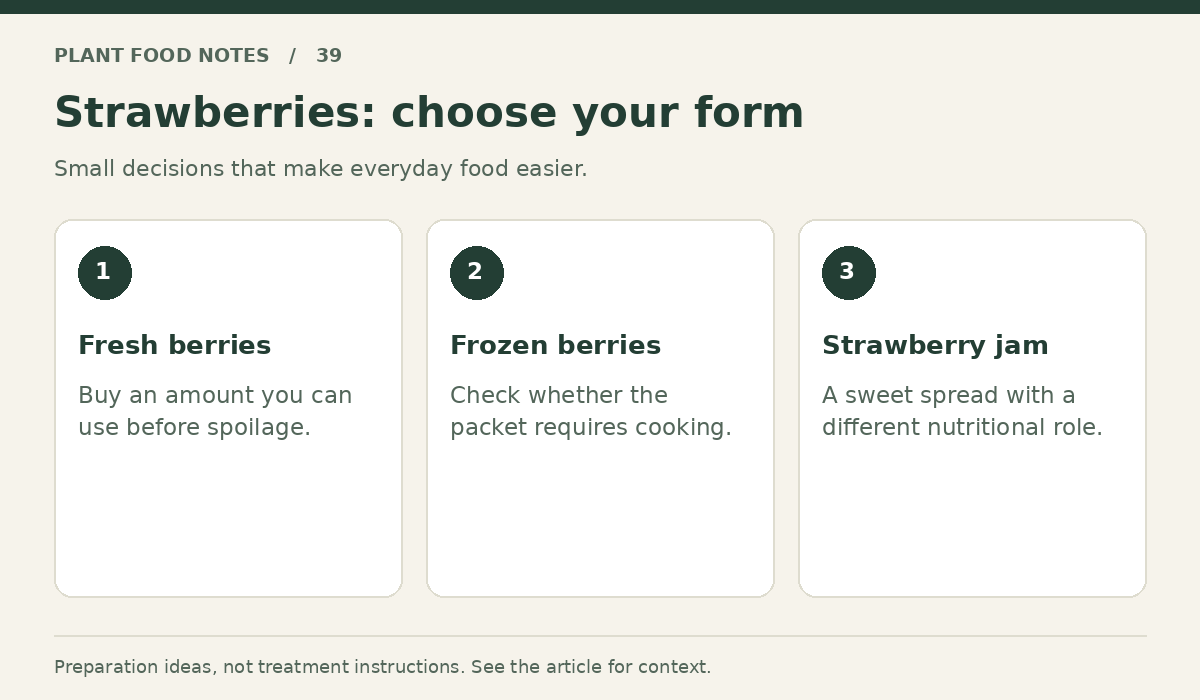
Whole strawberries retain their structure and fibre. A strawberry-flavoured drink, syrup, or sweet dairy dessert may contain a different amount of fruit and substantial additional ingredients. The picture on the packaging is not enough to judge the product. Read the ingredients and consider the serving you will actually eat rather than assigning the benefits of the whole fruit to anything with the same flavour.
Strawberry jam is another distinct food, often used in small quantities for taste. It can be enjoyed without pretending it is identical to fresh fruit. Similarly, a smoothie made from whole berries differs from a strained juice, and the rest of the smoothie ingredients matter. Precise descriptions make nutrition decisions easier than placing all these products under a single strawberry label.
Fibre works across the whole day
Strawberries can contribute to fibre intake alongside vegetables, pulses, and whole grains. The NIDDK guide to food and constipation explains why fibre and fluids matter. The useful goal is a regular pattern of suitable foods, not a large one-off bowl expected to correct every digestive concern.
People differ in appetite and tolerance, so start with an amount that fits the meal. If a sudden increase in many fibre-containing foods causes discomfort, adjust gradually rather than assuming the food is either miraculous or harmful. Persistent symptoms need appropriate attention. Strawberries can remain one enjoyable fruit option while you consider the broader routine and any individual medical advice.
Choose a breakfast that is more than a photograph
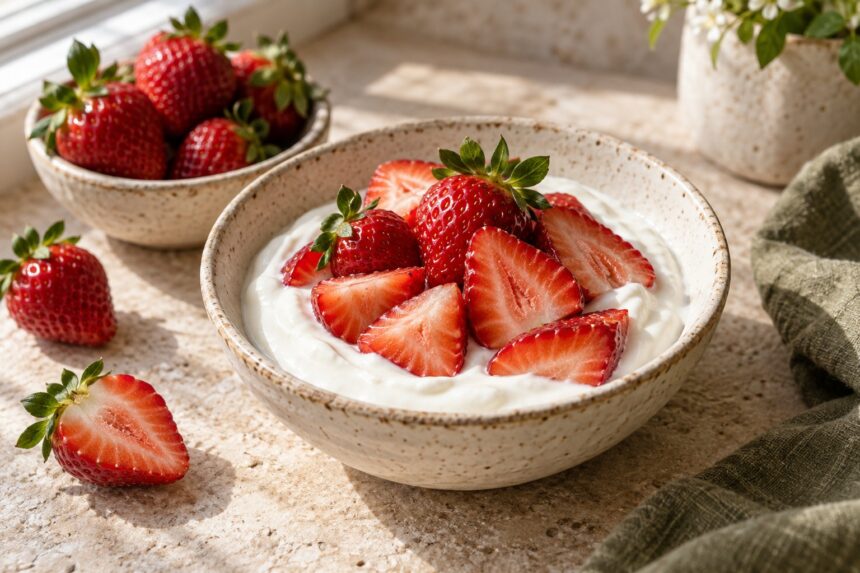
Sliced strawberries work well with plain yogurt, porridge, or another breakfast base. Add enough of the other components to make the meal suit your morning. A few berries arranged around a very small portion may look attractive without providing sufficient food. The aim is to feel adequately fed, not to reproduce a carefully styled image at the expense of appetite.
Taste ripe berries before adding sugar or syrup. Sometimes their own flavour is enough; sometimes you may prefer a little additional sweetness. Either way, make it a deliberate choice. There is no need to drown the fruit’s flavour, and no need to treat a modest addition as a moral failure. The complete meal and your regular habits provide more useful context.
Buy for ripeness and the time you have
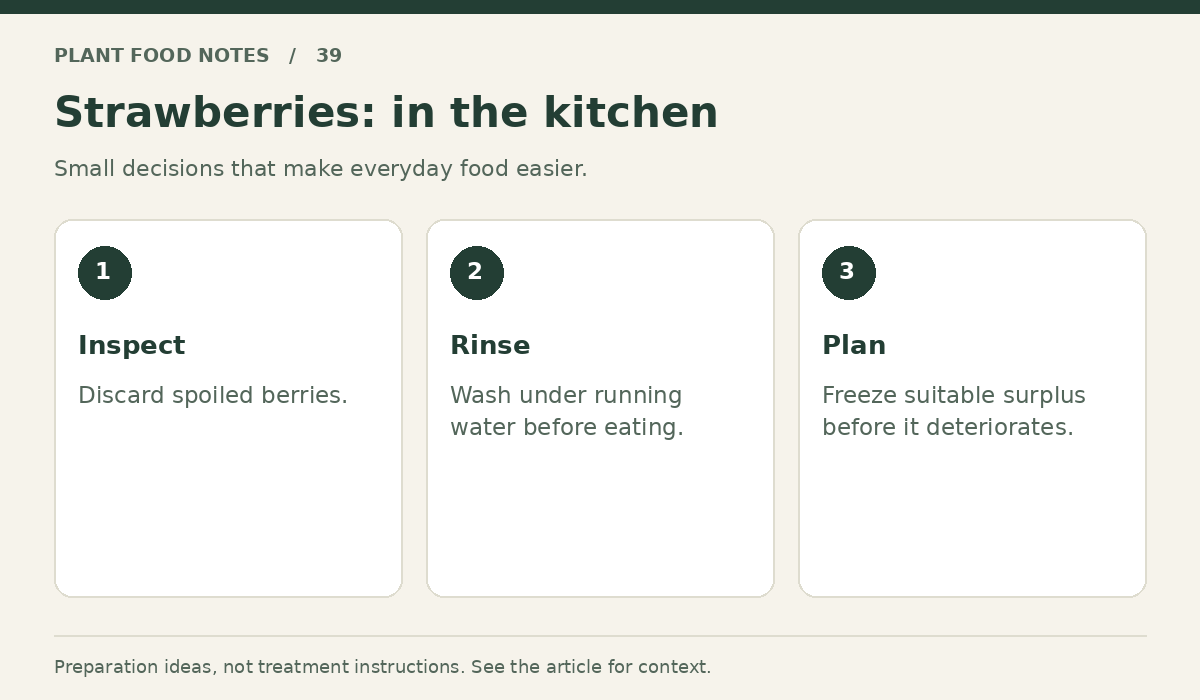
Inspect the container rather than choosing only by berry size. Look for sound fruit and avoid packs with obvious spoilage. Buy an amount you can use while it remains in good condition, especially if your household eats berries slowly. A bargain on a large box is not a saving when a substantial part of it ends up discarded.
Plan the first use before bringing the fruit home: a snack, breakfast, or a dessert you already intend to make. Keep it appropriately refrigerated and handle it gently. If you know you will not use fresh berries quickly enough, a suitable frozen product may be more practical. Convenience and waste reduction are legitimate considerations in a healthy eating routine.
Wash and handle berries safely
The FDA advice on selecting and serving produce recommends washing produce under running water rather than with soap. Use clean hands, utensils, and surfaces, and keep cut fruit appropriately chilled. A food’s attractive appearance does not remove the need for ordinary hygiene, especially when it will be eaten without cooking.
Discard mouldy or spoiled berries rather than blending them into a drink to hide the problem. If using frozen strawberries, follow the packet’s directions, including any requirement to cook them. Freezing is not the same as making a product ready to eat. A cooked berry topping can still be enjoyable when that is the appropriate preparation for the product you bought.
Use ripe fruit in more than one way
Sound berries that are soft but not spoiled can be useful in a cooked topping, depending on their condition and safe handling. Heat with a little water if needed and taste before sweetening. Serve with porridge or another suitable food. This can help use fruit that is less appealing as a fresh snack without treating cooking as a way to rescue spoiled produce.
For a savoury option, try sliced strawberries in a salad with leafy vegetables and a dressing that balances their sweetness. Include a substantial main component if the salad is intended as lunch. Their role is flavour and fruit variety, not replacing every other food group. A simple combination that you like is enough; it does not need a wellness name to be worthwhile.
Keep expectations as fresh as the fruit
Strawberries can be part of meals for many people, including those managing blood glucose, but individual plans and portions matter. They are not a diabetes treatment, and a known allergy takes precedence over general benefits. If fresh strawberries are too expensive or unavailable, other fruits can fill the role. Healthy eating should not depend on a particular seasonal purchase.
Their strongest everyday case is a pleasant source of vitamin C and whole-fruit fibre that can make breakfast, snacks, and meals more varied. Buy thoughtfully, use safe preparation, and distinguish the fruit from products carrying its flavour. That gives strawberries an honest place in the diet without turning them into either a miracle food or something to fear because they taste sweet.
General nutrition information; not personalised medical advice. Sources checked on 16 September 2026.