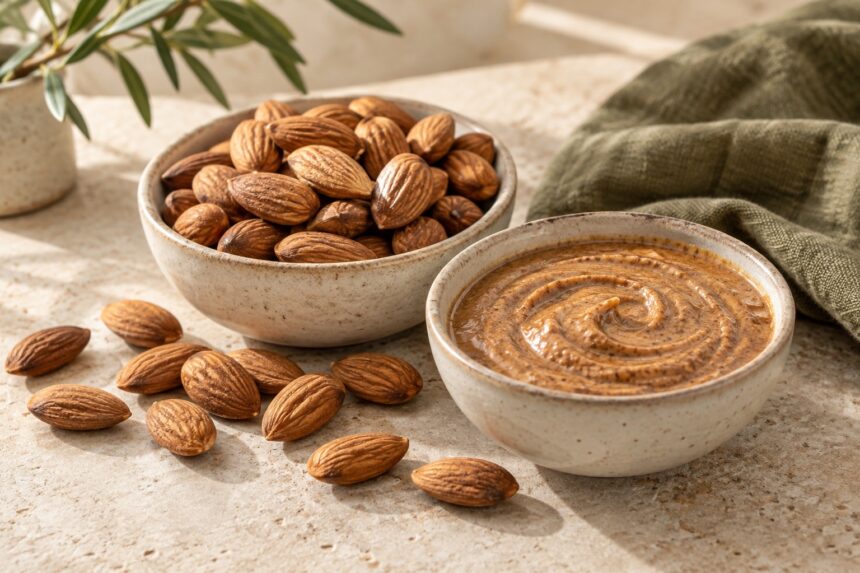
Almonds appear in snack bags, breakfast bowls, plant drinks, flour, and jars of butter. That variety can create a misleading impression that every almond product delivers the same benefits. It does not. Whole almonds are a compact food containing fat, fibre, and protein; a heavily diluted almond drink has a different composition. Understanding the product matters more than the healthy-looking image on its packaging.
The useful question is what almonds will replace or contribute in your day. A small serving instead of a routine low-fibre snack can be a practical change. Buying almond flour for an occasional cake is a different decision. Neither needs to become a declaration that ordinary flour, peanuts, or other foods are inherently inferior.
What makes almonds nutritionally interesting
Almonds provide mainly unsaturated fat, along with vitamin E, fibre, and some protein. The Harvard guide to almonds discusses evidence for nuts within heart-conscious diets and explains that almond-specific research is more limited than general nut research. Benefits for blood lipids should not be inflated into a claim that a handful prevents a heart attack in an individual person.
Vitamin E is another reason almonds attract attention. The NIH vitamin E fact sheet explains its nutritional role and food sources. Obtaining a nutrient through food is different from assuming that high-dose supplementation will amplify the benefit. Almonds do not need to be treated as a delivery vehicle for a megadose, and eating them does not imply that you also need a vitamin E capsule.
A sensible serving is about the eating occasion
For a snack, a small handful is a useful starting point, not a compulsory daily dose. Put it in a bowl or container rather than repeatedly eating from a large bag while distracted. This makes the portion visible and allows you to decide whether you need something else, such as a piece of fruit, instead of continuing without noticing.
For a meal, almonds may function mainly as a topping. Chopped nuts over vegetables add crunch, while almond butter stirred into a sauce adds richness. These uses do not have to provide a full snack-sized portion to be worthwhile. The relevant question is whether the dish is satisfying and fits your needs, not whether every appearance of almonds meets a quota.

Raw versus roasted is usually a taste decision
Some people enjoy raw almonds; others find dry-roasted almonds more appealing. A food you enjoy is easier to use consistently. Compare added salt, coatings, and seasonings rather than assuming roasting itself makes a nut unsuitable. Honey-coated or chocolate-covered almonds can be enjoyable treats, but they are different products from plain nuts and should be described honestly.
Try buying a small packet before investing in a large bag. Nuts that sit around unused may become unpleasant in flavour. Store them sealed, away from heat, and follow the manufacturer’s advice. If you use nuts infrequently, keeping a portion in the refrigerator or freezer can be practical. Avoid judging freshness from the best-before date alone when the taste or smell has clearly deteriorated.
Almond butter: convenient, with a label worth reading
A jar made mainly from almonds can be a convenient way to use the food, especially when you prefer a smooth texture. Stir if natural oil separation occurs, following the label’s directions. Compare added sugar, salt, and other fats across brands. There is no need to buy the most expensive jar simply because it uses words such as clean, activated, or premium.
Use almond butter deliberately: spread a thin layer on toast, mix a spoonful into a dressing, or pair it with a fruit you enjoy. If it is too thick for a sauce, loosen it gradually with water and add lemon or spices. This is an adaptable kitchen technique, not a special detox recipe. Peanut or seed butter may be a more affordable alternative if those foods suit you.
Almond milk is not a liquid handful of almonds
Many almond drinks contain relatively little protein compared with dairy milk or some soy drinks. Fortification varies too. If the drink is simply something you enjoy in coffee, that may not matter much. If it replaces a major source of protein and calcium in your diet, the comparison becomes more important. Read the nutrition panel per serving and check whether the product is fortified.
Homemade almond drinks should not automatically be assumed equivalent to fortified commercial products. Straining changes what remains in the liquid, and adding water dilutes nutrients. This is not a criticism of making food at home; it is a reminder that “homemade” describes a process, not a complete nutritional profile. Choose the beverage according to the role it needs to perform.

A meal idea that uses almonds well
Roast or steam a vegetable you already like, then add a small scattering of chopped almonds before serving. For a more substantial meal, include beans, lentils, fish, tofu, or another protein food and a suitable staple. The almonds provide a contrast in texture rather than becoming the entire meal. This approach works with carrots, green beans, or a mixed vegetable tray.
For a cold lunch, combine cooked grains with chopped vegetables and a lemon dressing, keeping the almonds separate until eating if you want maximum crunch. It is a useful way to make leftovers feel different. Prepare only enough dressing to coat the food rather than hiding the texture under a large amount of sauce.
Who needs an alternative?
Tree-nut allergy is an obvious reason to avoid almonds and watch for cross-contact. Whole nuts are also a choking hazard for young children; use age-appropriate forms and follow paediatric guidance. People with swallowing difficulties should seek advice about safe textures. Almond butter is not automatically safe for every swallowing problem simply because it is smooth.
The best reason to eat almonds is that they fit a varied, enjoyable diet. Their advantages are real but do not require exclusivity. Rotate foods, compare products thoughtfully, and keep the form matched to the purpose. A sensible snack and a dependable cooking ingredient are more valuable than a cupboard full of products bought for the almond name alone.
General nutrition information; not personalised medical advice. Sources checked on 15 September 2026.