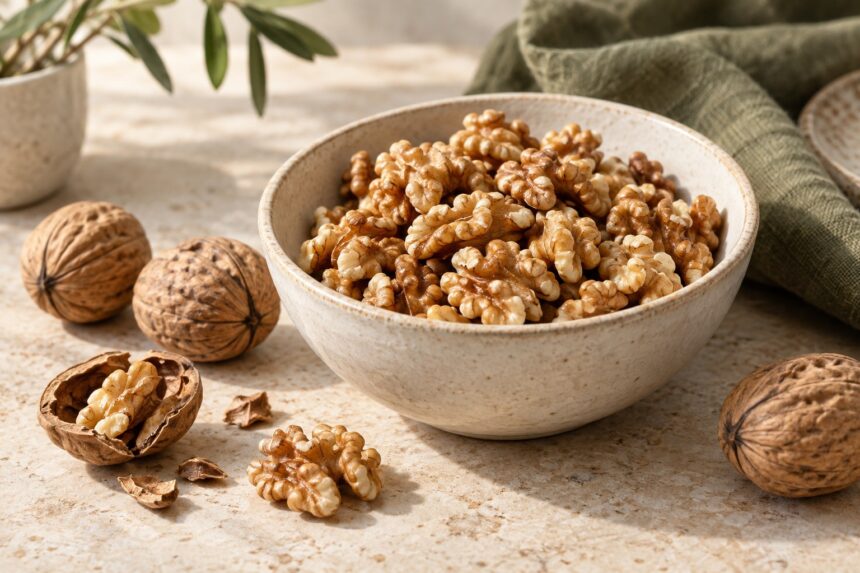
Walnuts are easy to recognise and easy to over-market. Their shape encourages claims about the brain, while their plant omega-3 content attracts comparisons with fish oil. The more useful story is quieter: walnuts are a source of unsaturated fat that can fit into meals and snacks, and clinical research has examined their effects on blood lipids. You can take that evidence seriously without expecting them to sharpen memory overnight or compensate for an otherwise poor diet.
Their strong flavour also makes them different from milder nuts. A few chopped pieces can change a salad, sauce, or porridge. That means you do not have to enjoy eating a handful on its own to use walnuts regularly. The preparation that suits your taste may be more important than the serving style used in an advertisement.
What human research actually supports
A 2018 systematic review of controlled walnut trials found improvements in blood lipid profiles when walnuts were incorporated into diets. It did not establish that everybody should expect the same result or that walnuts replace cholesterol medication. Trials differ in duration, participants, comparison diets, and the amount supplied, all of which affect how findings translate to everyday life.
The comparison food matters especially. Replacing some foods high in saturated fat with walnuts is not the same as adding a large bag of nuts to an unchanged diet. The first changes the balance of foods; the second also increases overall intake. When reading a headline, ask what participants ate instead of the walnuts. That question often reveals more than the size of the claimed benefit.
Plant omega-3 is not the same as fish omega-3
Walnuts provide alpha-linolenic acid, usually shortened to ALA. This differs from EPA and DHA, the forms associated with fish and some algae products. The NIH omega-3 fact sheet explains that conversion from ALA to the longer-chain forms is limited. It is therefore inaccurate to describe a walnut portion as a direct nutritional replacement for a specified fish-oil dose.
That limitation does not make ALA unimportant. It simply keeps the claim precise. Foods can contribute different nutrients without being interchangeable in every respect. If you avoid fish and have questions about omega-3 needs in pregnancy, a restricted diet, or a medical condition, seek advice about the whole dietary pattern rather than trying to calculate everything from walnuts alone.
Why the brain-shaped nut does not prove a brain benefit
Appearance is not evidence. A food resembling an organ tells us nothing reliable about its effects on that organ. Research on walnuts and cognition is interesting, but a positive laboratory mechanism or a selected subgroup result is not a general promise of better memory. In a trial of walnuts in healthy adolescents, being assigned walnuts for six months did not improve the main overall neuropsychological outcomes.
This is a helpful example of honest nutrition reporting. An appealing hypothesis can remain unproven even when the food is nutritious. There is no need to reject walnuts because a dramatic brain claim is unsupported. Their flavour and nutritional contribution stand on their own, and the absence of a miracle does not erase those qualities.
Make walnuts work in savoury food
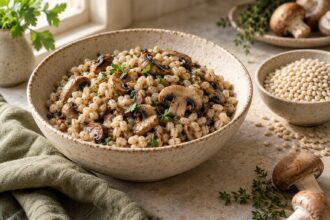
Try roughly chopping walnuts and adding them to a warm grain-and-vegetable dish just before serving. Their texture contrasts with soft roasted vegetables or cooked lentils. A lemon dressing helps balance the richness. Keep the nuts as one component of the meal rather than assuming a large amount must be better because the fat is mostly unsaturated.
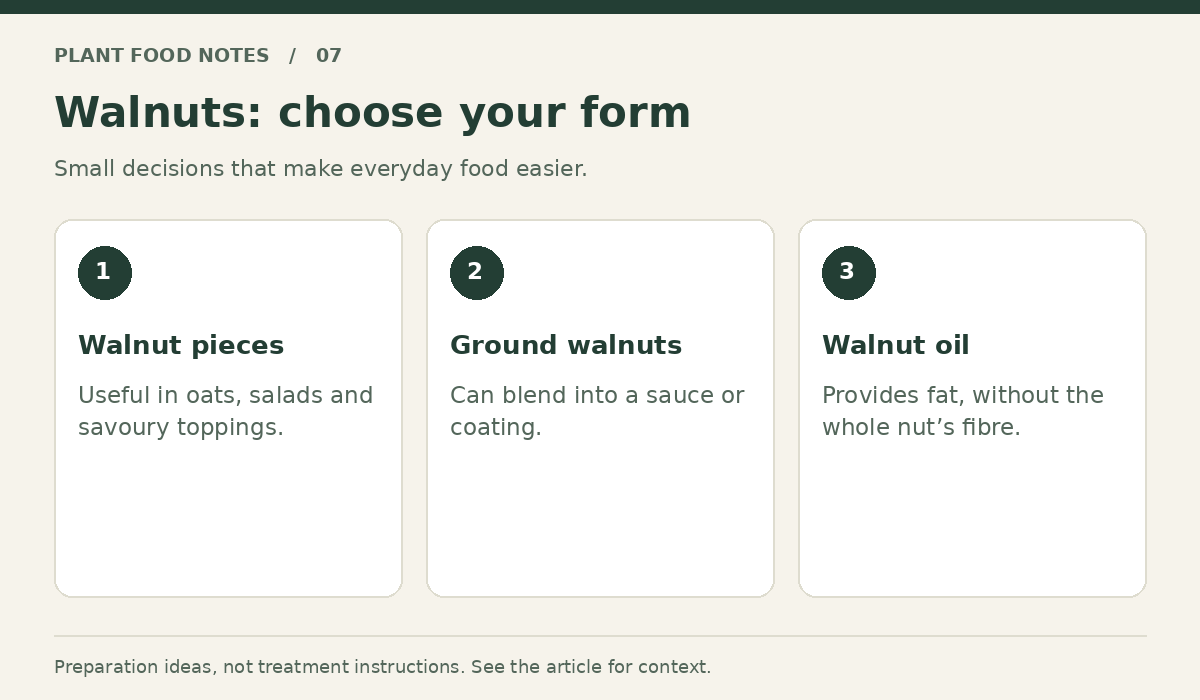
Another option is a simple walnut sauce. Blend or finely crush walnuts with a little water, herbs, garlic if tolerated, and lemon. Adjust the consistency gradually and spoon it over vegetables or a suitable protein food. This gives the nuts a distinct job in the dish. It also allows you to use broken pieces, which may cost less than visually perfect halves.
Breakfast and snacks without a health halo
Walnuts can add crunch to porridge or yogurt, but toppings accumulate quickly. Choose a combination you enjoy instead of adding nuts, seeds, coconut, syrup, and dried fruit automatically. A simpler bowl makes it easier to judge appetite and flavour. If walnuts are bitter to you, use fewer pieces or combine them with a fruit rather than abandoning the whole meal.
For a snack, portion them into a small container. If you are still hungry, consider whether you need a proper meal rather than repeatedly refilling the container. Nuts are convenient, but they are not designed to replace every eating occasion. Eating enough across the day matters as much as choosing ingredients with a favourable reputation.
Buy and store for freshness
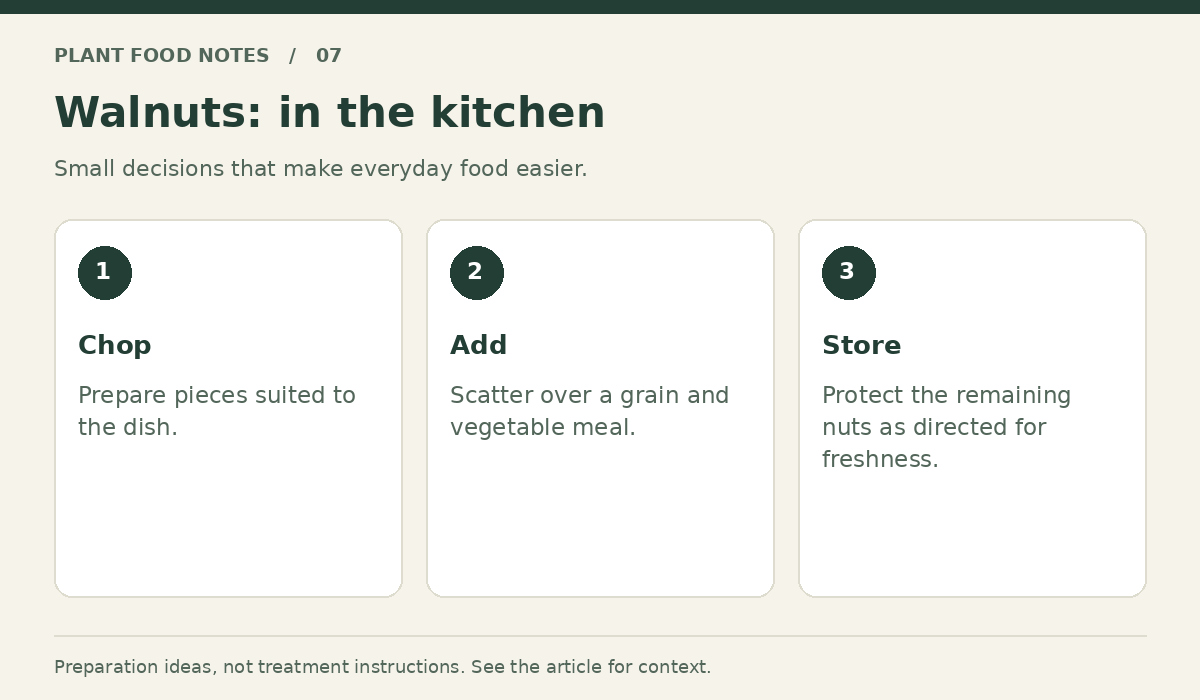
Walnuts have a high fat content, so protecting flavour during storage is worthwhile. Buy a quantity that matches your actual use and keep it sealed. Follow package storage instructions; refrigeration or freezing can be practical for larger amounts. If the nuts smell or taste rancid, do not hide the flavour in a heavily seasoned recipe. Start again with a smaller purchase.
Whole nuts in shells may look attractive, but cracking them takes effort and creates waste to manage. Shelled halves or pieces can be easier for a weekday kitchen. The more convenient format is not nutritionally suspect simply because someone else removed the shell. Choose according to cost, freshness, and the way you intend to eat them.
Safety and realistic expectations
Walnuts are unsuitable for someone with a relevant nut allergy. Whole pieces also require attention to choking risk in young children and to texture in people with swallowing difficulties. A medical diet may need individual adjustments; a general heart-health article cannot account for every person’s energy, kidney, or allergy-related requirements.
For most interested readers, a useful experiment is to replace one familiar snack or enrich one regular meal with a modest amount of walnuts. Keep the rest of the routine reasonably consistent and judge whether the change is enjoyable and sustainable. If cholesterol is the goal, assess it through your healthcare team’s testing plan. Taste can tell you whether dinner worked; it cannot tell you whether LDL changed.
General nutrition information; not personalised medical advice. Sources checked on 15 September 2026.