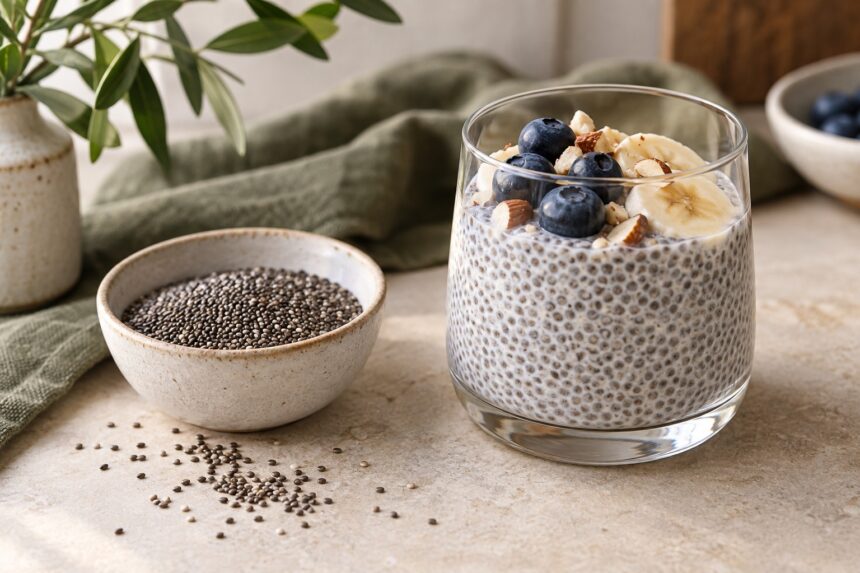
Chia seeds are unusually good at changing texture. Stir them into liquid and they swell into a gel-like mixture, which explains their popularity in puddings, breakfast jars, and some baking recipes. Their fibre and plant-fat content also make them nutritionally interesting. The problem begins when these ordinary properties are turned into promises that chia water melts abdominal fat, cleans the gut, or makes appetite disappear.
You can enjoy chia without buying those promises. The useful question is whether a small amount improves a meal you already like. For someone who enjoys soft puddings, chia may be convenient. For someone who dislikes the texture, oats, other seeds, or legumes may be easier ways to diversify food choices. There is no obligation to develop a taste for a fashionable ingredient.
Nutrition is stronger than the miracle claims
The Harvard Nutrition Source guide to chia seeds describes their fibre, minerals, and alpha-linolenic acid content. It also distinguishes that nutritional value from the limited and inconsistent evidence for specific weight and cardiovascular effects in humans. A food can contain useful nutrients without having a proven independent effect on body weight.
Chia’s omega-3 is mainly ALA, not the EPA and DHA found in fish and some algae products. The NIH explanation of omega-3 fats is useful for understanding that distinction. Calling chia “rich in omega-3” does not make a spoonful equivalent to a particular fish-oil preparation. Nutrient names need enough detail to support a meaningful comparison.
Why soaking changes the experience
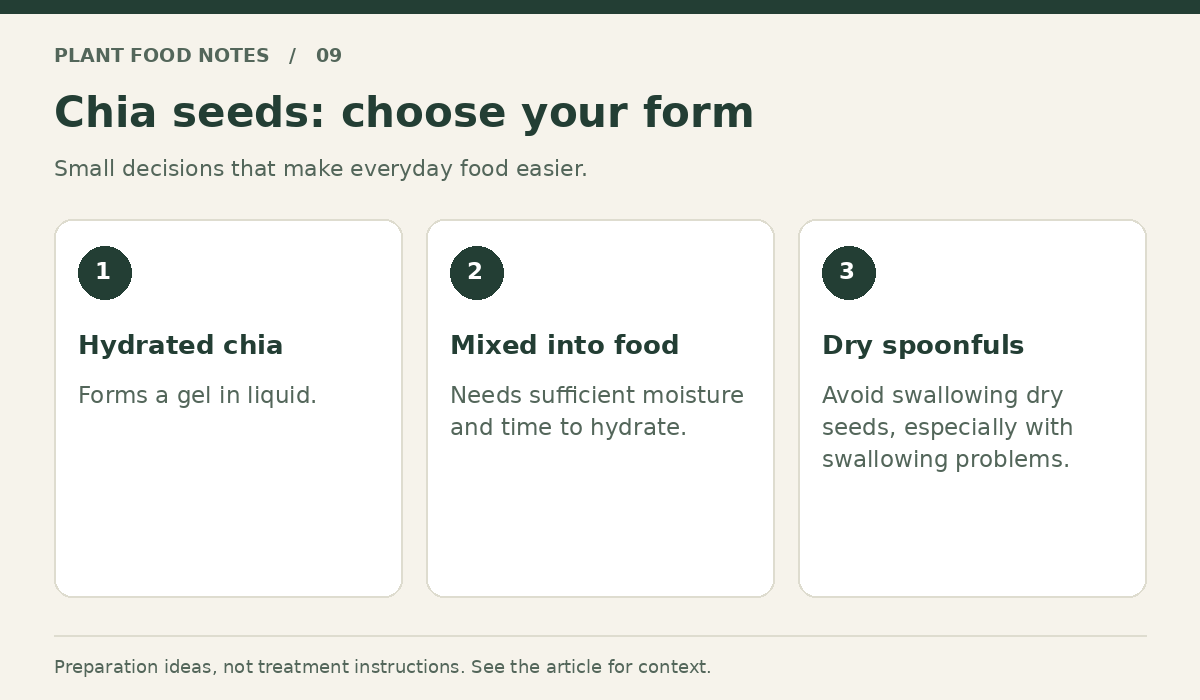
Hydration turns chia from small, loose seeds into a thickened food. That makes it easier to distribute through a bowl and reduces the temptation to swallow a dry spoonful. Do not eat dry chia by the spoonful and chase it with water: swelling can create a swallowing hazard, particularly for someone with an underlying swallowing problem. Follow product directions and use a fully moistened preparation.
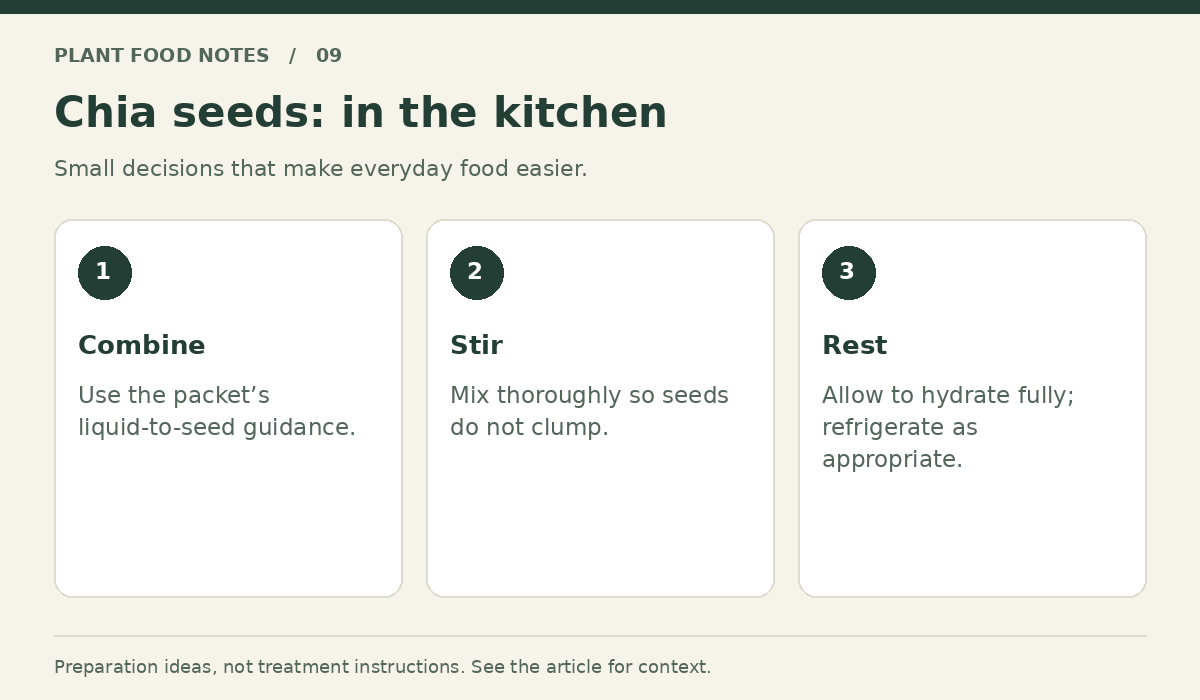
For a breakfast jar, mix the seeds into the liquid thoroughly, stir again after they begin to thicken, and allow the preparation to hydrate. This helps prevent a dry clump at the bottom. Refrigerate mixtures containing milk, yogurt, or other perishable ingredients. A sealed jar is convenient, but it does not make the contents safe to leave on a warm desk all morning.
Pudding is a recipe, not a health category
A chia pudding made with unsweetened milk or a suitable fortified alternative, fruit, and a modest amount of seed differs from one made with large amounts of syrup and rich toppings. Both may taste good. The word “chia” does not erase the rest of the ingredients, and a pudding’s portion may be much larger than the serving pictured on the packet.
Begin with a small recipe rather than preparing a week’s supply before you know whether you enjoy it. Try a plain base with grated apple and cinnamon, or a berry version with yogurt. Adjust the liquid to achieve the texture you prefer. If the mixture becomes too thick, add liquid gradually instead of forcing yourself to eat something unpleasant because it is supposed to be healthy.
What to expect from fibre
Adding chia may raise the fibre content of a meal, but abruptly increasing fibre can cause discomfort. More seeds do not necessarily mean better digestion. Start with a manageable amount, especially if your usual diet contains little fibre. Maintain appropriate fluid intake and follow any specific medical advice about fluids or bowel conditions.
The NIDDK guidance on constipation and diet provides a broader context for fibre and liquids. Chia is only one possible contributor. If constipation persists or comes with severe pain, bleeding, vomiting, or unexplained weight loss, seek medical assessment. A homemade seed drink should not become a reason to postpone care.
Hunger and weight: observe rather than assume
Some people find a chia-containing breakfast satisfying; others need more food. The liquid, protein source, fruit, and total portion all influence the eating experience. If your breakfast leaves you hungry, adding more dry seed is not the only option. A piece of toast, more yogurt, or a different meal structure may make more sense.
Do not use the thickness of a mixture as proof that it will cause weight loss. Thick food can still contain substantial energy, and weight change depends on much more than one texture. A practical goal is to build a meal that is enjoyable and appropriate for your needs. That is more useful than looking for a special drink that allows the rest of a routine to remain unexamined.
Beyond the breakfast jar
Chia can help thicken a fruit mixture or add body to a moist batter. Treat those as cooking experiments and begin with a tested recipe when structure matters. Replacing an egg with a seed mixture changes more than binding: it also changes flavour and nutrition, and it will not behave identically in every cake or bread. A successful substitution depends on the recipe.
For a simple savoury experiment, add a small amount to a loose dressing and allow it to thicken before serving. Use enough liquid that the result remains pleasant. This is an optional way to vary texture, not a reason to add chia to every dish. The ingredient should improve the meal rather than making eating feel like completing a health checklist.
Make a sensible purchase
Plain chia is enough to begin with. Compare price per weight and check storage instructions. You do not need a branded detox blend, a subscription, or a special bottle. Flavoured mixes may contain useful ingredients, but they should be judged on the full list and the portion used, not the prominence of the seed on the label.
If chia suits you, keep it as one small option in a varied kitchen. If it does not, leave it out without feeling that you are missing an essential health secret. Its most credible strengths are its food composition and practical thickening ability. Safe preparation and realistic expectations make those strengths more useful than any exaggerated promise.
General nutrition information; not personalised medical advice. Sources checked on 15 September 2026.