Kale can be a difficult vegetable to like when it is served as a pile of tough leaves with very little seasoning. It can also be excellent in a soup, gently cooked with beans, or prepared as a salad with a texture that is easier to chew. The difference often has more to do with handling than with the variety. Learning one reliable preparation is more useful than repeatedly buying kale because you feel you ought to.
Its nutritional strengths include vitamin K and carotenoids, with other nutrients contributing to a varied diet. Those qualities make it a worthwhile leafy vegetable, but not a food that everyone must eat every day. Other greens can also be valuable. Kale’s popularity should not turn personal preference, affordability, or a medical dietary requirement into a source of guilt.
Vitamin K is a strength with a specific caveat
Kale is rich in vitamin K, which is involved in normal blood clotting and bone-related processes. The NIH vitamin K fact sheet explains these functions and identifies leafy vegetables as important food sources. This is a useful nutritional contribution, not proof that adding kale will independently prevent fractures or solve every concern about bone health.
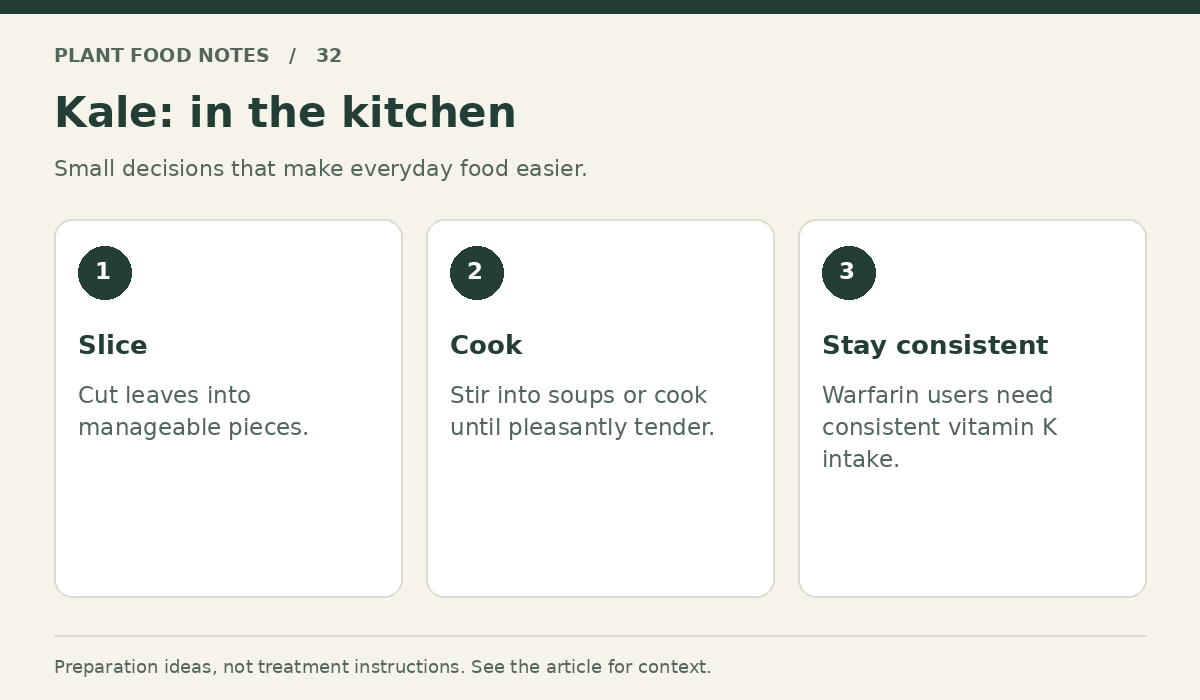
For people taking warfarin, changes in vitamin K intake can affect treatment. The practical message is generally consistency and communication with the anticoagulation team, rather than automatically avoiding all greens. A sudden move from occasional vegetables to a large daily kale smoothie is worth discussing. Follow the advice for your specific medicine; not every blood-thinning medicine has the same food considerations.
Carotenoids fit into a broader vegetable pattern
Kale contains carotenoids, including compounds relevant to the vitamin A discussion. The NIH overview of vitamin A and carotenoids explains the difference between these food components and preformed vitamin A. Eating a range of vegetables helps provide different nutrients without requiring one particular leaf to become the centre of every meal.
The presence of a nutrient involved in vision or immunity should not be converted into a promise that kale prevents infections or treats eye disease. Those are different claims requiring different evidence. It is enough to recognise kale as a nutrient-containing vegetable and use it where it makes meals better. A realistic explanation is more useful than assigning extraordinary powers to its dark colour.
Prepare the leaves before judging the flavour
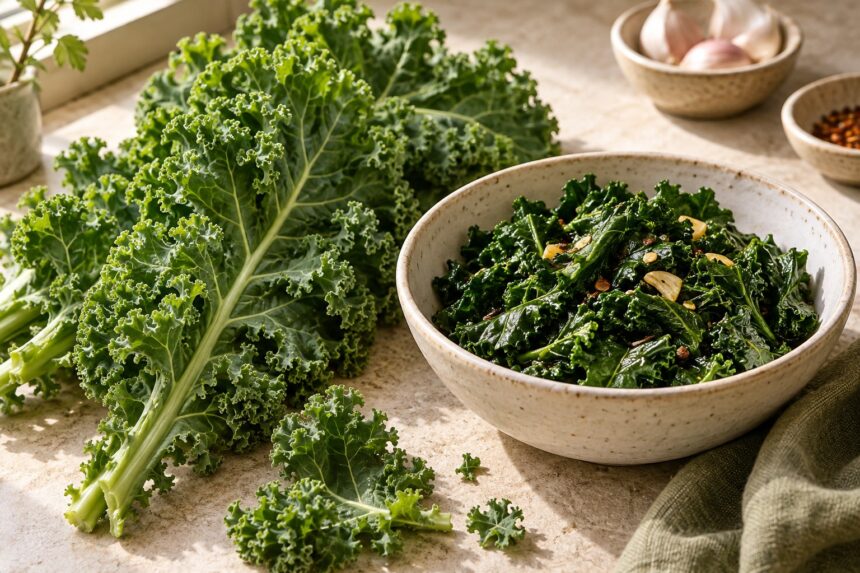
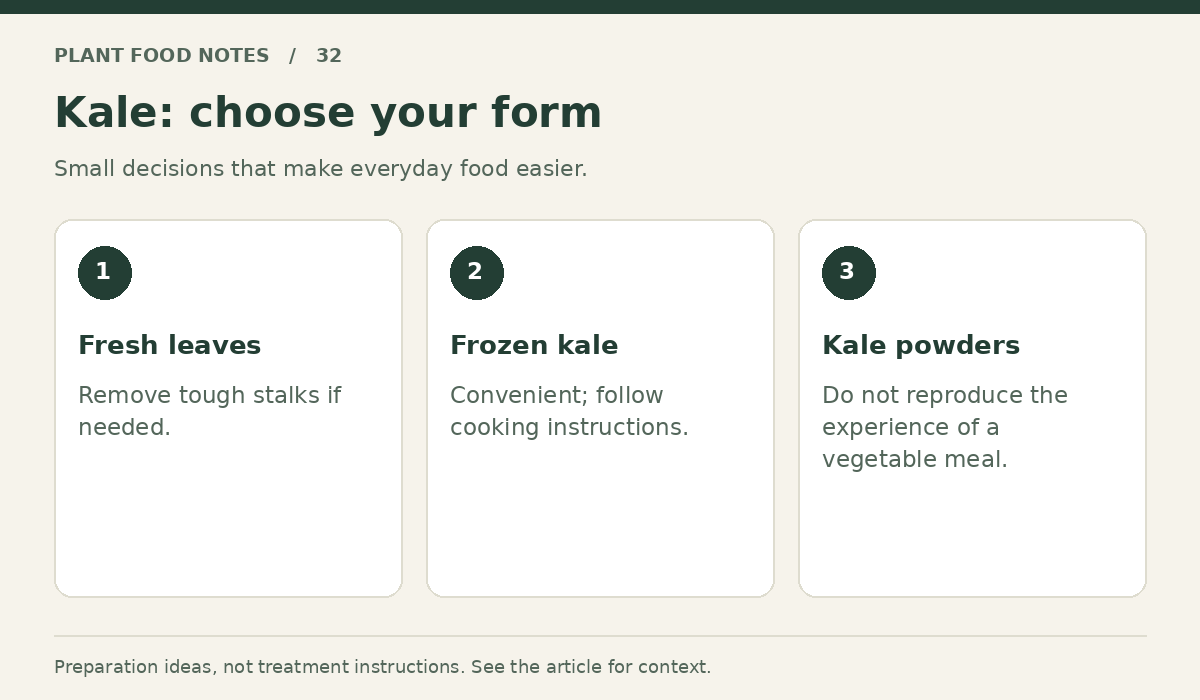
Remove very tough stalks when the recipe calls for tender leaves, and cut the leaves into pieces suited to the dish. Wash and handle them safely. Thick stems can sometimes be chopped finely and cooked separately for longer, but there is no need to force an unpleasant texture into a quick salad solely to avoid a small amount of trimming.
For a raw salad, finely slicing the leaves and working in a suitable dressing can make the texture less demanding. Letting the dressed leaves stand briefly may also help the eating experience. Use a preparation you enjoy rather than assuming raw kale must be eaten in large, unseasoned pieces to count. Good food preparation is part of making vegetables accessible.
Cook kale into a meal that already works
Try adding chopped kale to a pot of beans, a vegetable soup, or a stew with enough liquid and cooking time to soften it. The leaves become part of a familiar dish instead of a separate health assignment on the side. Taste as you go so the texture fits your preference. Some people like a little bite; others prefer a softer result.
If using kale with beans, add flavour through onion, herbs, spices, or a little citrus according to the recipe. Serve with an appropriate staple or other food so the meal is satisfying. The greens contribute variety, but they do not replace every source of protein or energy. A large bowl of leaves alone may look impressive while failing to meet the purpose of dinner.
Smoothies are not automatically a better use
Blending kale can be convenient, but a very large quantity may be easy to consume without noticing. The other ingredients matter too: fruit, juice, sweeteners, milk, and plant-based drinks create different beverages. A green colour is not a reliable nutritional summary. Consider the amount, the ingredients, and whether the drink is intended as a snack or a meal.
If you have a relevant medical dietary plan, concentrated daily routines deserve more thought than an occasional serving in food. There is no need to chase the darkest possible smoothie. A smaller amount that tastes pleasant may fit better, or you may prefer cooked greens entirely. The form that supports a comfortable, varied diet is more useful than the one most often promoted online.
Calcium needs cannot be reduced to one leaf
Kale can contribute calcium, but bone health involves overall intake and other factors. The NIH calcium fact sheet describes food sources and the broader role of calcium. If you avoid dairy or have a restricted diet, consider suitable fortified foods and other sources rather than expecting a small serving of kale to carry the entire requirement.
Portions are easy to misread because leaves shrink during cooking. A cup of loosely packed raw leaves and a cup of cooked greens represent different amounts of plant material. When using nutrition information, check the preparation and serving described. This simple step prevents impressive figures from being applied to a much smaller quantity than the one actually on your plate.
Keep the routine flexible
Buy an amount you can use, store it as directed, and decide on a meal before the leaves lose quality. Frozen kale may be convenient for soups and cooked dishes; follow the packet’s instructions. If kale is expensive or you dislike it despite trying different preparations, another leafy vegetable can take its place. Variety should make eating easier, not turn it into a narrow checklist.
Kale’s benefits are best understood as those of a useful leafy vegetable with notable vitamin K and other nutrients. Prepare it for a texture you enjoy, give it a clear role in a complete meal, and keep medication-related advice specific to the person. There is no need to call it a superfood for it to earn a regular place in the kitchen.
General nutrition information; not personalised medical advice. Sources checked on 16 September 2026.