Lentils solve a problem that many nutrition articles overlook: what to cook when you need something filling, inexpensive, and achievable after a long day. A bag of red lentils can become soup; green or brown lentils can give a salad enough substance to count as lunch. Their health value is connected to this usefulness. They make it easier to put fibre-rich plant food on the plate regularly, especially when the alternative is a meal built almost entirely around refined starch or processed meat.
It helps to approach lentils as a family of cooking ingredients rather than as a single therapeutic food. Different colours behave differently in the pan, and liking one preparation does not mean you will enjoy another. The best starting point is a dish you already eat, with lentils playing a clear role instead of appearing as an unfamiliar extra.
What lentils contribute nutritionally
Lentils provide plant protein, fibre, folate, and iron. They are also naturally low in saturated fat. The Harvard overview of lentils describes these strengths while placing them within the wider legume family. It is reasonable to call lentils nutrient-dense; it is not reasonable to promise that a bowl will correct anaemia or protect a particular person from cancer.
Their iron is non-haem iron, the form present in plant foods. Absorption depends on the meal and the person’s iron status. The NIH explanation of iron notes the role of vitamin C in helping the body absorb plant iron. Serving lentils with peppers, tomatoes, or a citrus dressing is therefore a practical pairing. Diagnosed iron deficiency may still need medical investigation and treatment.
Protein without making dinner complicated
A lentil meal does not have to resemble meat to be satisfying. Think about the job each component does: lentils supply substance, vegetables add variety, and rice, bread, or another staple completes the meal according to appetite. Herbs, spices, and a little oil make the dish enjoyable. A plate can be both familiar and more plant-rich without becoming a special “health meal.”
If your household is hesitant, begin with a mixed dish. Add a modest amount of cooked lentils to a tomato sauce or stew that everyone already likes. Let them replace part of another ingredient rather than simply making the meal enormous. This allows the flavour to stay recognisable while you learn the texture that works. There is no nutritional requirement to make a dramatic overnight switch to an entirely different cuisine.

Choose lentils by the result you want
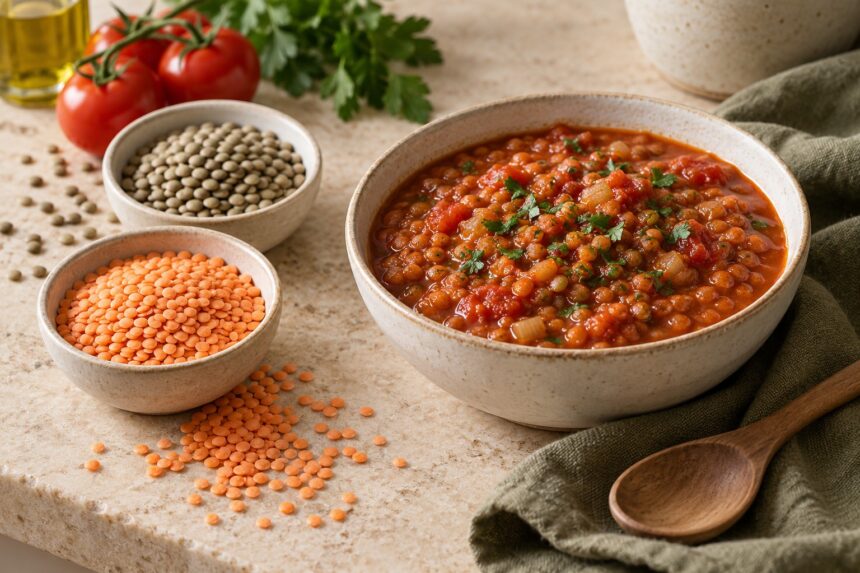
Split red lentils soften readily and suit a thick, spoonable soup. Whole green or brown lentils are better when you want separate pieces. That distinction matters more in an everyday kitchen than claims that one colour is the healthiest. A packet that looks attractive but cooks into the wrong texture can make a good ingredient seem disappointing.
Check dried lentils for small stones or other debris and rinse them. Follow the packet’s cooking instructions, allowing enough time for tenderness. For a first attempt, cook them separately from a complicated sauce so you can judge the result easily. Ready-cooked lentils are also useful. Compare salt levels if relevant, but do not dismiss a convenient packet or can simply because it saves work.
A flexible red lentil supper
For an uncomplicated meal, soften chopped onion and carrot in a little oil. Add rinsed red lentils, water or stock, and the seasonings you enjoy. Simmer according to the lentil packet, stirring and adding liquid as necessary until the texture is soft. Add tomatoes or greens to suit your taste, and finish with lemon after cooking. Serve with bread, rice, or another staple rather than treating the soup as a restrictive replacement for all carbohydrate.
This is a framework, not a medically calibrated recipe. Make it thicker for a stew or thinner for soup. Use ginger and cumin one evening, or thyme and black pepper another. If a household member dislikes visible vegetables, chop them more finely. The purpose is to make lentils adaptable enough to remain in your routine after the initial enthusiasm disappears.
Fibre, digestion, and getting comfortable
People sometimes try a very large bowl of lentils, become bloated, and conclude that pulses do not suit them. A gentler experiment is a smaller serving alongside familiar foods, repeated according to tolerance. Cooking until tender and adjusting portion size may help. Your digestive comfort matters more than matching a serving photographed on social media.
Persistent symptoms are different from a little temporary gas. People with irritable bowel syndrome may need individual guidance about portions and preparation, especially during a structured dietary trial. Do not keep increasing lentils to “train the gut” through significant pain. A dietitian can help distinguish food tolerance from a needlessly restrictive rule that excludes an entire food group.

Useful health claims, and claims to leave behind
Research on pulses supports their place in a heart-conscious eating pattern, but studies do not always isolate lentils from beans or chickpeas. The Nutrition Source discussion of legumes and pulses is useful for this broader context. The strongest everyday case is their combination of fibre and protein and their ability to replace some foods higher in saturated fat. “Lentils reverse diabetes” goes well beyond that evidence.
The same caution applies to weight loss. A lentil dish can be filling, but the overall meal still matters. Large amounts of oil, rich sauces, or oversized servings change its energy content. Conversely, deliberately under-eating because a meal looks healthy can leave you unsatisfied. Build a portion that works for your circumstances rather than assigning moral value to ingredients.
Make the habit survive a busy week
Keep one quick-cooking variety and one ready-cooked option available. Label cooked leftovers, refrigerate them promptly, and freeze portions you will not use soon. Plan two different meals from one batch so that repetition does not become boredom: a warm stew one day and a vegetable-filled wrap another. The most meaningful benefit of lentils may be that they make a nutritious meal possible on an ordinary, inconvenient Tuesday.
General nutrition information; not personalised medical advice. Sources checked on 15 September 2026.