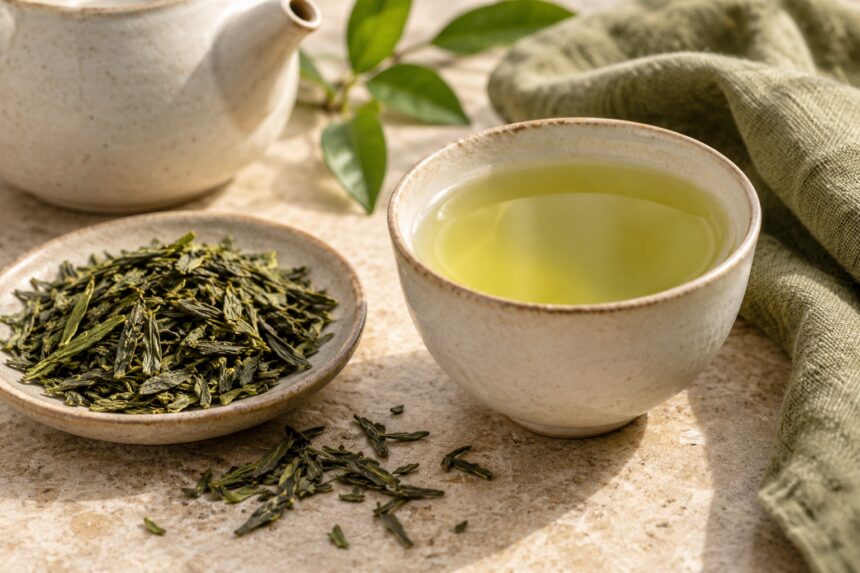
Green tea can be a pleasant pause in a busy day: a warm mug in the morning or a cooled drink with lunch. It is also surrounded by claims about fat burning, detoxification, cancer prevention, and longevity. These promises often merge ordinary brewed tea with concentrated extracts, even though the two are very different exposures. A practical guide needs to separate what is enjoyable and plausible from what has not been established.
The most straightforward benefit may be the least dramatic. Unsweetened green tea can replace a sugary drink for someone who enjoys its flavour. That is a concrete change in an everyday routine. It does not require believing that tea will undo an otherwise unbalanced diet or that a particular brand has special cleansing properties. The details of preparation and caffeine tolerance matter more than the marketing language.
What green tea contains
Green tea contains plant compounds called catechins, as well as caffeine unless sufficiently removed during processing. The NCCIH overview of green tea reviews research on tea and extracts, including limited effects on some cardiovascular risk markers and uncertain or inconsistent findings for other outcomes. Much research uses extracts, so results cannot automatically be assigned to an ordinary cup.
For example, a modest change in cholesterol in a study is not the same as proof that drinking tea prevents heart attacks. Likewise, investigations of cancer outcomes do not establish green tea as a cancer treatment. It is sensible to enjoy the beverage while keeping expectations specific. A food or drink does not have to cure disease to be worth including.
The useful swap is often the main story
Imagine replacing a regularly sweetened afternoon drink with green tea that you enjoy without sugar. The advantage comes partly from what the tea replaces. Adding a large sweetened tea alongside the usual drinks is a different change. Product names such as “green tea cooler” do not tell you how much sugar or tea is actually in the serving.
For bottled drinks, read the ingredients and nutrition label. At home, try the tea plain before adding anything. If you prefer some sweetness, notice the amount rather than assuming it disappears nutritionally because the base is tea. You can also choose water on some days. There is no obligation to drink green tea if another unsweetened option suits you better.
Brew for flavour, not maximum bitterness
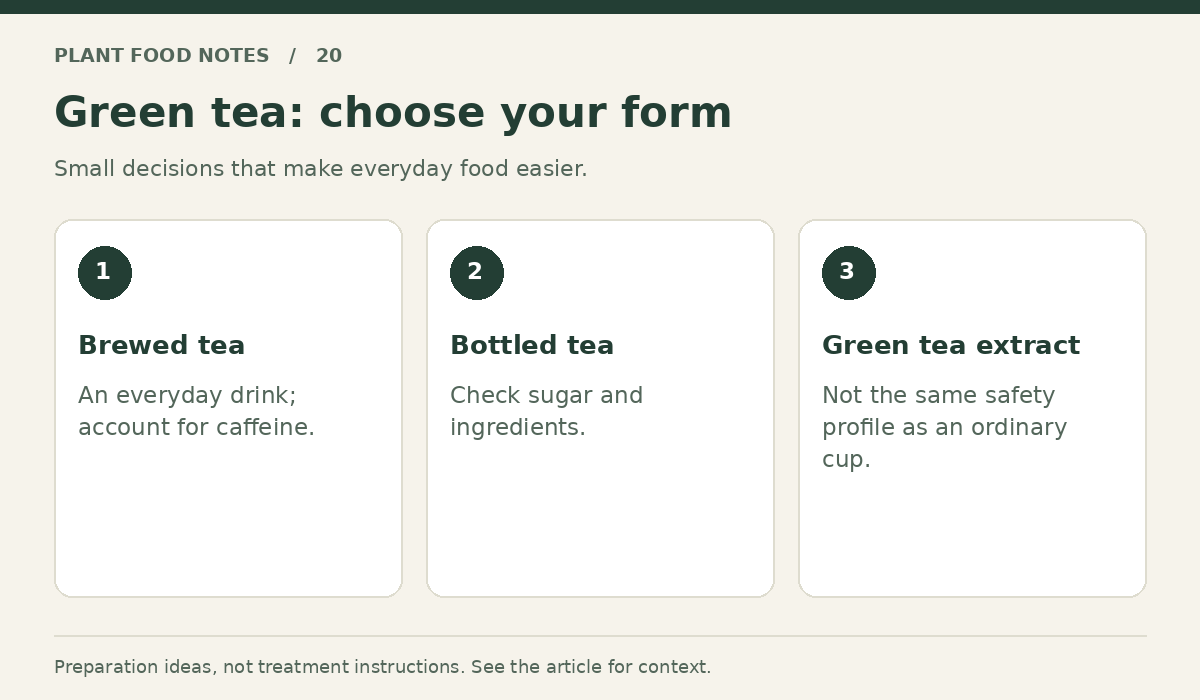
Tea varies, so the packet’s brewing directions are a good starting point. Very hot water or a long steep can produce a bitter result that encourages more sweetener. Use the suggested water temperature and time, then adjust gradually for your own preference. A milder cup is not a failure, and bitterness is not a reliable measure of a drink’s health value.
If preparing iced tea, brew according to the product directions, cool it safely, and refrigerate rather than leaving it warm for an extended period. Make an amount you can use promptly. A clean bottle and ordinary food hygiene matter more than an elaborate infusion ritual. Avoid presenting homemade drinks as shelf-stable products when they have not been prepared for that purpose.
Caffeine should fit your day
The caffeine in green tea can be relevant if you are sensitive to it, have difficulty sleeping, or consume several other caffeinated products. Cup size, tea type, and preparation vary, so a single universal caffeine figure is not a dependable guide to every mug. Pay attention to the product information and your total intake rather than considering tea in isolation.
The FDA guide to caffeine explains that sensitivity and appropriate intake differ among people. If an afternoon cup repeatedly interferes with sleep or makes you feel uncomfortable, try an earlier time, a smaller serving, or a suitable alternative. During pregnancy, discuss caffeine with your maternity professional rather than treating a general adult limit as personal advice.
Tea and iron deserve some timing awareness
Tea compounds can reduce absorption of non-heme iron when consumed with a meal. That issue is more relevant for someone managing low iron than for a person simply enjoying an occasional cup. The NIH iron fact sheet explains that iron absorption depends partly on what is eaten with it and that vitamin C can help with plant-source iron.
If you have iron deficiency or take an iron supplement, ask your clinician or pharmacist about timing tea around meals and medication. Do not attempt to fix low iron just by rearranging drinks; the cause still needs attention. For everyday meal planning, keeping tea between meals can be a practical option when iron absorption is a particular concern.
Extracts are not simply tea in a convenient form
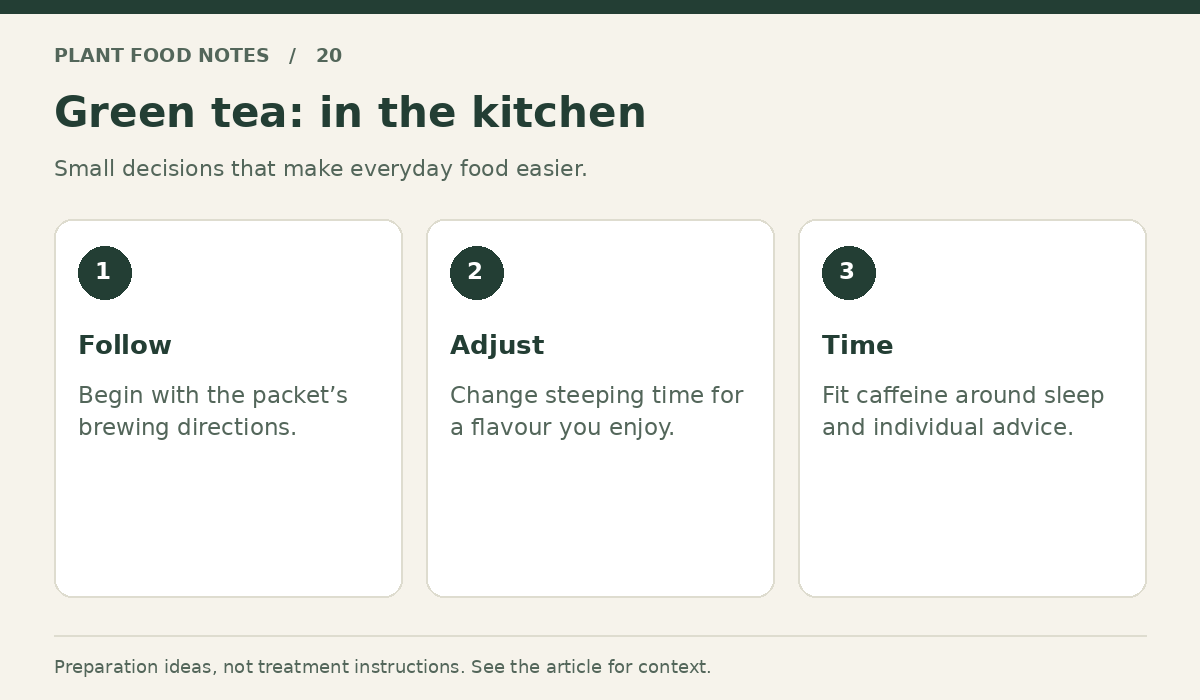
Concentrated green tea products deserve separate scrutiny. NCCIH reports liver injury associated mainly with extracts and notes potential interactions with certain medicines. A capsule marketed for weight loss does not inherit the same safety expectations as a familiar beverage. More concentrated does not mean more beneficial, and a long ingredient list can make the product harder to evaluate.
If you take regular medicines, check before starting an extract or making substantial changes in tea intake where interactions are relevant. Bring the product label to the conversation. Claims that a supplement “melts fat” or compensates for eating habits should be treated sceptically. Sustainable weight management is not established by the presence of tea leaves on a package.
Make the habit comfortable and affordable
You do not need a premium ceremonial product to explore whether you enjoy green tea. Buy a small quantity, keep it dry and protected as directed, and try it at a time that fits your caffeine tolerance. Matcha is another preparation, involving powdered leaf, rather than a reason to dismiss ordinary tea bags. Sweetened matcha drinks also need the same ingredient awareness as other café drinks.
The best routine is one you can enjoy without turning it into a health obligation. Green tea can provide variety and help replace sweeter beverages, while research on specific compounds continues. Brew it for a flavour you like, account for caffeine and individual medical needs, and keep concentrated extracts separate from the everyday cup. That is a more useful foundation than promises of cleansing or effortless weight loss.
General nutrition information; not personalised medical advice. Sources checked on 15 September 2026.