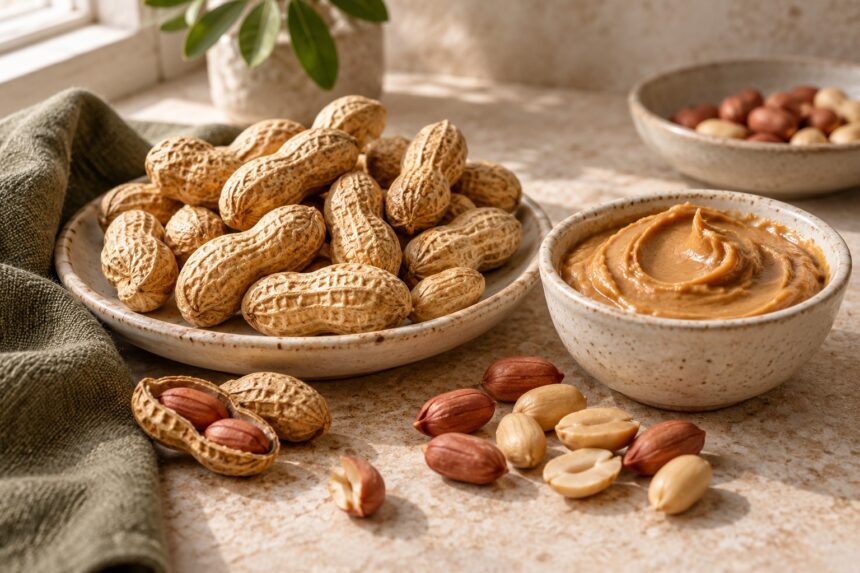
Peanuts often cost less than many tree nuts, yet they can play similar roles in meals: a crunchy snack, a sauce ingredient, or a smooth spread that makes a quick breakfast possible. Botanically they are legumes, but that classification does not prevent them from being useful alongside nuts and seeds in everyday cooking. Their accessibility is part of their value, especially when a healthier eating routine needs to survive a realistic household budget.
The familiar products are not all the same. Plain roasted peanuts, salted snack mixes, peanut butter, sweet peanut confectionery, and peanut-flavoured biscuits have different ingredient profiles. A useful health discussion starts with the actual food. Buying a product with a peanut picture on the label does not tell you how much peanut it contains or what else comes with it.
A practical source of plant protein
Peanuts contribute protein as well as mostly unsaturated fats and some fibre. They can make a snack or meal more substantial, although the amount eaten matters. A light smear of peanut butter on a large slice of bread is not a full meal by itself, while a generous portion in a sauce can contribute meaningfully to the dish’s energy and protein.
The Harvard Nutrition Source guide to protein emphasises considering the other nutrients that accompany protein foods. For peanuts, this means looking at the whole food rather than only a protein number. They need not replace all other protein sources. Variety across beans, soy foods, nuts, seeds, and any animal foods you eat can make meals easier to plan and enjoy.
The replacement matters for heart-conscious eating
Using a peanut-based spread in place of some foods rich in saturated fat can be one way to change a meal’s fat profile. Adding peanuts on top of everything without changing anything else is a different intervention. The American Heart Association’s overview of dietary fats provides the broader context for choosing unsaturated sources within an overall eating pattern.
This does not mean peanuts are a treatment for high cholesterol or that a person can stop prescribed medicine after changing breakfast. It means they are one available food when designing meals with a favourable balance of nutrients. A modest, repeated substitution is more meaningful than eating a large amount once and expecting a dramatic change in blood tests the next morning.
Read peanut butter labels without overcomplicating them
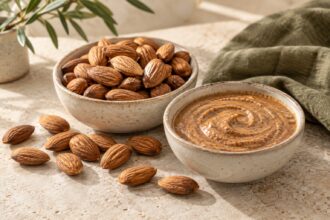
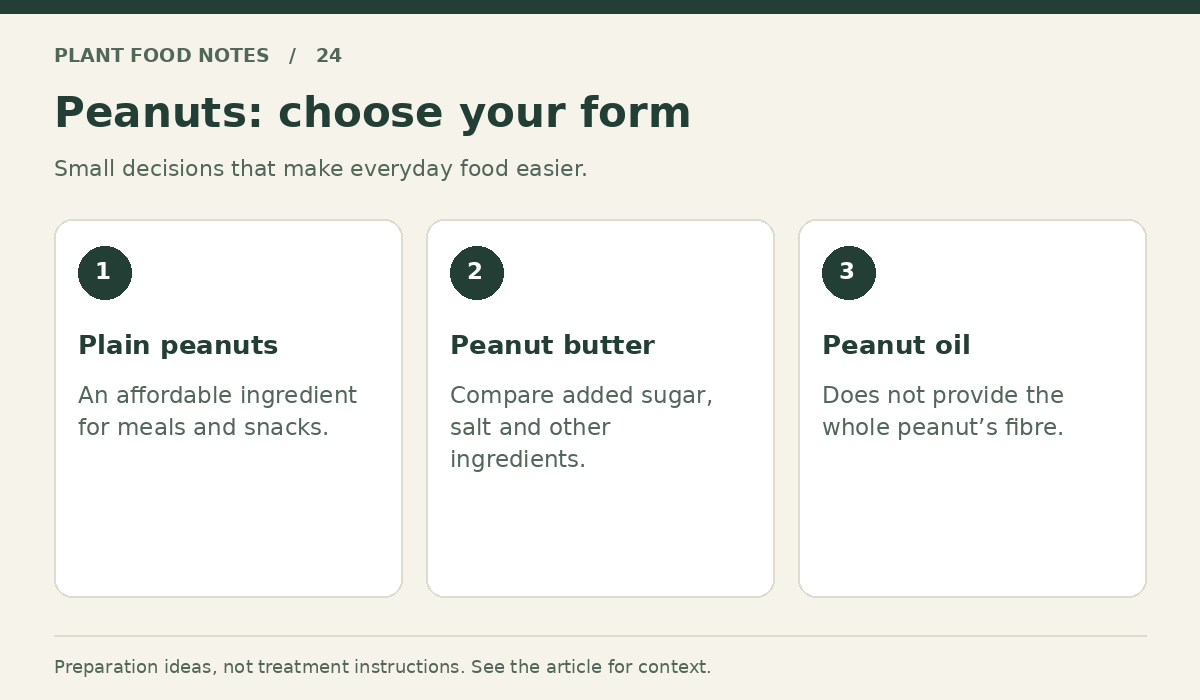
A peanut butter made mainly from peanuts gives you a straightforward ingredient for both sweet and savoury uses. Other versions may contain added sugar, salt, or oils. Read the list and compare products in the context of your needs. A jar does not need an elaborate wellness label, and a higher price does not prove that it produces better health outcomes.
Oil separation can be normal in some products; follow the instructions for stirring and storage. Use a clean utensil, especially if sharing the jar across several meals. Once peanut butter is mixed into a sauce with water or fresh ingredients, treat that sauce as prepared food requiring appropriate storage. It no longer has the same keeping characteristics as the original unopened jar.
Make a peanut sauce that supports the whole meal
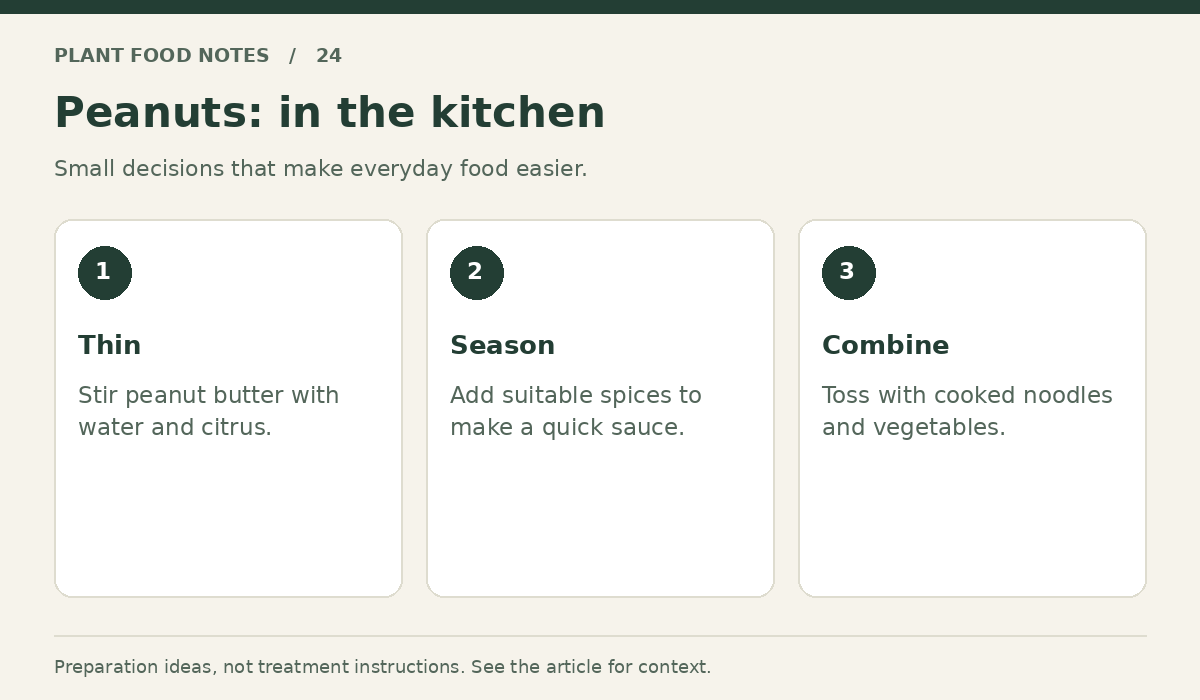
Stir a small amount of peanut butter with warm water until it reaches a pourable consistency. Add lime juice, ginger, and other seasonings you enjoy, adjusting gradually. If using a salty condiment, taste before adding more salt. The aim is a balanced sauce, not a concentrated spoonful of every strong flavour in the cupboard.
Use the sauce with vegetables and a staple such as rice or noodles, then include a suitable protein component if the overall meal needs one. Tofu, beans, or another choice can fit. The peanut sauce helps make the vegetables enjoyable, but it should not receive all the nutritional credit. The finished meal’s value comes from the combination and from eating enough to meet your needs.
Keep snacks simple and portions visible
Plain or lightly salted peanuts are easy to take to work in a small container. Pair them with fruit if you need a more substantial snack, or use them as one part of lunch. If a large bag tends to disappear while you are distracted, put an amount in a bowl first. That simple change can make eating more deliberate without turning it into a complicated calculation.
Peanuts are energy-dense, which is not inherently a disadvantage. A compact food can be useful for someone with high energy needs or a limited appetite. The same property means they should not be described as a food that can be eaten without regard to quantity. The right amount depends on the person, the meal, and what else is being eaten.
Allergy is the most important exception
Peanut allergy can be severe, and peanut butter is not safer simply because it is smooth or cooked into a sauce. The FDA advice on food allergy labels explains why ingredient checks matter. For someone with a diagnosed allergy, follow their medical plan and avoid assuming that a small amount is acceptable.
When preparing food for others, make the presence of peanuts clear and prevent cross-contact where necessary. For young children or people with swallowing difficulties, whole peanuts and thick spoonfuls of nut butter can also pose problems; use age-appropriate guidance and suitable textures. General praise for a food should never override the needs of the individual at the table.
Buy for freshness and regular use
Choose peanuts and peanut butter from a reputable supplier, inspect the product, and follow storage directions. Discard spoiled or mouldy food. A large discount pack only saves money if it remains usable and you finish it. If peanuts are mainly a cooking ingredient in your home, a plain version gives you more options than a strongly flavoured snack mix.
Peanuts deserve a place in the conversation about accessible nutrition. They provide a useful combination of plant protein, fats, and texture at a price many households can manage. Use them deliberately in snacks, spreads, or sauces, remain attentive to allergies, and judge each product on its actual ingredients. Their practical strengths do not require a miracle claim to be worthwhile.
General nutrition information; not personalised medical advice. Sources checked on 16 September 2026.