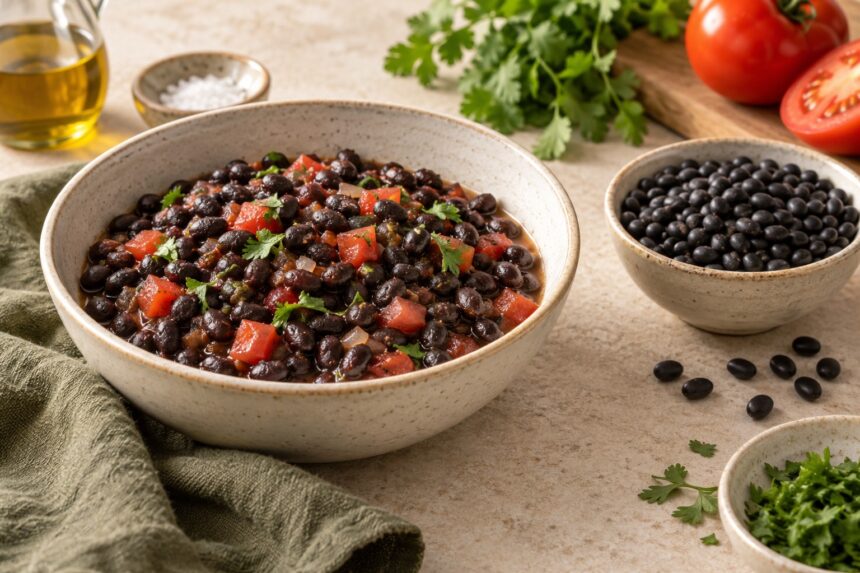
Black beans can turn rice, vegetables, or a simple soup into a more substantial meal. They are particularly useful when a kitchen needs inexpensive ingredients that store well and work across several dishes. Their appeal is not limited to a specific diet: a bean filling can sit inside a wrap, accompany a familiar staple, or replace part of the meat in a stew. That flexibility is central to their health value because it makes regular use realistic.
The phrase “eat more plants” can sound abstract. Opening a can of beans and adding it to dinner is concrete. It changes what is on the plate without requiring a complete identity change, specialist equipment, or expensive powders. The aim is to understand what beans contribute and prepare them well, not to turn every meal into a nutritional calculation.
What black beans bring to the plate
Black beans supply fibre and plant protein alongside carbohydrate and minerals. Like other pulses, they can help increase the range of plant foods in a diet. The Harvard Nutrition Source review of legumes places beans within research on dietary patterns and cardiometabolic health. Much of that evidence considers pulses together, so it cannot establish that black beans are uniquely superior to every other bean.
That distinction should make shopping easier. If black beans are unavailable or expensive, another cooked bean can fulfil a similar culinary role. Colour is interesting, but it is not a reliable ranking system for health. Choose a variety you enjoy, can afford, and know how to prepare. A dependable bag or can is more useful than a supposedly exceptional variety that is difficult to obtain.
Replacing part of a meal changes the comparison
Consider a stew that usually contains a large amount of processed sausage. Using beans for some of its substance can change the balance of fibre, saturated fat, and sodium, depending on the recipe. Adding beans to exactly the same stew without adjusting anything else is a different intervention. Both might taste good, but they should not be described as nutritionally identical.
The same principle applies to rice and beans. You do not need to remove the rice to make the beans worthwhile. Build the meal with enough beans to contribute substance, add vegetables, and choose a portion of rice that suits your appetite. If you use a salty stock cube or cured meat for flavour, account for that rather than assuming the presence of beans automatically makes the entire dish low in salt.
A reliable black bean pan supper
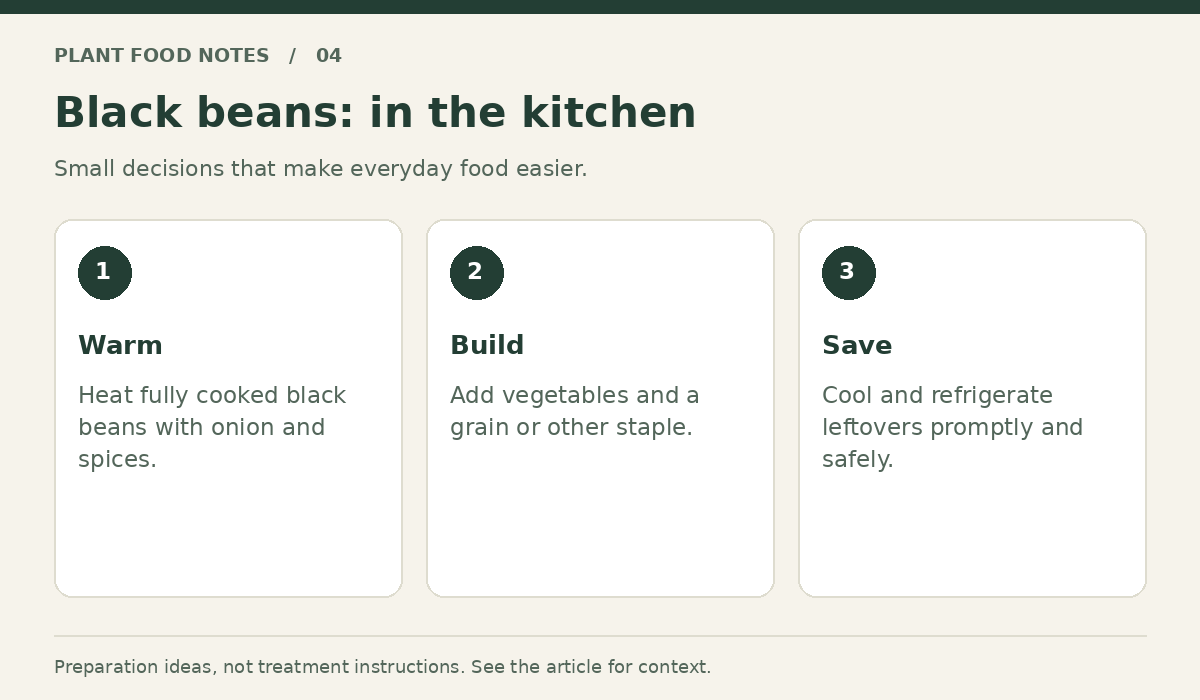
Start with cooked black beans. Warm a little oil in a pan, soften chopped onion and peppers, then add the beans with a splash of water. Season with cumin, smoked paprika, or the spices you prefer. Mash a few beans against the pan to thicken the liquid while leaving most whole. Finish with lime or lemon and chopped herbs, and serve with rice, a wrap, or a baked potato.
This approach produces a flexible base. The next day, the filling can go into a vegetable wrap or become soup with extra liquid. Keep strongly flavoured extras separate if several people share the meal. Someone can add chilli at the table while another person keeps it mild. Cooking this way reduces the chance that a nutritious ingredient becomes impractical because everybody wants a different dinner.
Digestion and fibre: a gradual approach
Beans contain carbohydrates that intestinal bacteria ferment. Gas after eating them does not prove they are harmful, but discomfort is still worth respecting. Introduce a small amount with a familiar meal and adjust according to tolerance. If you have a condition requiring a restricted diet, do not use a general article to override your personal treatment plan.
For persistent constipation, changing one ingredient may not address the whole problem. The NIDDK guidance on eating for constipation discusses fibre and fluids as part of care. Severe pain, vomiting, bleeding, or ongoing symptoms need assessment. Beans should support a diet, not delay investigation of a problem that requires medical attention.
Canned, dried, and seasoned products
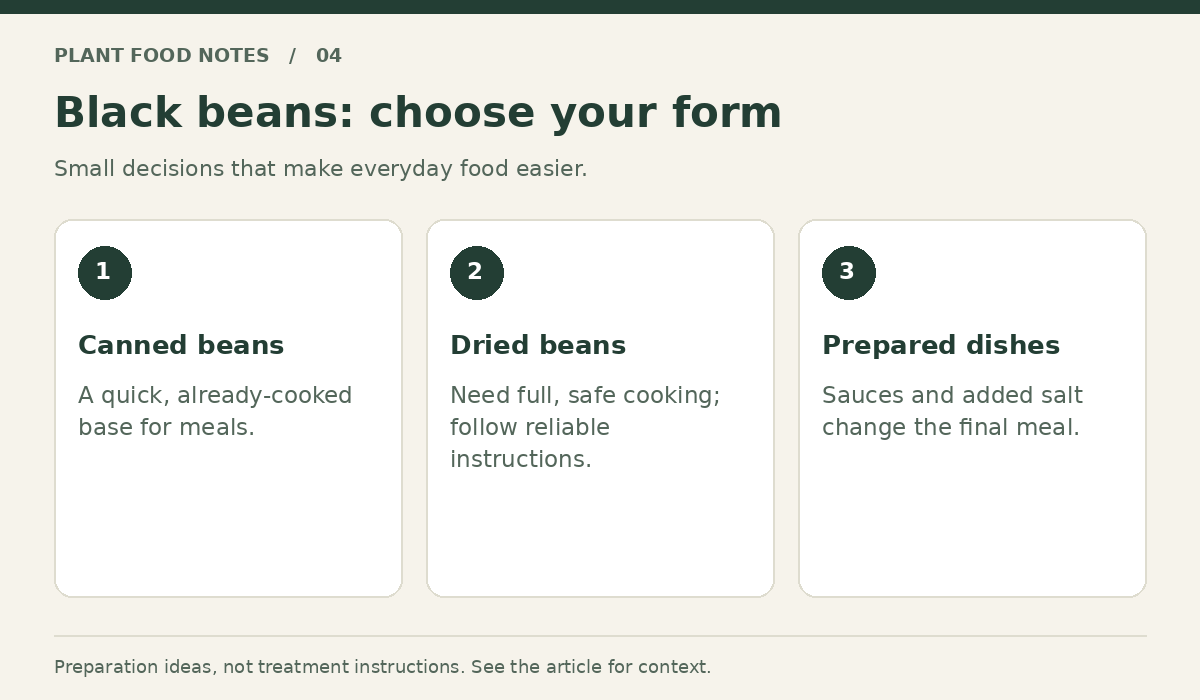
Canned beans are useful precisely because they are ready. Drain and rinse them when the recipe allows, and compare sodium on the label. Plain versions give you more control over seasoning than beans already packed in a rich sauce. That does not mean seasoned beans are forbidden; it means they are a prepared dish rather than an interchangeable substitute for plain beans.
When cooking dried beans, follow reliable instructions for the variety and appliance. Do not assume that soaking alone makes dry beans ready to eat. Different beans can need different preparation, and a slow cooker is not a universal substitute for the initial boiling specified in safety instructions. If convenience matters more than the process, choosing commercially canned beans avoids the uncertainty of an unfamiliar dry-bean method.
Protein claims need sensible proportions
A spoonful of beans sprinkled over a plate is not a large protein serving. Likewise, a “bean-based” snack may contain relatively little actual bean. Read quantities and think about the meal’s role. Someone who needs a substantial lunch may want beans as a central ingredient rather than a garnish. Other protein foods can remain part of the day according to preference and nutritional needs.
There is also no need to balance every bite into an exact amino-acid equation. A varied diet across the day is a more useful practical goal for most healthy adults. If you have increased protein requirements, a very limited diet, or difficulty eating enough, seek tailored advice. General enthusiasm for pulses should not obscure the need for adequate overall intake.
Keep the habit affordable and enjoyable
Compare price per usable portion rather than package size alone. Dried beans may offer value, but cooking time, fuel, storage space, and waste count too. A can used immediately can be better value than a huge bag that you never cook. Plan a second use for leftovers before preparing a large batch, refrigerate cooked food promptly, and freeze what you will not use soon.
Black beans are worth eating because they are nourishing and adaptable. Their realistic benefits emerge through repeated meals and useful substitutions, not a cleanse or a seven-day challenge. Find one seasoning combination you enjoy and one backup canned option. That is a more durable starting point than expecting a particular bean to solve every health concern.
General nutrition information; not personalised medical advice. Sources checked on 15 September 2026.