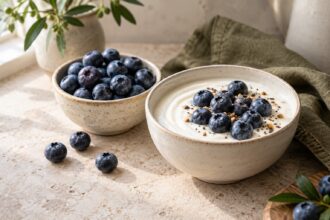
A bowl of oats earns its place at breakfast without needing a superfood label. It is inexpensive, keeps well in a cupboard, and can become either a sweet porridge or a savoury meal. Its most interesting health feature is less visible: a soluble fibre called beta-glucan. Unlike a supplement promise printed on a brightly coloured packet, the cholesterol discussion around oat beta-glucan rests on human research. The useful question is how to turn that evidence into an ordinary breakfast you enjoy often enough to repeat.
That does not mean eating oats obliges you to give up bread, rice, or foods from your own culinary tradition. Think of oats as one available ingredient, not a compulsory health ritual. A breakfast that suits your budget, appetite, and morning schedule is more valuable than a theoretically perfect bowl that you abandon after three days.
Why the cholesterol claim deserves attention
Beta-glucan forms a viscous mixture in the digestive tract. This can influence the handling of bile acids and cholesterol. A systematic review of randomised trials on oat beta-glucan examined LDL cholesterol and related cardiovascular markers. The evidence supports a modest cholesterol-lowering effect, not the claim that oatmeal clears blocked arteries. LDL is a risk factor; changing it is not the same as proving that one breakfast prevents an individual heart attack.
The Harvard Nutrition Source overview of oats also explains the distinction between soluble fibre and the oat products that contain it. A food containing a little oat flour is not necessarily a useful source of beta-glucan. An oat-flavoured biscuit, a strained oat drink, and a bowl of porridge can differ substantially. Read the actual ingredients and fibre information rather than treating the word “oat” as a guarantee.
Choose the texture you will actually eat
Steel-cut oats give a firmer, more separate texture. Rolled oats make a softer porridge more quickly. Plain quick oats are convenient when mornings are rushed. The sensible choice is not always the least processed-looking option: somebody who regularly prepares plain quick oats may get more practical benefit than somebody whose steel-cut oats remain unopened. Flavoured sachets can be useful too, but compare added sugar and serving size.
Try one change at a time. If you dislike porridge because it is gluey, use a wider pan, adjust the liquid, or stop cooking earlier. If chewing is difficult, a softer consistency may be preferable. Overnight oats have a different texture again. These are preparation preferences, not competing therapies, and there is no need to force yourself to eat a cold breakfast because an online influencer calls it optimal.

Build a bowl rather than a sugar delivery system
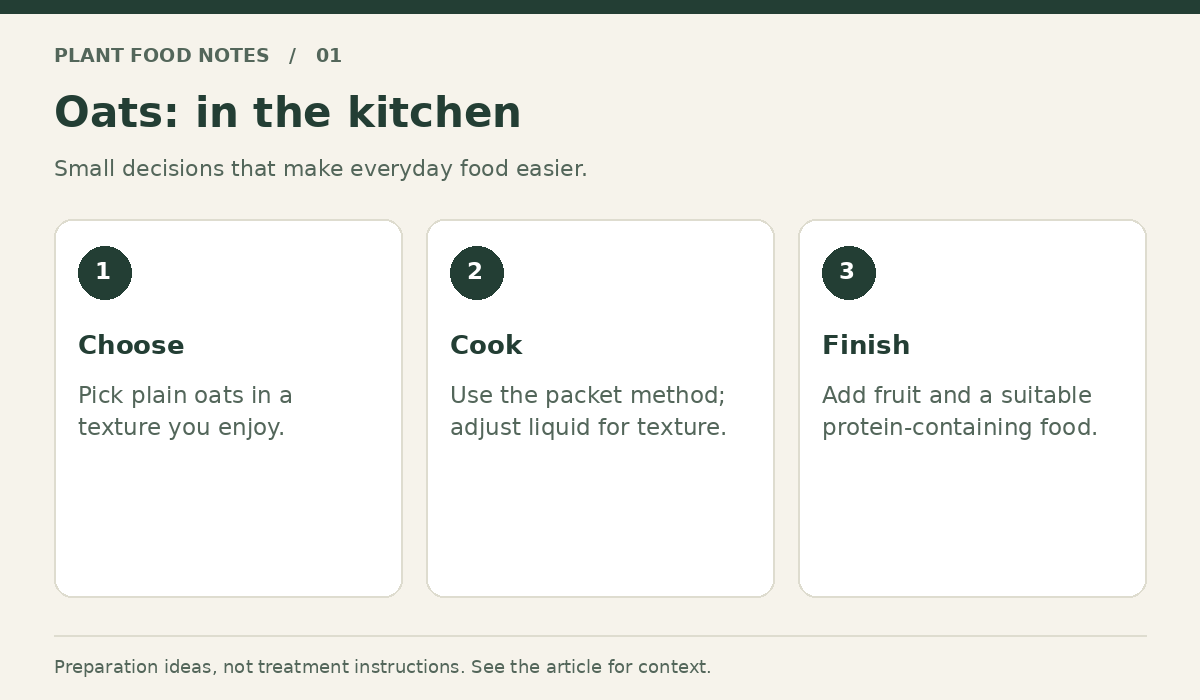
Begin with a portion that matches your appetite and the packet’s preparation directions. Add milk or a suitable fortified alternative if you want a creamier bowl. Then choose a fruit and a source of additional protein or fat. For example, try pear with plain yogurt, or banana with a little peanut butter. Adjust the quantities to make a satisfying meal rather than piling on every fashionable topping.
For a savoury version, cook the oats with water, stir in cooked vegetables, and finish with herbs and an egg or tofu. Leftover roasted carrots, peas, or mushrooms work particularly well. This is useful for people who find sweet breakfasts unappealing. It also moves oats beyond breakfast: a small savoury bowl can be a quick lunch when there is little time to cook.
Fullness and blood sugar need context
A substantial bowl may keep you satisfied longer than a small, low-fibre snack, but fullness is personal. The amount you eat, the accompanying protein, your activity, and the time until your next meal all matter. Oats do not switch off appetite, and feeling hungry later is not evidence that you prepared them incorrectly. If breakfast leaves you hungry within an hour, review the whole meal before buying a new supplement.
Oats contain carbohydrate. A person managing diabetes should not interpret “whole grain” as “unlimited.” Use the carbohydrate information for the portion you actually prepare, including fruit, milk, honey, or syrups. Continue the monitoring and meal-planning approach agreed with your healthcare team. A food can be nutritious while still affecting blood glucose; these are compatible facts, not a contradiction.
A practical shopping comparison
Imagine two products on the same shelf. One is a large bag of plain rolled oats. The other is a small granola packet advertising ancient grains and natural sweetness. Compare price per weight, fibre, added sugar, and the portion you would realistically eat. Granola may be enjoyable, but its oil, sweetener, and dried fruit make it a different product. There is no reason to pay more solely for health-oriented language.
You can also reduce waste by keeping a small jar of oats near the cooking area and storing the remaining bag sealed. Put the cooking instructions somewhere visible until the proportions become familiar. If several people share a kitchen, make a plain base and let each person add toppings. That avoids preparing multiple breakfasts and makes the habit easier to maintain.
When extra care matters
People with coeliac disease should choose oats specifically labelled gluten-free and follow their clinician’s advice about including them. Oats may be contaminated with wheat, barley, or rye during production. A small number of people also have difficulty tolerating oats themselves. If you develop persistent symptoms, investigate the cause rather than assuming that increasing fibre must always feel uncomfortable.
Introducing a much larger amount of fibre suddenly can bring bloating. Start with a manageable serving and drink normally throughout the day, following any medical fluid restriction you have. Persistent abdominal pain, bleeding, or unexplained weight loss deserves medical attention. Oatmeal is a food, not a diagnostic test or a substitute for prescribed cholesterol treatment.
Your first week with oats
Choose two preparations: one that takes only minutes and one that feels like a leisurely meal. Keep the base simple enough that you can notice whether the texture and portion suit you. After a week, ask practical questions: did you enjoy it, did it fit the morning, and did you buy ingredients you actually used? Those answers help create a lasting routine. Any measurable cholesterol benefit belongs within a broader eating pattern and should be assessed through appropriate testing, not through how virtuous breakfast feels.
General nutrition information; not personalised medical advice. Sources checked on 15 September 2026.