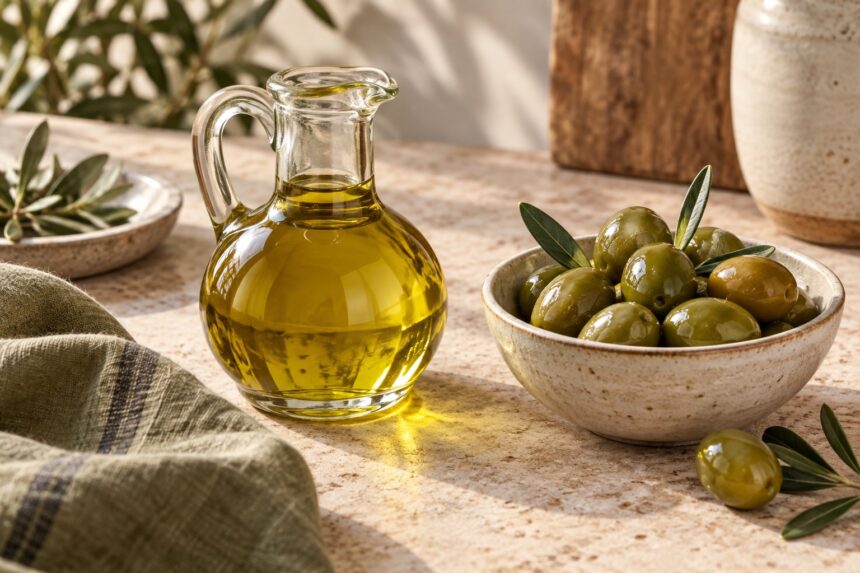
Olive oil is often discussed as if health comes from swallowing it separately each morning. In everyday cooking, its more useful role is as an ingredient: dressing vegetables, helping prepare a meal, or replacing some butter or other fats. That context matters. An oil added to an unchanged diet is a different choice from an oil used in place of a food higher in saturated fat.
Extra-virgin olive oil also offers flavour. A peppery or fruity oil can make a plain bean dish or a plate of vegetables more appealing. Enjoyment is not a trivial bonus here. An ingredient that helps you eat and enjoy a varied meal can support a useful habit even when no immediate effect is visible on a health tracker.
What the Mediterranean-diet evidence shows
The revised PREDIMED report published in 2018 studied people in Spain at high cardiovascular risk. Mediterranean dietary programmes supplemented with extra-virgin olive oil or nuts had fewer major cardiovascular events than the comparison programme. The report was revised after problems with some original allocation procedures, an important detail when discussing the study honestly.
This was evidence about supported dietary programmes, not a trial showing that an olive-oil shot alone prevents disease. Participants received dietary advice, and the findings should not be interpreted as permission to disregard the rest of the plate. Nor do results in an older, higher-risk population give every reader a personal percentage reduction in risk. The most defensible lesson concerns an overall pattern in which olive oil can play a role.
Why replacing a fat is different from adding one
Olive oil is mostly unsaturated fat. Replacing some saturated fat with unsaturated sources is a familiar heart-conscious dietary strategy. The American Heart Association’s explanation of dietary fats provides a broader framework. It is the type of fat and the food being replaced that make the comparison meaningful, rather than the simple idea that more oil must be better.
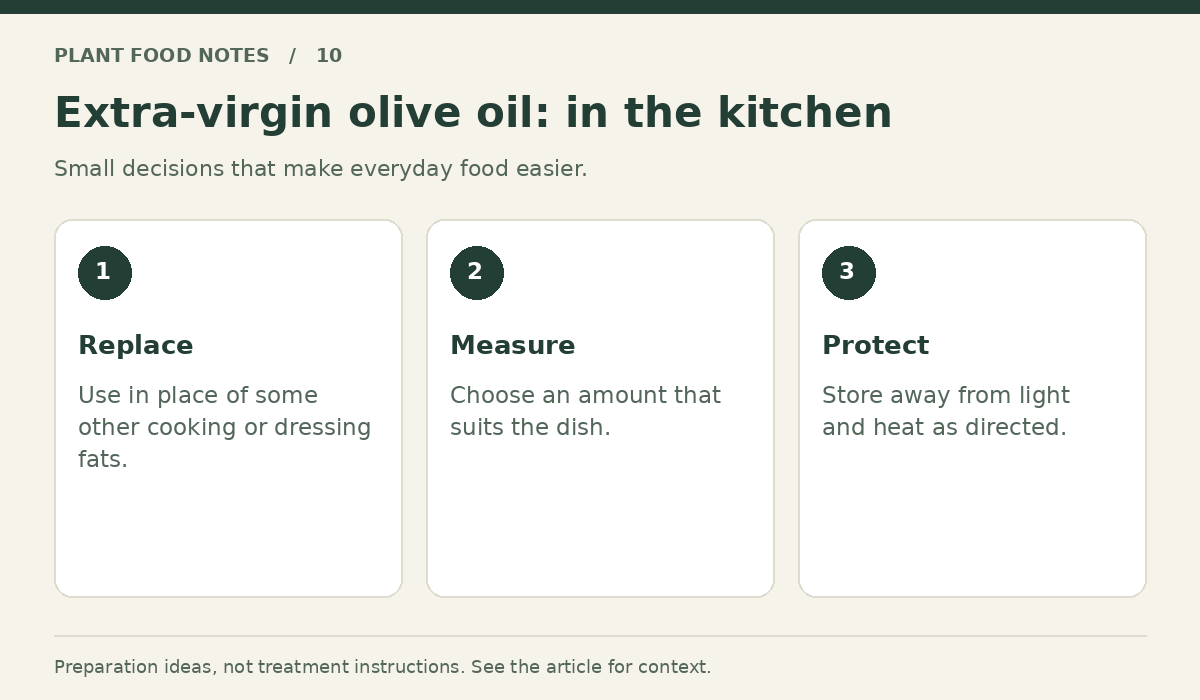
For example, you might use a small amount of olive oil and herbs to finish vegetables that you normally serve with a large amount of butter. That changes the recipe. Pouring olive oil onto the same butter-rich dish changes it differently. Neither scenario can be understood from the name of the oil alone, so be wary of articles that ignore quantities and comparisons.
A useful dressing is easy to repeat
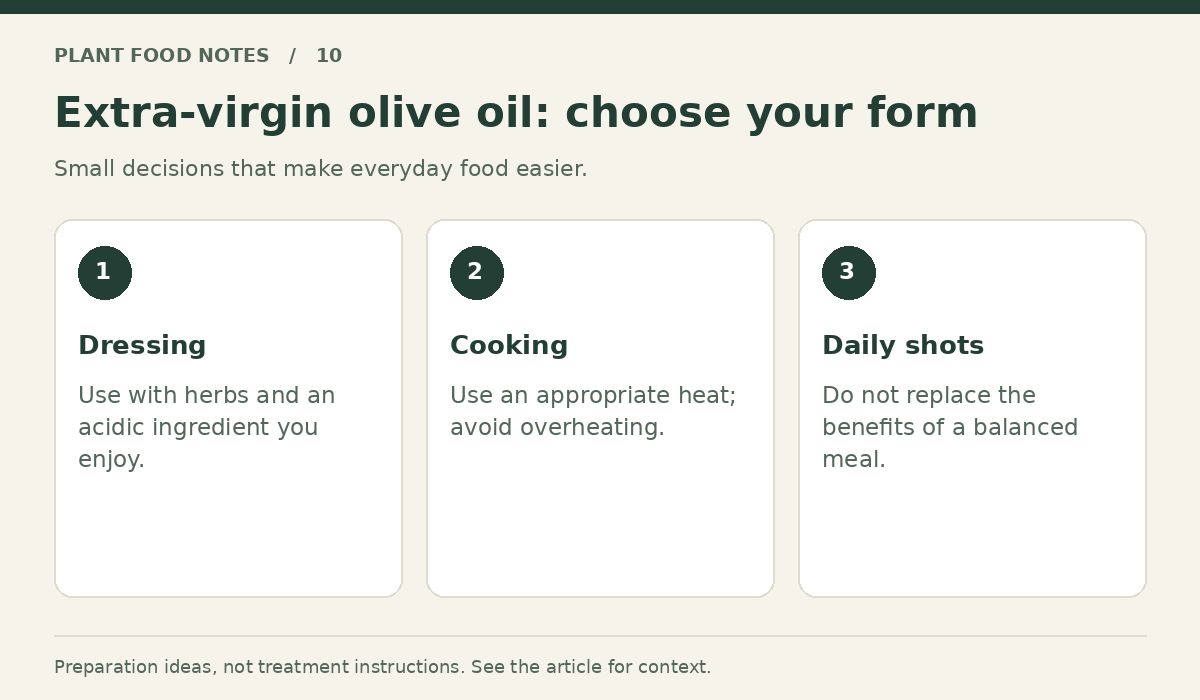
Mix olive oil with lemon juice or vinegar, then add herbs, mustard if you like it, and seasoning to taste. Start with a small quantity and adjust the sharpness. You do not need an exact “therapeutic ratio.” The aim is a dressing that coats the food and makes it enjoyable, not a pool of oil left at the bottom of the bowl.
Use the dressing on beans, cooked grains, or vegetables, and add a protein food or staple as appropriate. Keeping a basic version in your routine can reduce dependence on buying a different bottle of sauce for every meal. If you add fresh ingredients, refrigerate appropriately and avoid improvising long-term storage of fresh garlic or herbs submerged in oil.
Can you cook with extra-virgin olive oil?
Yes, it can be used in ordinary cooking. The practical approach is to match the method to the food and avoid overheating any oil until it smokes heavily. There is no need to reserve a pleasant oil exclusively for cold salads if a little helps you sauté vegetables or prepare a familiar dish. Follow the recipe and manage the heat rather than treating one smoke-point number as the complete story.
Flavour and cost may guide which bottle you use. A strongly flavoured oil can be especially noticeable in a finishing drizzle, while a milder one may suit a cooked dish. This is a kitchen preference, not a moral hierarchy. You do not have to buy the most expensive bottle on the shelf to prepare a nutritious meal.
Buy for freshness and actual use
Choose a package size that you can use sensibly and store it away from heat and light. Keeping a decorative bottle beside a hot cooker may be convenient but is not ideal for maintaining quality. Close the bottle after use and follow storage guidance. If you cook infrequently, a smaller bottle can be a better purchase than a large container that sits open for a long time.
Read the label carefully. Extra-virgin olive oil and blends containing olive oil are not necessarily the same product. Packaging language can be elaborate, but the ingredient declaration and product category are useful starting points. Avoid judging quality solely from colour; colour alone does not tell you how an oil will taste or how it has been handled.
The daily-shot trend misses the main opportunity
There is no requirement to drink oil on an empty stomach to make it beneficial. A shot may be unpleasant, adds energy, and separates the ingredient from the vegetables, pulses, and other foods that make a meal useful. If you enjoy olive oil, using it in food is a more practical way to give it a clear purpose.
Claims that oil “flushes the liver” or removes toxins should raise doubts. Your liver and kidneys are not cleaned by a kitchen ritual. Similarly, a product marketed as a high-polyphenol cure needs evidence for its specific claim, not merely evidence that olives contain plant compounds. Food quality and medical efficacy are separate questions.
A realistic place in your kitchen
Choose one regular meal where olive oil improves flavour or replaces another fat. Keep the portion intentional and the other ingredients varied. If your budget is tight, affordable unsaturated oils can also have a place; healthful eating should not depend on buying a prestigious imported product. The broader diet matters more than owning an impressive bottle.
Olive oil is best understood as a useful ingredient within a sustainable pattern of eating. It can help make beans, vegetables, and other staples enjoyable and contribute unsaturated fat. Those are worthwhile benefits. A morning shot, a detox promise, or an exact daily ritual is not needed to give the oil value.
General nutrition information; not personalised medical advice. Sources checked on 15 September 2026.