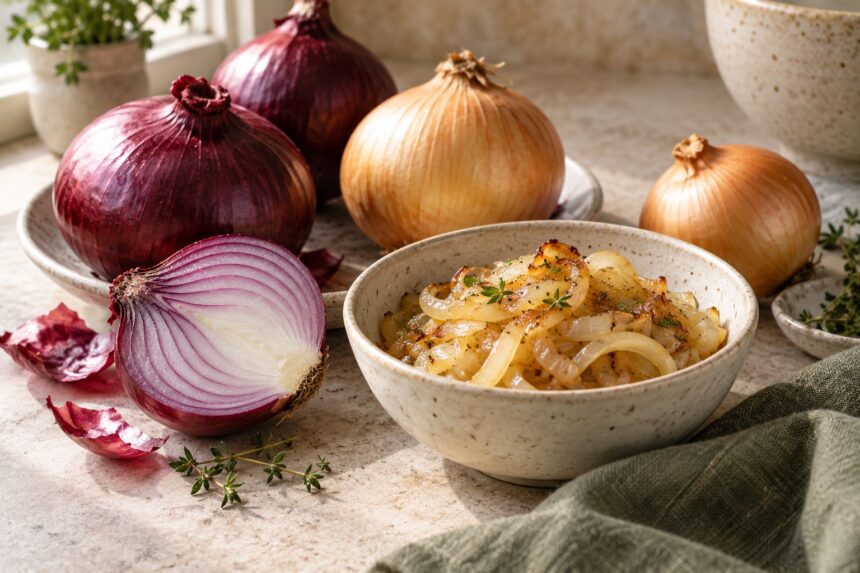
Onions are rarely the ingredient that receives credit when a meal is praised, yet they often provide the flavour on which the rest of the dish depends. They can be sharp and crisp in a salad, soft and savoury in a stew, or sweet after patient cooking. That range makes them useful for building satisfying meals from vegetables, beans, and other affordable ingredients.
- Flavour can support a better eating routine
- Fructans explain part of the digestive story
- Prebiotic does not mean more is always better
- Plant compounds are interesting, but food is not an extract
- Cook onions to the stage your dish needs
- Use raw onion deliberately
- Storage and portions should match the household
Their health reputation is more complicated than their ordinary kitchen role suggests. Onions contain fibre and plant compounds, but they are also a common source of symptoms for some people with digestive sensitivities. Calling them either a universal gut-healing food or something everyone should avoid misses the point. Their value depends on the person, the preparation, and the place they occupy in the whole meal.
Flavour can support a better eating routine
An onion base can make a pot of lentils or a vegetable sauce appealing enough to become a regular meal. That is a practical benefit even when the onion is not the main source of protein or fibre in the dish. Nutrition is not only about ranking ingredients by a laboratory measurement; it also involves whether people can prepare and enjoy the foods that meet their needs.
For example, slowly softened onions can add depth to beans without making a processed meat ingredient essential. Raw onion can provide contrast in a salad, if you enjoy it and tolerate it. Neither use needs to be described as detoxifying. The flavour has an understandable job, and the rest of the meal can provide its own nutritional contributions without assigning all the credit to one vegetable.
Fructans explain part of the digestive story
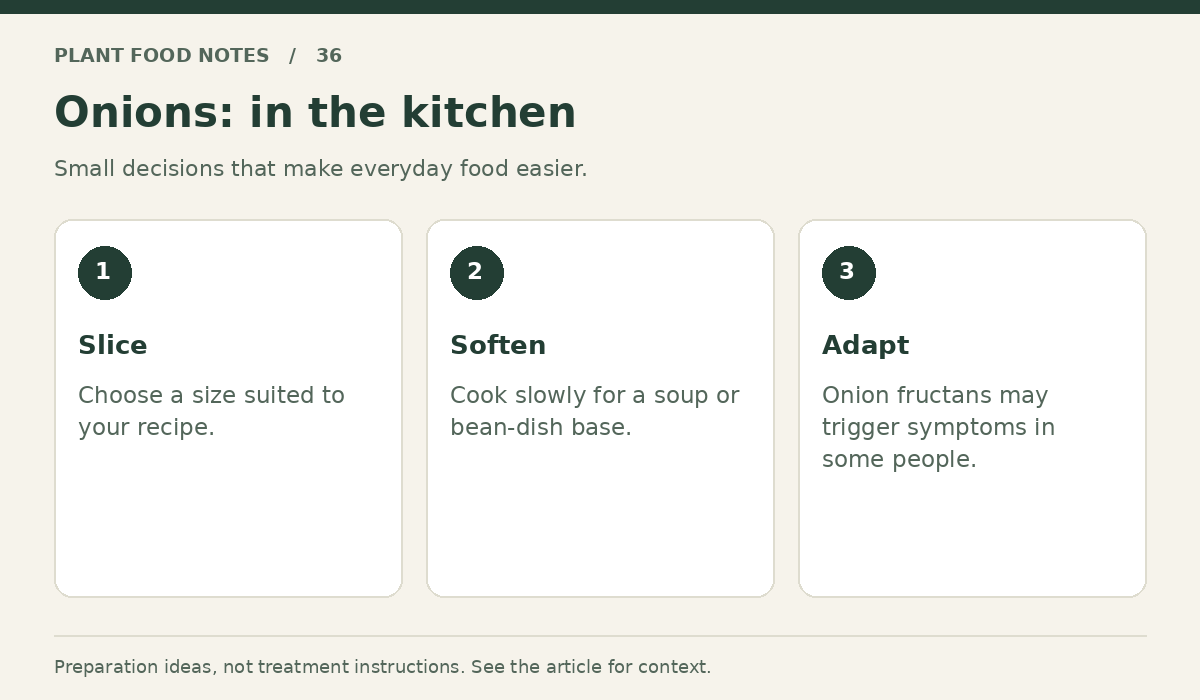
Onions contain fructans, carbohydrates that can be fermented by gut microbes. Monash University’s guide to onion, garlic, and infused oils explains why these can trigger symptoms in people with irritable bowel syndrome and FODMAP sensitivities. The same food can therefore be ordinary and comfortable for one person while causing bloating or pain for another.
It is misleading to interpret every uncomfortable symptom as proof that the food is healing the gut. It is equally misleading to infer that onions are harmful to everyone. If you notice a consistent problem, discuss it with a qualified professional. A structured approach can help identify what you tolerate without turning a temporary dietary adjustment into an unnecessarily restricted lifelong diet.
Prebiotic does not mean more is always better
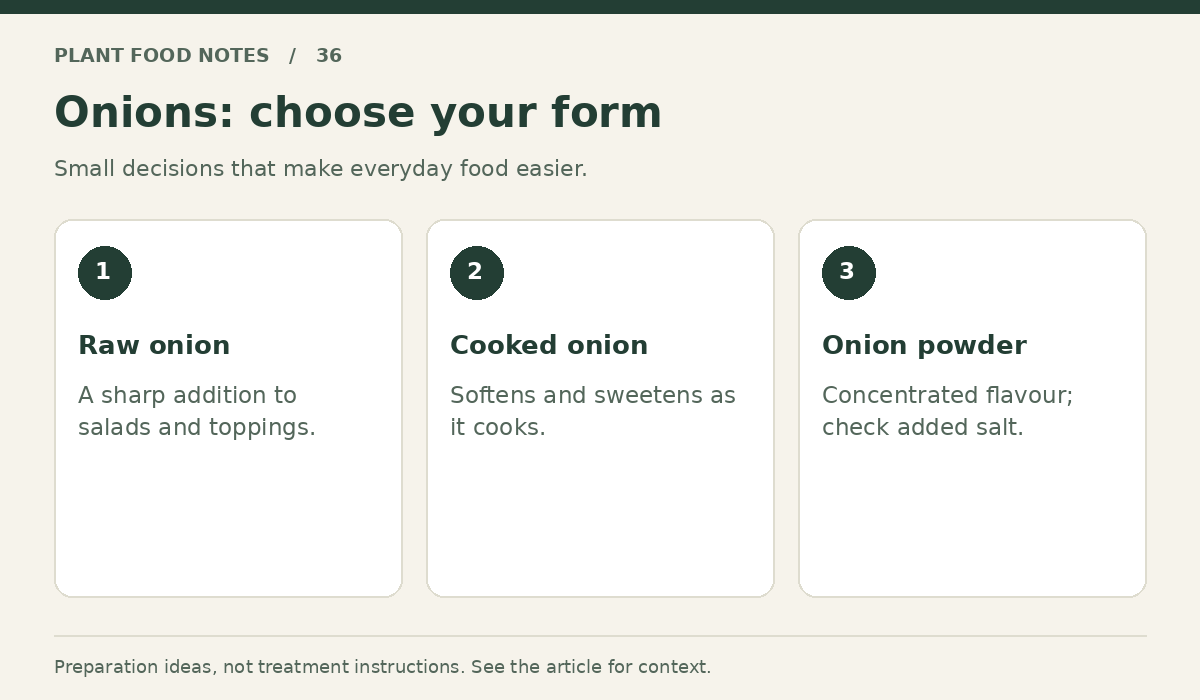
The term prebiotic is often used in discussions of fermentable food components. The NCCIH explanation of probiotics and prebiotics distinguishes prebiotics from live microorganisms and notes the complexity of gut-related effects. A broad term on a label does not tell you that a particular amount of onion will improve your symptoms or produce a specific health outcome.
For everyday eating, use portions that suit you and include a variety of plant foods where tolerated. There is no need to create an onion-heavy routine to maximise fermentation. If you already eat a varied diet, adding one food in excessive amounts is unlikely to be the most useful next step. Comfort, adequacy, and diversity are better goals than chasing a single gut-health slogan.
Plant compounds are interesting, but food is not an extract
Onions contain plant compounds, including flavonoids such as quercetin, that attract research interest. A study of an isolated compound or concentrated supplement cannot automatically be translated into a claim about a normal serving of onion. The amount, absorption, and other components differ. A list of chemicals in a food is a starting point for research, not a complete demonstration of a clinical benefit.
Be cautious with claims that onions clean the blood, cure diabetes, or prevent every infection. Those statements require evidence for the actual outcome and preparation, not an appeal to tradition or antioxidant language. You can value onions as part of a varied diet while declining to treat them as medicine. Their culinary usefulness is already considerable and does not depend on accepting inflated promises.
Cook onions to the stage your dish needs
Softening onions for a sauce is different from deeply browning them. Use a suitable pan, moderate the heat, and stir as needed so the result develops without scorching. If the recipe calls for a soft base, you do not need to keep cooking until everything is dark. Match the method to the dish rather than assuming one level of browning is always best.
When time is limited, finely chopped onion can become tender more quickly than thick slices. Frozen chopped onion may also be convenient for cooked dishes, following the product directions. Convenience is not a nutritional failure. If an accessible preparation helps you cook a balanced meal on a busy evening, it may be more useful than a fresh ingredient you have no time or energy to prepare.
Use raw onion deliberately
A little thinly sliced onion can add sharpness to a salad, sandwich, or bean dish. Start with a small amount so it complements the other ingredients. If the flavour is too strong, use a different variety, a suitable preparation method, or simply less. There is no obligation to endure raw onion because someone has claimed that cooking removes all possible benefits.
For people with digestive sensitivity, changing from raw to cooked may not solve every issue, because the relevant carbohydrates can remain. Follow individual guidance rather than assuming softness means a food is low in FODMAPs. If you need alternatives, herbs or suitable infused products can sometimes provide flavour. The aim is an enjoyable meal that fits your needs, not a test of tolerance.
Storage and portions should match the household
Keep whole onions in conditions appropriate to the variety and follow safe handling for cut or cooked portions. Do not leave prepared onion dishes sitting out unnecessarily. The FDA guide to selecting and serving produce safely provides general handling principles, including clean preparation and appropriate refrigeration for cut produce.
Onions earn their place by making many useful foods taste better, while contributing some fibre and plant compounds of their own. Their digestive effects are individual, and concentrated research products should not be confused with dinner. Learn the preparation that suits your meals, respect symptoms when they occur, and keep the health claims proportionate. An ordinary onion can be valuable without being presented as a cure.
General nutrition information; not personalised medical advice. Sources checked on 16 September 2026.