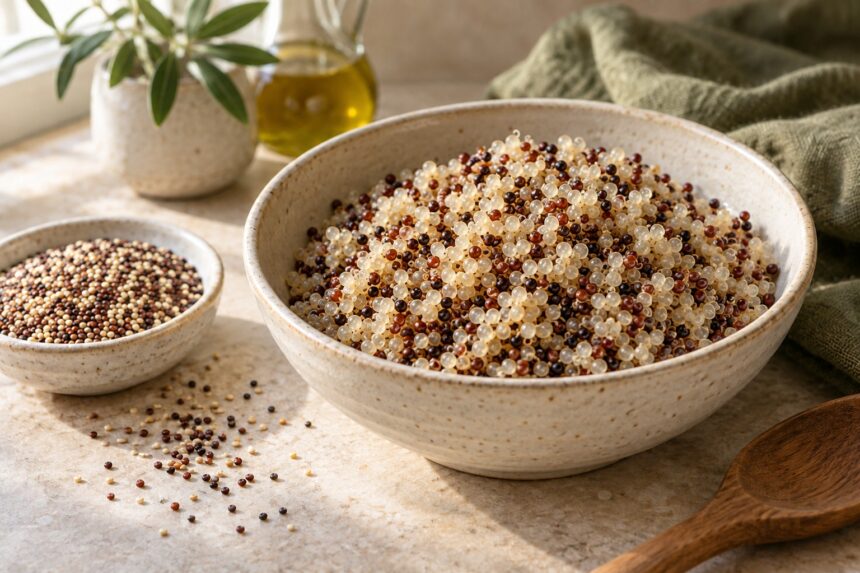
Quinoa is sometimes presented as a nutritional upgrade that everyone should make, regardless of what they already eat. That is an unnecessary burden for a small seed. Its genuine strengths are more practical: it cooks into a flexible base for meals, contributes protein and fibre, and can add variety when rice or pasta feels repetitive. It is an option worth understanding, not a compulsory replacement for familiar staples.
The difference between a satisfying quinoa meal and a disappointing one is usually in the preparation and the other ingredients. A bowl of plain cooked quinoa can seem bland or dry. Add beans, vegetables, herbs, and a suitable dressing, and it becomes a useful lunch. Starting with that complete meal prevents the ingredient’s reputation from doing more work than the actual food on the plate.
What the protein claim really means
The Harvard Nutrition Source overview of quinoa describes it as a seed used like a whole grain and notes that its protein contains all nine essential amino acids. That is useful, but the phrase complete protein does not mean a small serving meets all of a person’s protein needs. Amount matters as well as amino-acid composition.
Treat quinoa as one contributor rather than the only protein component in every meal. Beans, tofu, eggs, dairy, fish, or other foods can add substance according to your eating pattern. There is no need to make the meal rigidly plant-only unless that is your preference. The purpose is adequate, enjoyable food, not proving that one fashionable ingredient can replace an entire category of nutrition.
Fibre is part of its everyday value
Quinoa provides fibre, which contributes to the total across your diet. It can therefore be useful when it replaces a lower-fibre component of a meal. That is different from assuming any dish containing quinoa must be high in fibre overall. A small amount mixed into a product mainly made from refined flour may contribute less than the prominent label suggests.
The NIDDK guidance on food and constipation explains the role of fibre and fluids in bowel habits. Increasing fibre gradually is often more comfortable than abruptly adding large amounts. If quinoa is new to you, begin with an ordinary meal portion and consider the rest of the day instead of expecting one bowl to solve a longstanding digestive problem.
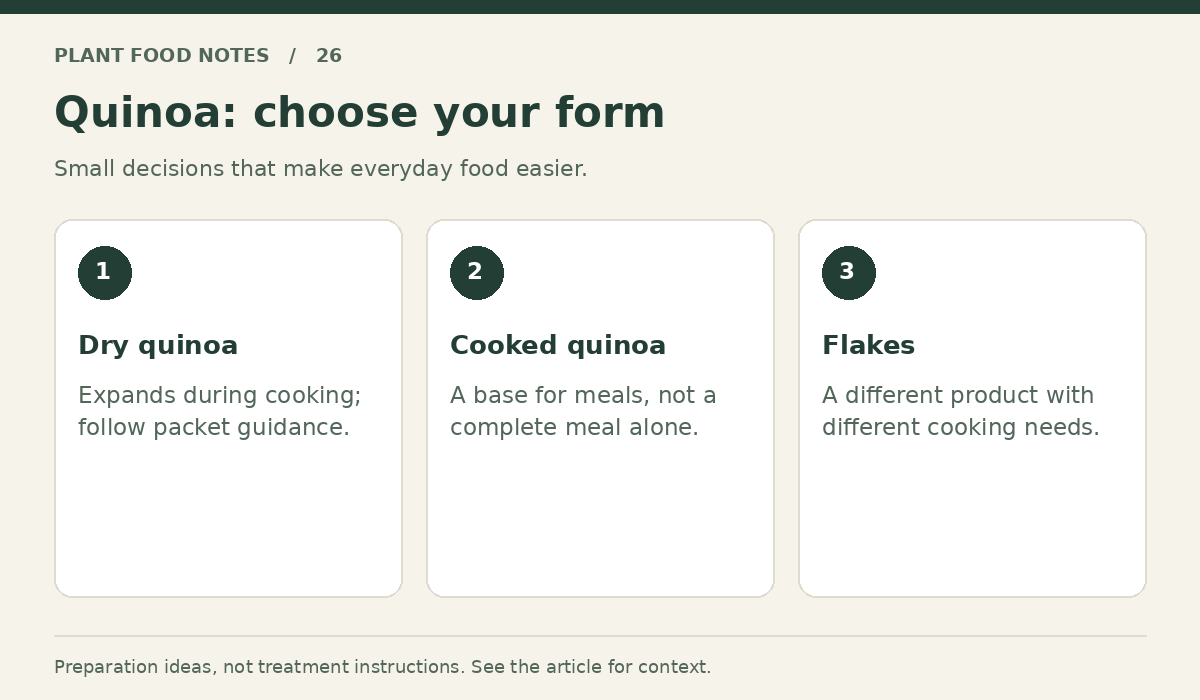
Naturally gluten-free still requires label awareness
Quinoa itself does not contain gluten. For someone with coeliac disease, however, the safety of a packaged product also depends on other ingredients and possible cross-contact. A quinoa-labelled cereal, pasta, or baking mixture can contain wheat or be processed in a way that requires attention. Read the relevant label rather than assuming the featured ingredient answers every question.
The NIDDK guide to eating with coeliac disease discusses gluten-free choices and contamination concerns. Follow individual advice if you need strict avoidance. For people without a medical reason to avoid gluten, quinoa can still be enjoyable, but gluten-free wording alone does not make a food nutritionally superior to all alternatives.
Cook for texture rather than following a photograph
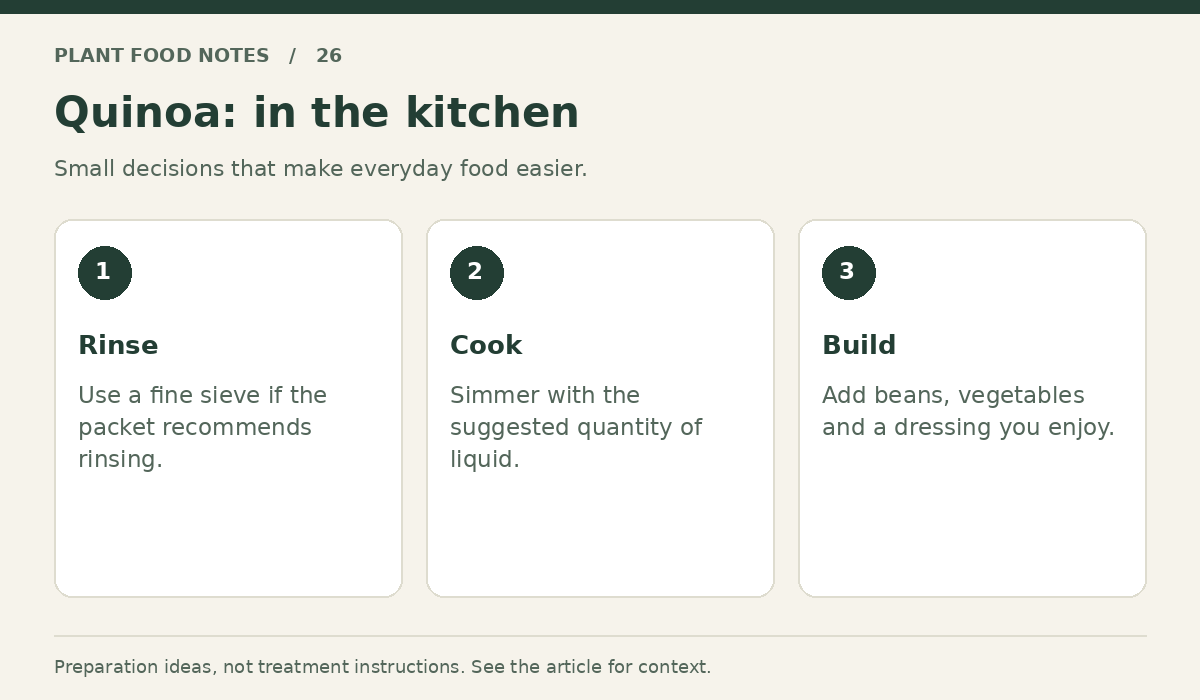
Check whether your quinoa needs rinsing, then follow the packet’s liquid ratio and cooking time. A fine sieve helps prevent the small seeds from escaping during rinsing. Once cooked, allow it to rest as directed and loosen it gently. Different products and cooking methods can produce different textures, so use the instructions as your starting point rather than applying one universal ratio to everything.
If it turns out too wet, make a note for the next batch instead of deciding that quinoa is inherently unpleasant. If it tastes bland, consider seasoning and the intended dish. Cooking in a suitable broth or adding herbs after cooking can help. The point is to find a repeatable method that fits your kitchen, not to produce perfectly separated seeds for a photograph.
Build a lunch with contrast
Combine cooked quinoa with chickpeas, chopped cucumber, roasted peppers, and parsley. Add a simple dressing and taste before adding more salt. The beans contribute substance, the vegetables provide different textures, and the dressing helps the ingredients belong together. You can change the vegetables according to price and availability without losing the basic structure of the meal.
For a warm version, use cooked vegetables and a sauce you already like. Quinoa does not require a special set of expensive ingredients. It can sit alongside leftovers or form part of a familiar family meal. Start by replacing some of a usual staple if that makes the flavour easier to introduce, rather than insisting on a complete change from the first attempt.
Cost and convenience should influence the choice
Quinoa can be more expensive than rice, oats, or other grains. That does not make those alternatives inferior. If buying quinoa would reduce your budget for vegetables, pulses, or enough food overall, it may not be the most useful choice. A nutritious diet can be built from many combinations of affordable staples, and variety does not need to be expensive.
Ready-cooked pouches can help on a busy day, but compare the ingredients and cost with a dry packet. Flavoured products may add salt or oil, which should be considered as part of the meal. There is no requirement to cook everything from scratch if convenience helps you eat regularly. Choose the format that you can use reliably, with the label providing the details.
Store cooked quinoa like other prepared food
Cook only what you can use safely, cool leftovers promptly, and refrigerate appropriately. Do not leave a large pot sitting warm for hours because the food is plant-based. Portioning can make both cooling and later use easier. Reheat and handle according to ordinary food-safety guidance, and discard leftovers if you are uncertain about how they were stored.
Quinoa’s benefits are best understood as part of a meal: a useful source of fibre and some protein, a naturally gluten-free seed where appropriately handled, and a flexible change of texture. None of those qualities requires calling it a superfood. Find a preparation you enjoy, pair it with enough other food, and keep it as one good option among several.
General nutrition information; not personalised medical advice. Sources checked on 16 September 2026.