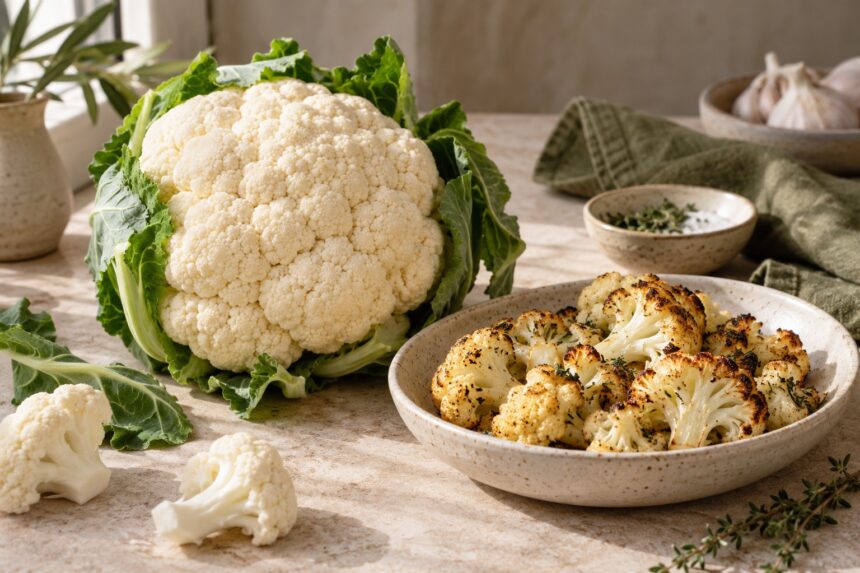
Cauliflower has been asked to do many jobs in recent years: rice, pizza crust, mash, and even a centrepiece described as a steak. Some of those preparations are enjoyable, but they can obscure the vegetable’s simpler strengths. It contributes fibre and nutrients, absorbs flavour well, and can make a meal more varied. It does not need to impersonate another food to deserve a place on the plate.
- Vitamin C and fibre are practical benefits
- Cruciferous research should be described carefully
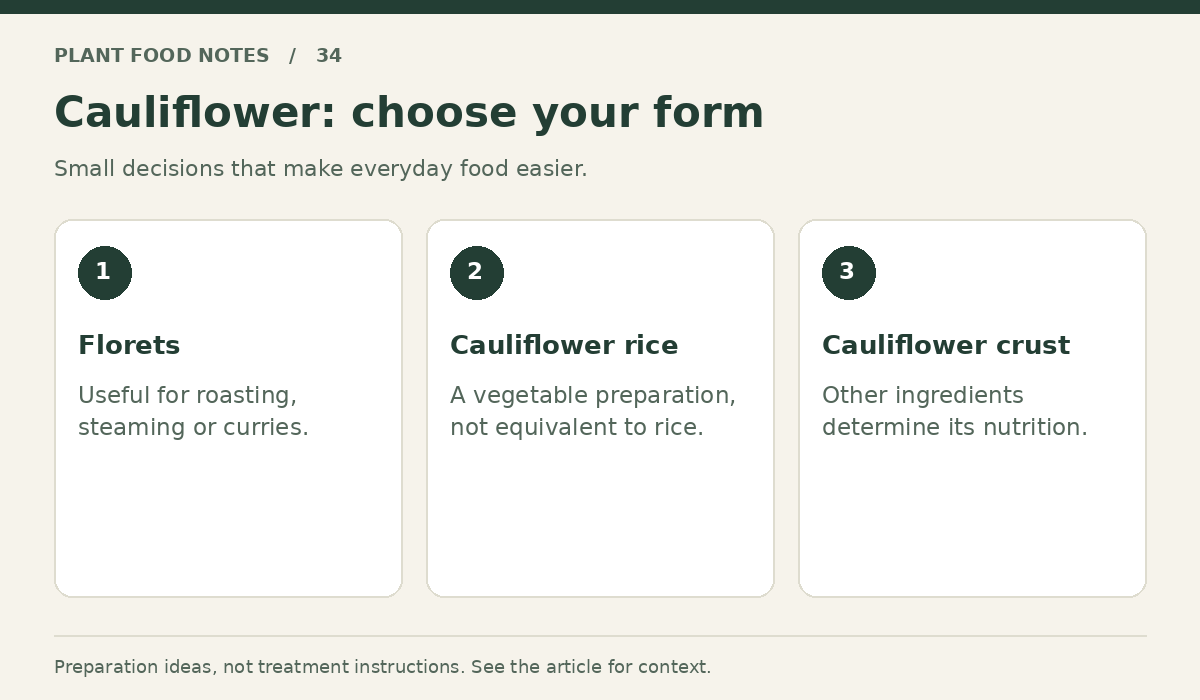
- Roast florets for a different texture
- Cauliflower rice is a vegetable preparation
- A cauliflower centrepiece still needs companions
- Packaged cauliflower foods need individual assessment
- Use the whole purchase thoughtfully
The most useful question is what role you want it to play. A roasted cauliflower side dish is different from a full dinner, and finely chopped cauliflower is nutritionally different from rice. Replacing one with the other changes the amount of carbohydrate and energy in the meal. That may suit a particular plan, but it is not automatically an improvement for every person or every situation.
Vitamin C and fibre are practical benefits
Cauliflower provides vitamin C and some fibre. The NIH vitamin C fact sheet explains why the vitamin is needed for normal functions, including collagen production and support of the immune system. A vegetable can help meet those needs without being an immune booster that prevents every cold or compensates for inadequate sleep and medical care.
Its fibre contribution fits alongside other vegetables, fruit, legumes, and whole grains. The value comes from the overall pattern rather than a huge serving of one ingredient. If cauliflower is the vegetable you find easiest to cook, that is a useful starting point. Over time, include other foods too so variety does not depend on repeatedly preparing the same white florets in different disguises.
Cruciferous research should be described carefully
Cauliflower belongs to the same broad vegetable family as cabbage and broccoli. The National Cancer Institute’s fact sheet on cruciferous vegetables describes research into their compounds while noting the limits of evidence in people. Laboratory activity is not the same as proof that eating cauliflower prevents or treats cancer.
This is a common place where nutrition headlines become overconfident. A compound can be biologically interesting without turning the food into medicine. For readers, the sensible conclusion is to include vegetables they enjoy within a varied diet, not to chase an exact cauliflower dose. If dealing with a medical diagnosis, food advice should support appropriate care rather than replace it.
Roast florets for a different texture
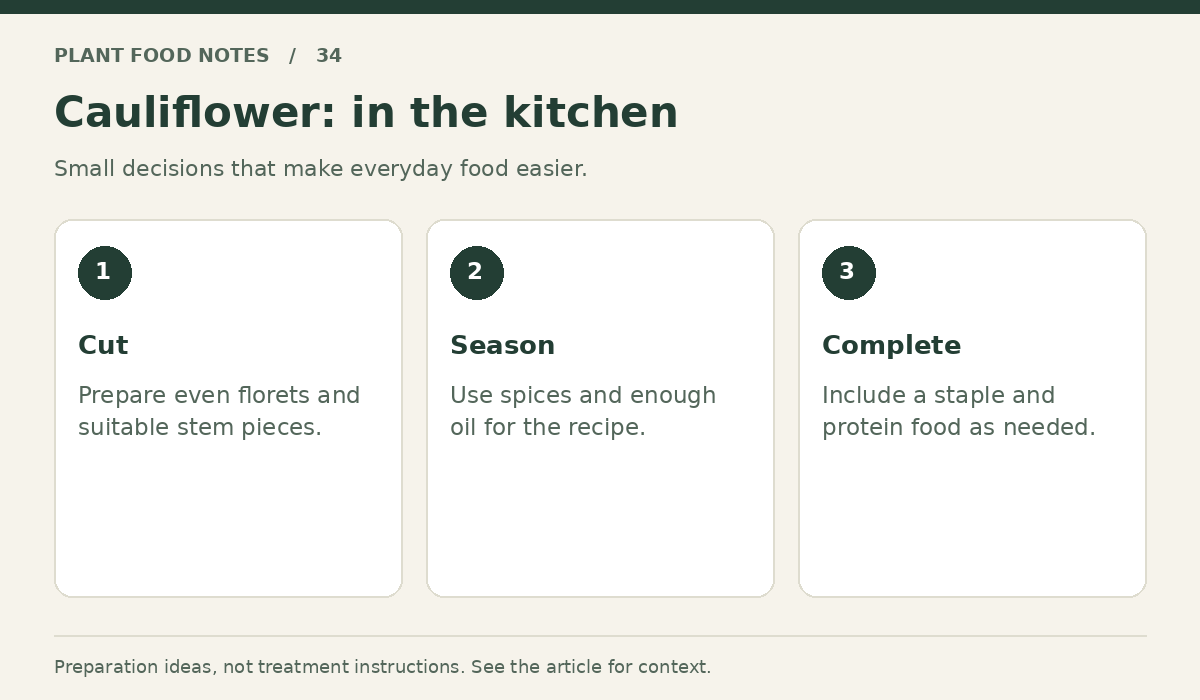
Cut the cauliflower into pieces of reasonably similar size, wash and prepare it appropriately, then use a little oil and seasonings before roasting. Leave enough space on the tray for the result you want. Pieces crowded together can cook differently from those spread out. Use a reliable recipe as a starting point and check tenderness rather than relying only on the colour of the surface.
Try cumin, mild curry spices, or herbs according to the rest of the meal. Serve the florets with beans, tofu, fish, or another suitable protein food and a staple if needed. Roasting can make cauliflower more appealing to someone who dislikes a very soft boiled texture. A preparation that tastes good is more likely to become a routine than one chosen solely for an imagined nutritional ideal.
Cauliflower rice is a vegetable preparation
Finely chopped cauliflower can be useful in a stir-fry or as part of a bowl, but it is not nutritionally identical to cooked rice. If you replace all the rice in a meal, you reduce a major source of carbohydrate and energy. Someone with high energy needs, a small appetite, or a long active day may need to account for that change elsewhere.
One option is to use cauliflower alongside rice instead of replacing it completely. Another is to enjoy it as a vegetable side and keep the staple separate. There is no universal rule. The important point is to make the choice deliberately, based on appetite and individual needs, rather than assuming that removing a familiar carbohydrate always makes a meal healthier.
A cauliflower centrepiece still needs companions
A thick roasted slice can look attractive and taste good, but calling it a steak does not give it the protein content of the food whose name it borrows. Add beans, lentils, tofu, or another suitable component if the meal otherwise lacks substance. Presentation can make vegetables appealing, but it should not hide the nutritional role of the actual ingredients.
The same principle applies to cauliflower mash. It can be a pleasant side, especially with seasoning and a texture you enjoy. If it replaces a more energy-dense food, decide whether that suits the meal. A bowl that looks full can still leave someone hungry soon afterwards. Adequacy and enjoyment are useful goals alongside adding more vegetables.
Packaged cauliflower foods need individual assessment
Pizza bases, snack products, and ready-made meals featuring cauliflower may also contain flour, cheese, oils, or other ingredients. Some use only a modest amount of the vegetable. Read the label instead of assuming the highlighted ingredient describes the entire product. A cauliflower label does not automatically make a food gluten-free, low in salt, or suitable for a particular dietary plan.
Convenience products can still be useful. The question is what they provide and whether they fit your needs, budget, and preferences. Compare them with the alternatives you would actually buy. There is little benefit in paying a premium for a health impression that is not supported by the ingredient list or the amount of vegetable in the serving.
Use the whole purchase thoughtfully
Tender stalk portions and suitable leaves can sometimes be used in cooking rather than discarded automatically. Trim tough or damaged parts and use a method appropriate to the texture. Frozen florets are another practical option when a whole head is too much; follow the packet’s cooking directions and use only the amount you need.
Cauliflower can cause digestive discomfort in some people, particularly in large portions, so adjust if necessary. Its useful place is as one adaptable vegetable among several, with fibre and vitamin C and many possible preparations. Enjoy it for what it contributes, keep meal substitutions nutritionally honest, and let the rest of the plate provide what cauliflower alone cannot.
General nutrition information; not personalised medical advice. Sources checked on 16 September 2026.