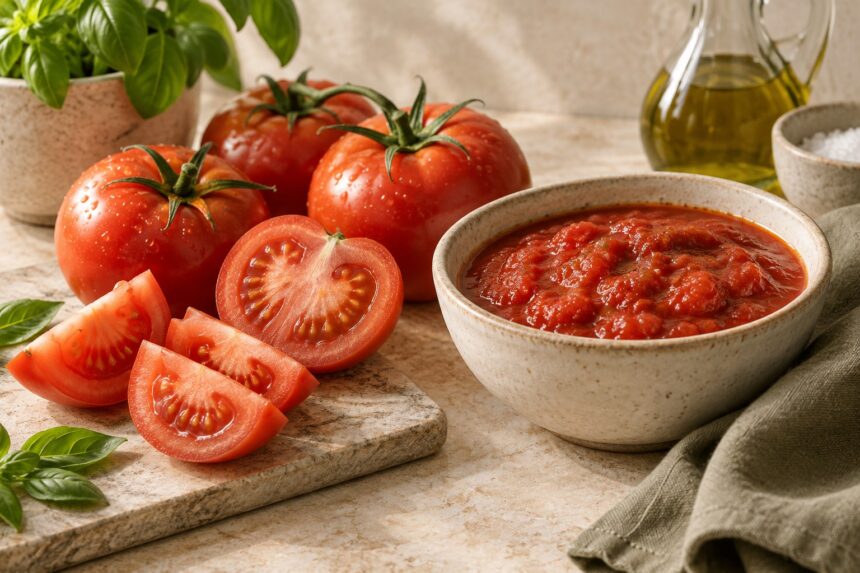
Tomatoes are often discussed through one compound, lycopene, even though their everyday value is much broader. They add acidity, moisture, colour, and savoury depth to meals. A fresh tomato can improve a sandwich; a tin of tomatoes can become the base of a bean stew. Those kitchen roles help people build varied meals, which is more useful than treating tomatoes as a narrowly targeted supplement in disguise.
- What lycopene is—and what it does not prove
- A nutrient can be interesting without becoming a prescription
- Fresh tomatoes have their own strengths
- Canned tomatoes make nutritious meals more accessible
- A sauce that supports the rest of dinner
- Reflux changes the personal calculation
- Tomato products are not interchangeable
- The benefit worth keeping
The fresh-versus-cooked debate is also less simple than it sounds. Cooking changes texture and nutrient availability in different ways. A tomato salad and a tomato sauce are both legitimate foods. You do not need to choose one permanently in order to eat well, and a processed tomato product is not automatically inferior merely because it comes in a can.
What lycopene is—and what it does not prove
Lycopene is a carotenoid pigment responsible for much of the red colour in tomatoes. Researchers have studied it in relation to several health outcomes, including prostate health. The National Cancer Institute’s review of lycopene and prostate supplements explains that findings are mixed and do not establish lycopene as a cancer treatment.
The same review notes that lycopene is more available from some processed tomato products than from raw tomatoes. This is a useful correction to the idea that processing always reduces food value. It is not a reason to assume that ketchup, soup, paste, and a homemade sauce are nutritionally identical. Sugar, salt, fat, and serving size still distinguish the products.
A nutrient can be interesting without becoming a prescription
An antioxidant mechanism in a laboratory is not proof that a food prevents disease in every person. The NCCIH discussion of antioxidant supplements explains why supplement results do not simply follow from the biology of antioxidants. Extracting and concentrating a compound changes the intervention, sometimes in important ways.
For a reader choosing dinner, the practical response is not to calculate a medicinal lycopene dose. Include tomatoes if you like them and use them in a balanced meal. For a person with prostate symptoms or a cancer diagnosis, medical assessment and treatment take priority. A sauce cannot stand in for screening discussions, diagnosis, or prescribed care.
Fresh tomatoes have their own strengths
Fresh tomatoes provide a juicy contrast to bread, grains, and legumes. Their flavour varies with variety, ripeness, storage, and season. If a large tomato tastes bland, smaller varieties or cooked preparations may suit you better. Nutrition advice is easier to follow when it acknowledges that the ingredient needs to taste good, not merely look colourful in a photograph.
For a simple salad, combine chopped tomatoes with cooked beans, herbs, and a little dressing. Add bread or another staple if needed to make a meal. This gives the tomato a clear role while beans provide substance. The result is more useful than eating a token slice beside a meal and expecting that slice to carry the whole nutritional burden.
Canned tomatoes make nutritious meals more accessible
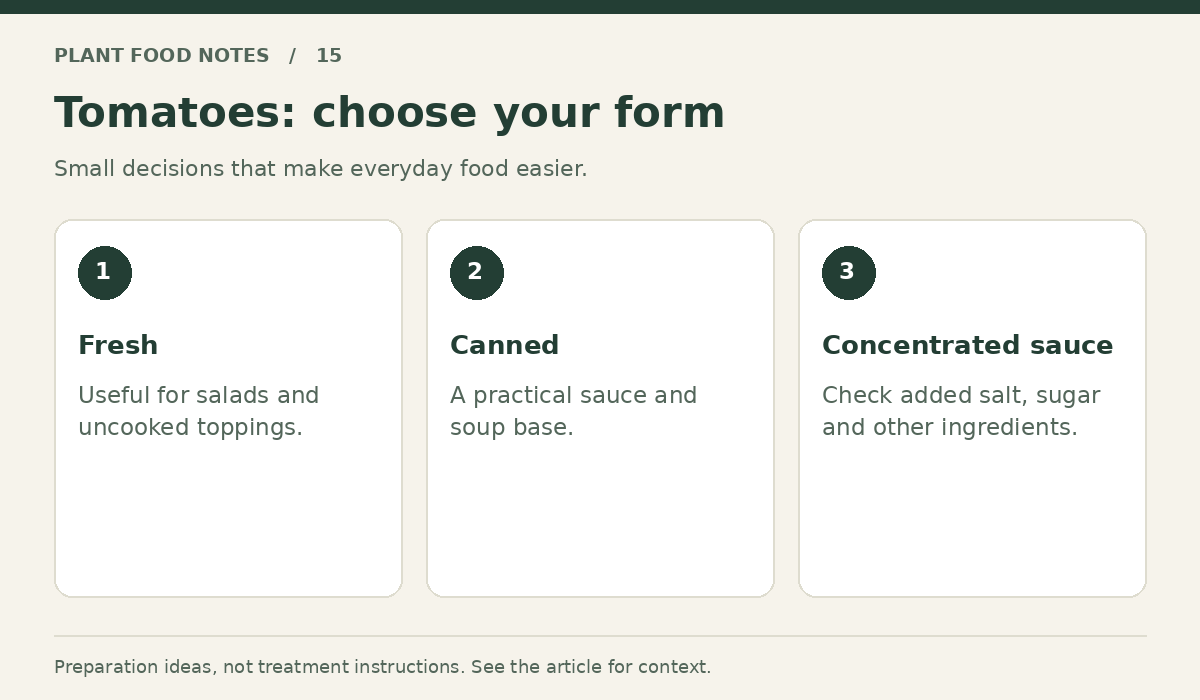
A tin of tomatoes can become the base of lentil soup, a vegetable sauce, or a bean stew. This is particularly helpful outside the season for good fresh tomatoes or when shopping is infrequent. Compare added salt and other ingredients. Plain chopped tomatoes or passata offer a flexible starting point because you can adjust the seasoning yourself.
Once opened, store unused contents safely according to the package and general food-storage guidance. Plan the next use rather than leaving half a container forgotten. A small portion can enrich another pan dish or be frozen for later use where appropriate. Convenience and waste reduction are legitimate reasons to choose canned tomatoes, not compromises that need apologising for.
A sauce that supports the rest of dinner
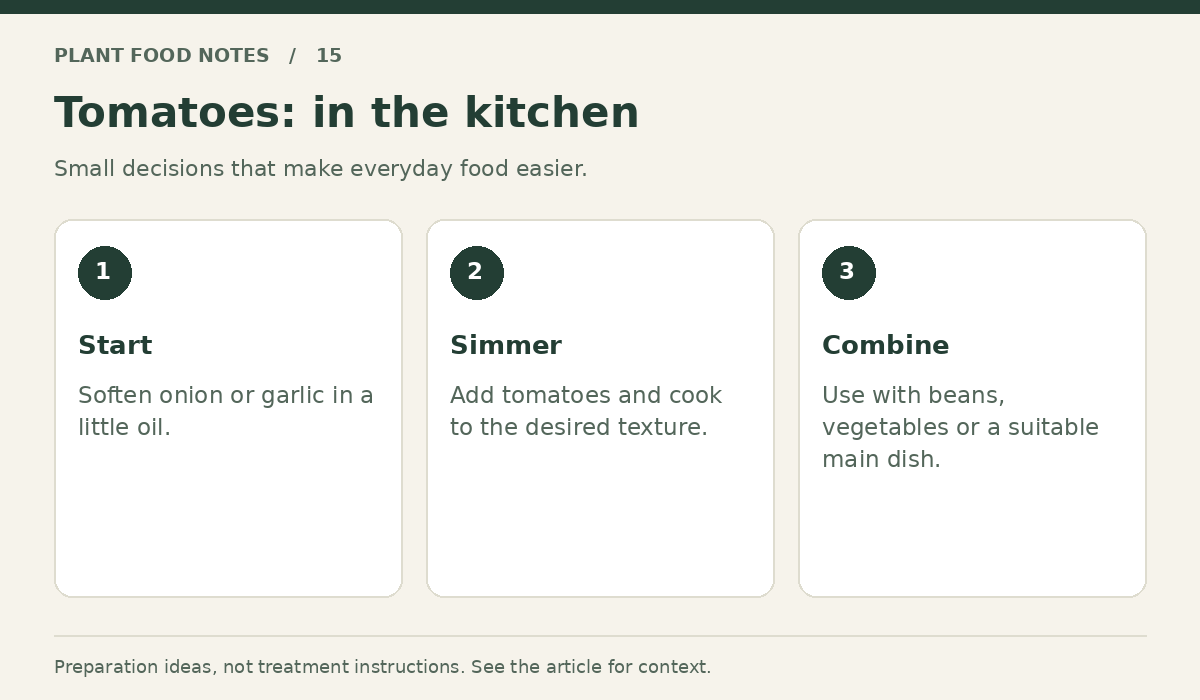
Soften onion or another aromatic ingredient in a little oil, add tomatoes, and simmer until the flavour and consistency suit you. Add cooked lentils or beans if you want the sauce to contribute more substance. Serve it with pasta, rice, or vegetables according to the meal. The method is flexible enough to suit different kitchens without requiring a branded health product.
Taste before adding sugar automatically. Some sauces benefit from balancing acidity, but you may prefer herbs, a longer cooking time, or a different tomato product. Avoid making the meal excessively salty through several ingredients at once, such as stock, salty cheese, and a heavily seasoned sauce. The tomato is one part of the finished recipe, not a guarantee about all of it.
Reflux changes the personal calculation
Tomatoes can trigger reflux symptoms for some people. The NIDDK guidance on food and gastro-oesophageal reflux discusses individual triggers, including acidic foods. If tomato-rich meals repeatedly cause symptoms, consider portion, timing, and the rest of the dish with your healthcare professional.
There is no need for everyone to avoid tomatoes because they bother someone else. Likewise, a food’s favourable reputation is not a reason to ignore your own recurring symptoms. A rich, spicy late-night tomato dish may be different from a small amount at lunch. Identifying the actual pattern is more helpful than a universal list of foods labelled good or bad.
Tomato products are not interchangeable
Tomato paste is concentrated and usually used in small amounts for flavour. Juice is a drink with a different fibre profile and may contain substantial sodium. Ketchup is a condiment. A creamy tomato soup includes more than tomatoes. These distinctions matter because “contains tomatoes” tells you little about the portion or the rest of the ingredients.
If you are choosing a product for everyday use, first decide its purpose. A versatile plain base may be more useful than several specialised sauces. Read the label once, then build a reliable meal around it. This is a practical way to make informed choices without turning every supermarket visit into a search for the highest antioxidant claim.
The benefit worth keeping
Tomatoes can make vegetables, pulses, and ordinary staples easier to enjoy. Their nutrients and plant compounds add to the variety of a diet, while fresh and cooked forms provide different culinary options. Keep both if they suit you, adjust for reflux or other personal needs, and leave disease-treatment promises to evidence that actually tests those outcomes. A useful sauce is already a worthwhile result.
General nutrition information; not personalised medical advice. Sources checked on 15 September 2026.