Broccoli is a useful example of how nutrition headlines can outrun the evidence. It contains fibre, vitamins, and plant compounds that researchers study with genuine interest. Yet “scientists investigated a broccoli compound” often becomes “broccoli kills cancer” by the time the story reaches social media. Those statements are not equivalent. You can value the vegetable without turning it into a treatment, and you can cook it well without needing to maximise a laboratory measurement at every meal.
For many people, the immediate challenge is simpler: making broccoli taste good enough to eat regularly. If your only experience is a large bowl of overcooked florets, you may not need more motivation. You may need a different texture, a better seasoning, or a preparation that fits the rest of dinner.
What the plant compounds actually tell us
Broccoli belongs to the cruciferous vegetable group. These plants contain glucosinolates, which can be broken down into compounds including isothiocyanates. Sulforaphane is one of the best-known examples. The National Cancer Institute’s fact sheet on cruciferous vegetables describes the biological interest while explaining that human cancer findings have been mixed.
Laboratory experiments can show effects on cells under specific conditions. They do not show that eating a serving produces the same exposure throughout a person’s body, or that it treats an established tumour. Dose, absorption, metabolism, and the actual clinical outcome all matter. A vegetable can be a worthwhile part of a diet while a dramatic disease claim remains unsupported.
Ordinary nutrients still count
It is easy to become so focused on sulforaphane that fibre and micronutrients sound boring. They are not. Broccoli adds vegetable variety and contributes nutrients involved in normal body functions. The NIH vitamin C fact sheet explains vitamin C’s roles, including collagen formation and helping absorption of plant iron. These normal nutritional roles are more defensible than a promise that broccoli “boosts immunity” beyond healthy function.
There is no need to eat broccoli exclusively to obtain these benefits. Other vegetables can contribute overlapping nutrients and different flavours. Variety also makes a routine less fragile: if broccoli is expensive, unavailable, or unappealing one week, another vegetable can take its place. A resilient eating pattern has alternatives rather than one indispensable ingredient.
Raw or cooked: there is no universal winner
Raw broccoli is crisp and can work in a finely chopped salad. Cooked broccoli may be easier to chew and more enjoyable for many people. Cooking affects nutrients and plant compounds in different ways, so a simple rule that raw is always best is not useful. The method also changes how much you are likely to eat and whether the meal is pleasant.
If you enjoy both, use both. Try small raw pieces in a mixed salad one day and lightly steamed florets another. Do not force down a huge raw portion to pursue a theoretical advantage. A modest serving you enjoy and tolerate is a better starting point than a preparation that makes you avoid the vegetable afterwards.
Make texture the first cooking goal
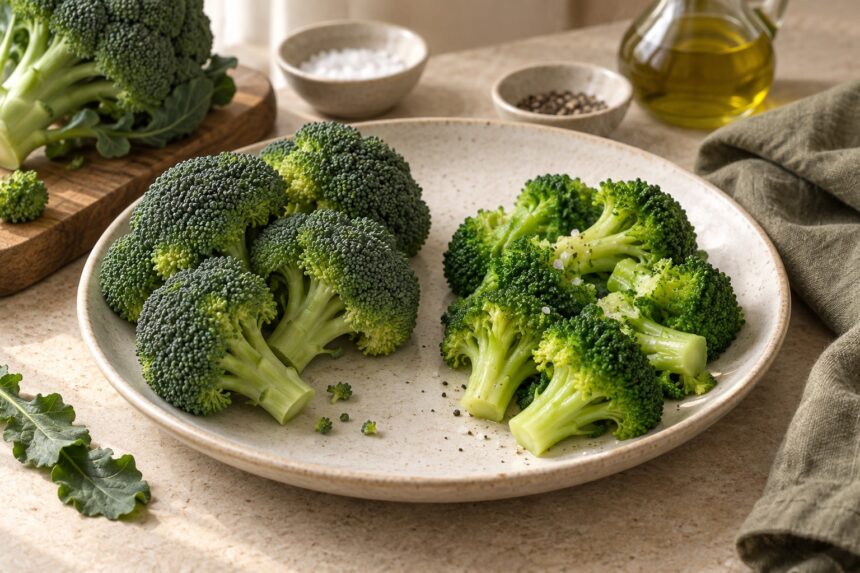
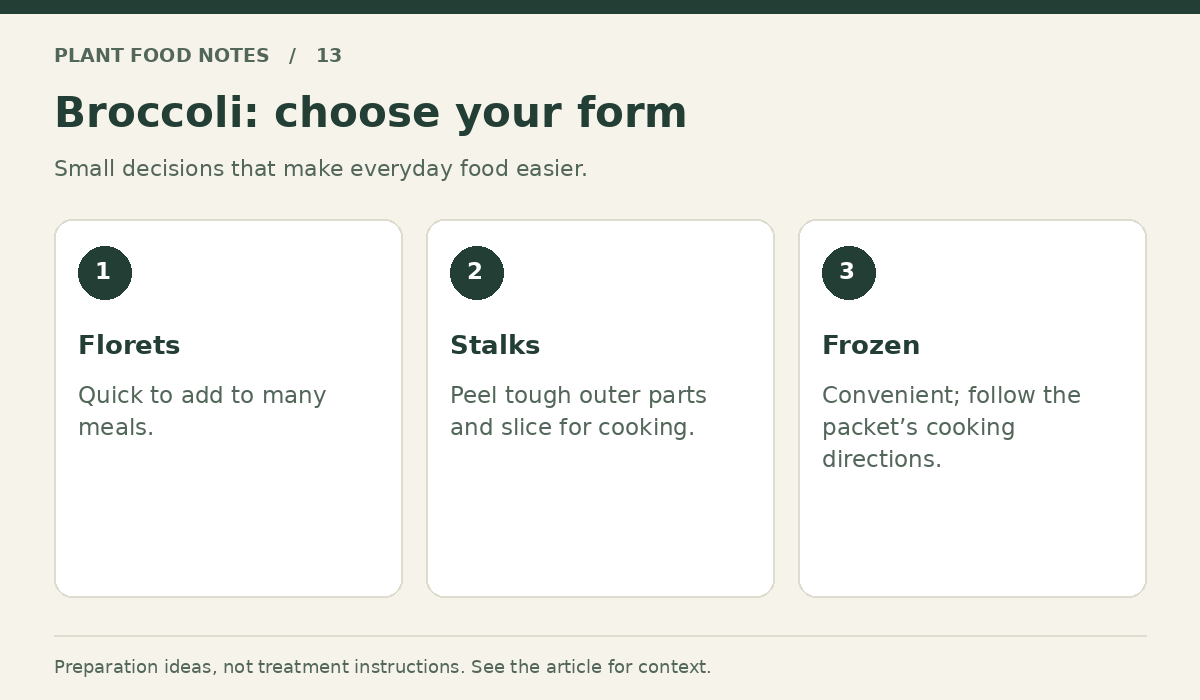
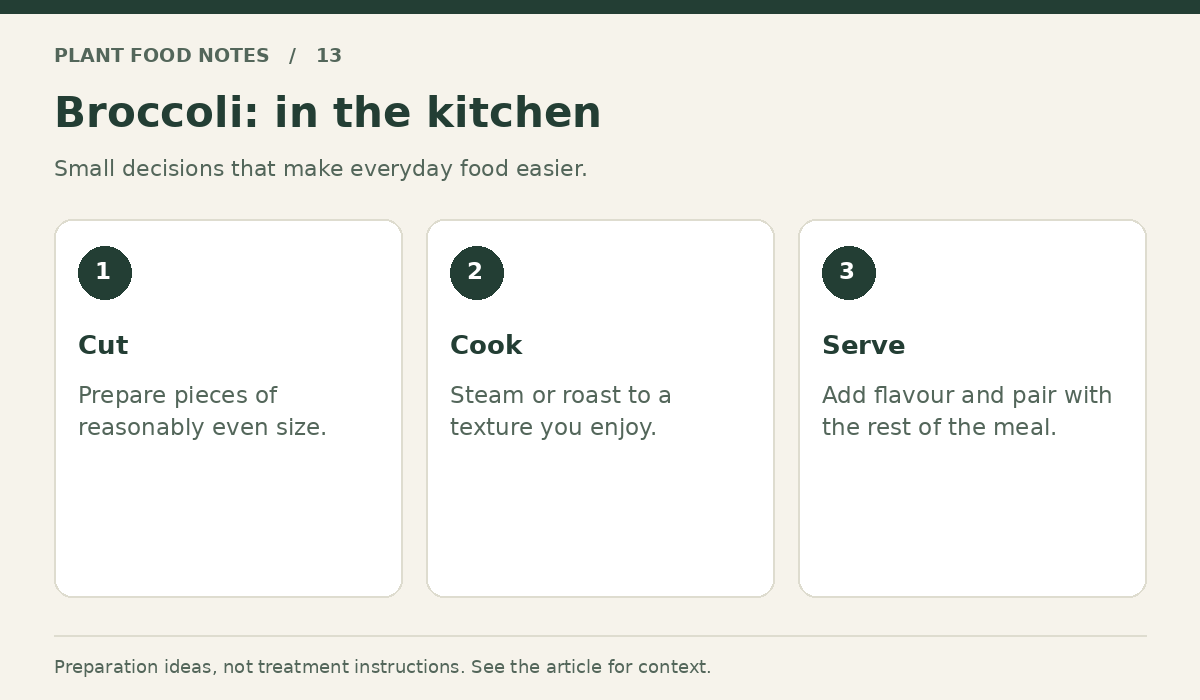
Cut florets into roughly similar sizes so they finish together. If using the stem, trim the tough exterior as needed and slice the tender centre more thinly. Steam, roast, or stir-fry according to the texture you prefer, checking as you go. Stop when the result suits the meal rather than waiting until the vegetable loses all structure.
For roasting, leave space between pieces and use a little oil to help the surface cook attractively. For steaming, drain away excess water before adding a dressing. These steps prevent the bland, watery result that often gives broccoli a poor reputation. A squeeze of lemon, a spoon of a suitable sauce, or toasted seasoning can make more difference to repeat use than a long list of abstract benefits.
Build a meal around familiar flavours
Broccoli can sit beside rice and beans, become part of a pasta dish, or accompany fish, tofu, or another protein food. Give it a clear role instead of treating it as a compulsory mound added after dinner is already complete. A mixed vegetable stir-fry may be more appealing than a separate plain serving, especially when introducing it to someone who is hesitant.
For a simple lunch, combine cooked broccoli with a grain, a protein ingredient, and a sharp dressing. Keep crunchy toppings separate until serving. If using leftovers, cool and refrigerate them promptly and follow safe reheating practices. A colourful lunch can still require ordinary food safety; fresh-looking vegetables do not make cooked leftovers immune to spoilage.
Frozen broccoli deserves a place
A frozen bag can reduce waste and make vegetables available when shopping is difficult. Follow cooking directions and avoid thawing it unnecessarily if the method works directly from frozen. It may have a different texture from fresh broccoli, but that does not make it nutritionally meaningless. Soup, a sauced dish, or a mixed pan meal may suit it especially well.
Compare plain frozen vegetables with versions already coated in rich sauces. Both can be convenient, but they are different products. If you choose plain broccoli, you can adjust seasoning to the rest of the meal. This is useful when managing sodium, feeding people with different tastes, or trying to avoid buying several separate prepared side dishes.
Cautions that are actually relevant
Broccoli contains vitamin K. People taking warfarin are usually advised to keep vitamin K intake consistent rather than abruptly eliminating greens or suddenly eating very large amounts. The NIH vitamin K guide explains this interaction. Follow your anticoagulation team’s advice; do not change medication because you want to eat more vegetables.
Large portions may also cause digestive discomfort for some people. Adjust the amount and preparation according to tolerance, particularly with a diagnosed bowel condition. Broccoli sprouts and concentrated supplements are separate products with their own safety considerations; evidence or handling advice for ordinary cooked broccoli should not automatically be transferred to them.
Keep the useful promise
Broccoli can help make a diet more varied and provide fibre and micronutrients. Its plant chemistry is scientifically interesting, but the strongest practical promise is a good vegetable on a plate you enjoy. Find one reliable cooking method, use the stem when appropriate, and keep a frozen backup if it helps. Dinner does not need to function as an experiment in cancer treatment to be worthwhile.
General nutrition information; not personalised medical advice. Sources checked on 15 September 2026.