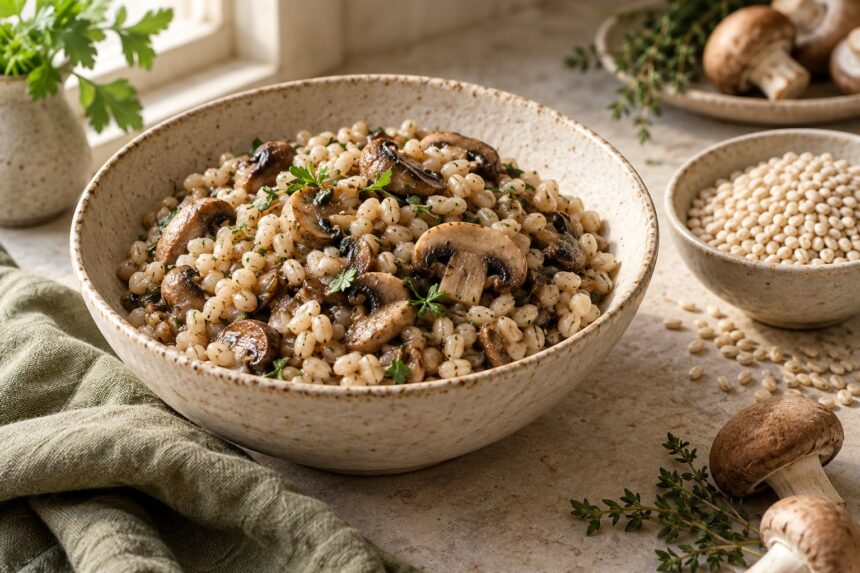
Barley has a pleasantly chewy texture that makes a bowl of soup feel more substantial. It can also form the base of a warm grain dish, taking on the flavour of mushrooms, herbs, or roasted vegetables. Unlike ingredients that are mainly useful as toppings, barley can occupy a meaningful part of the plate. Its nutritional appeal includes fibre, particularly beta-glucan, alongside the practical advantage of making simple meals feel complete.
The shopping decision can be confusing because hulled, hulless, pearled, flaked, and quick-cooking products are not identical. Knowing which one you have prevents disappointment at the stove and helps you interpret whole-grain claims. The best choice is one that fits both your nutritional aims and the time you realistically have to cook, rather than the product with the most impressive front label.
Beta-glucan gives the cholesterol discussion substance
A systematic review of trials on barley beta-glucan found reductions in LDL and non-HDL cholesterol compared with control diets. The studies used defined interventions, not merely any food with barley somewhere in its ingredients. This supports an evidence-based reason to include suitable barley foods while keeping the expected effect modest and linked to the actual amount and preparation.
Lowering a risk marker is not the same as demonstrating that one bowl of barley prevents a heart attack. Nor does dietary change remove the need for prescribed treatment when it is indicated. For everyday use, barley can be one component of a heart-conscious pattern that also considers other foods, activity, smoking, and medical care. Its contribution is real without needing to be exaggerated.
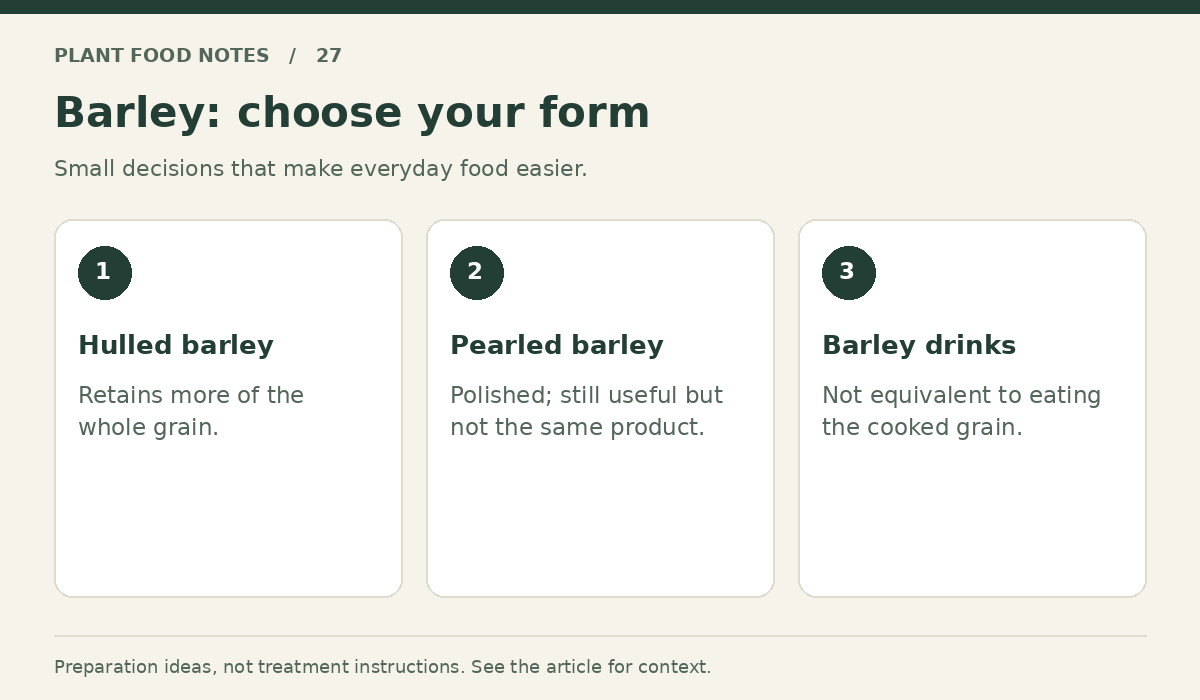
Hulled and pearled barley are different
The Whole Grains Council’s guide to barley forms explains that hulled and hulless forms can retain the whole grain, while pearling removes some or all of the bran. Pearled barley is therefore not generally classified as a whole grain, although it can still provide fibre. Processing is not a simple switch between perfect and worthless food.
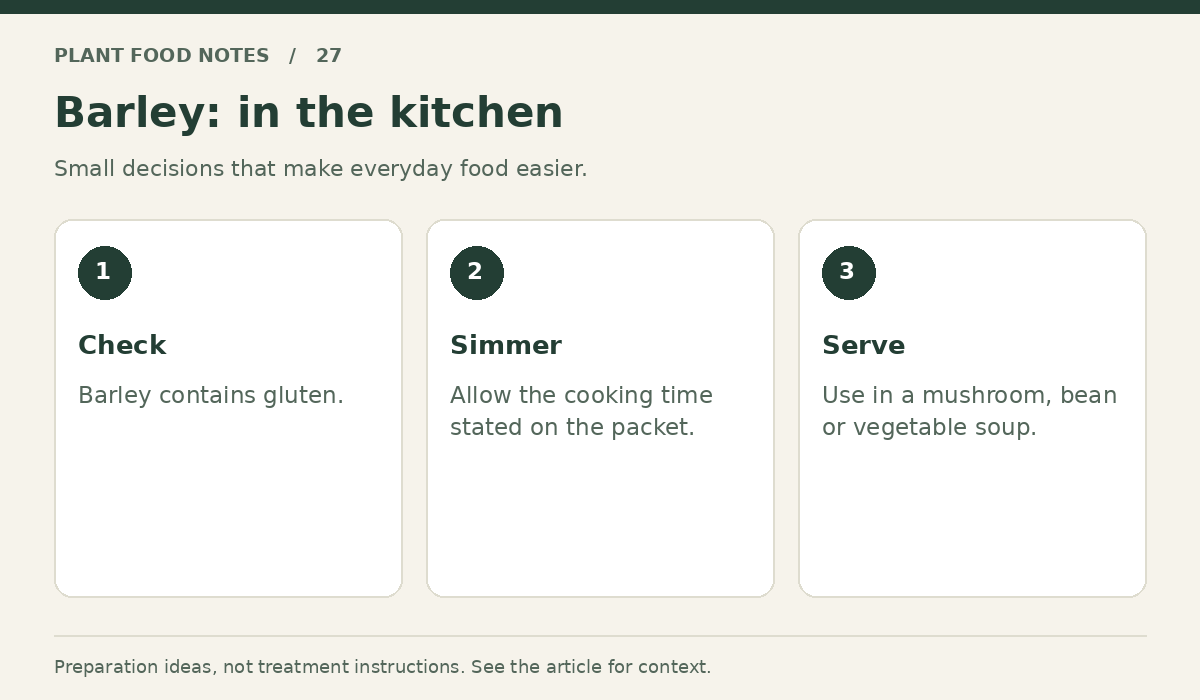
Hulled barley usually needs more cooking time and has a firmer character. Pearled barley is often easier to find and can be convenient in soups. Check the packet rather than assuming the same cooking method will suit both. If a product says quick-cooking, its preparation may differ again. Choosing knowingly is more useful than buying the least processed version and never finding time to use it.
Barley is not suitable for a gluten-free diet
Barley contains gluten. This is important for anyone with coeliac disease, even when the grain is described as wholesome or high in fibre. The NIDDK advice on coeliac disease and food identifies barley among the grains that must be avoided in a strict gluten-free diet. Its general benefits do not override that requirement.
If cooking for someone who needs gluten avoidance, choose an appropriate alternative and consider cross-contact. Do not simply remove visible barley from a soup after it has cooked. For people who can eat it, there is no need to view gluten itself as a reason to reject barley. Suitability depends on the individual rather than a universal ranking of grains.
Make a mushroom-and-barley pot
Soften onion and sliced mushrooms in a little oil, then add barley and the liquid specified for the product. Simmer until the grain is cooked, adding other vegetables at appropriate stages so they do not all become overly soft. Season gradually. Barley absorbs liquid and can thicken a dish considerably, so keep an eye on the pot rather than assuming it will remain soup-like throughout.
Add cooked beans or another protein food if you want the dish to function as a full meal. Finish with herbs and a little acidity if that suits the flavour. The result can be comforting without needing a rich sauce. The barley contributes chew and body, while mushrooms and seasoning make it interesting enough to repeat on an ordinary weeknight.
A grain salad is another useful route
Cook barley according to its packet, cool it safely, and combine with vegetables and a dressing. Its firm texture can work well with chopped tomatoes, cucumber, parsley, or roasted vegetables. Use whatever combination makes sense locally and seasonally. A grain salad does not need a long list of premium ingredients to become a useful packed lunch.
Keep the other components in mind. If the bowl is mainly barley with only a few pieces of vegetable, decide whether you want to add more produce or a protein source. If it is mostly leaves with a spoonful of grain, it may need more substance. The title grain bowl does not guarantee a balanced meal; the actual proportions and your appetite provide the useful information.
Fibre works best as a gradual habit
If your usual meals contain little fibre, a sudden large serving of barley alongside several other high-fibre additions may cause discomfort. Introduce changes gradually and include appropriate fluids. The objective is a comfortable, sustainable eating pattern, not the largest possible fibre total in a single sitting. Individual digestive conditions may also affect which foods and portions suit you.
Persistent bloating, pain, or altered bowel habits should not simply be blamed on a lack of willpower to tolerate healthy food. Seek advice when needed. Barley is optional; oats, other grains, pulses, and vegetables provide different ways to build variety. A food that repeatedly causes trouble is not mandatory just because it appears in a favourable research paper.
Plan around its cooking time
Barley may be easier to use when you cook it on a day with more time and portion it for later, following safe cooling and storage practices. Alternatively, choose a faster-cooking product that fits your schedule. The nutritional discussion should include whether the grain will actually reach the table, not only the theoretical advantages of its least processed form.
Its strongest benefits are a useful fibre contribution, evidence related to beta-glucan and cholesterol, and a satisfying texture that works in substantial meals. Know the type you bought, respect the gluten limitation, and build a dish with enough variety around it. That makes barley a practical pantry food rather than another ingredient purchased for an ambitious health promise and left unused.
General nutrition information; not personalised medical advice. Sources checked on 16 September 2026.