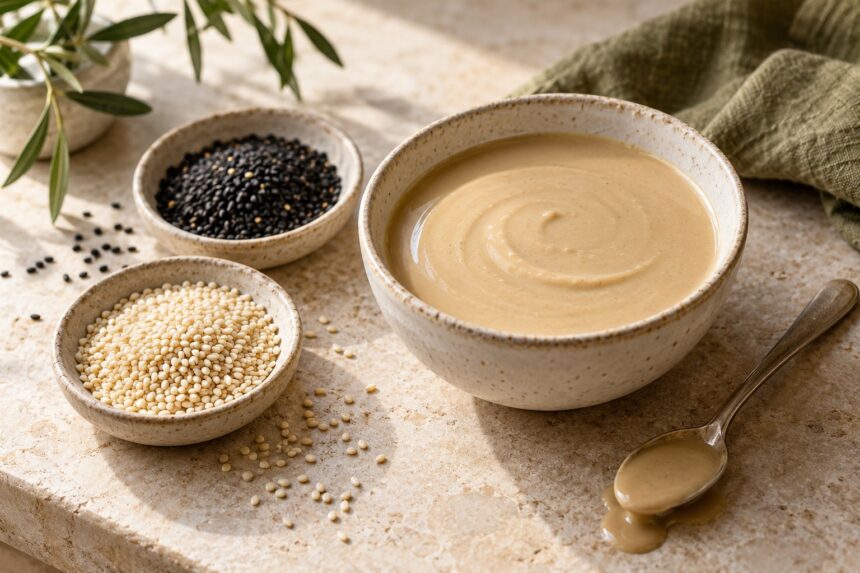
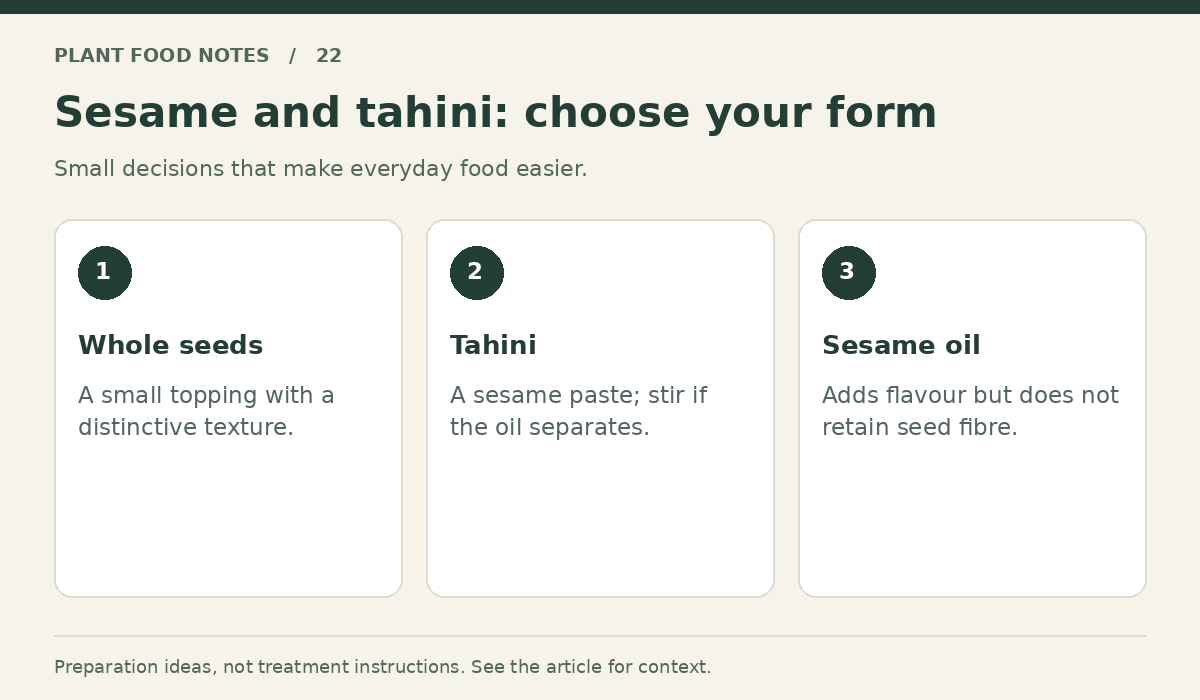
Sesame can appear almost unnoticed on a bread roll, then become the main flavour in a bowl of tahini sauce. Those are very different amounts of the same seed, and the difference matters when discussing nutrition. A few seeds on the surface of food provide flavour and appearance. A spoonful of sesame paste contributes more substantially to the meal, including fats, some protein, and minerals.
Tahini is particularly useful when you want a creamy sauce without relying on cream. Its earthy flavour works with beans, vegetables, grains, and citrus. That flexibility gives sesame a practical advantage: it can help bring several useful foods together. Understanding the product, however, is more helpful than repeating sweeping claims about bone strength, skin, or hormones that may have little to do with an ordinary serving.
What sesame adds to a meal
Sesame seeds contain unsaturated fats, protein, and fibre. Grinding them into tahini changes the texture and makes them easy to distribute through a dressing or dip. It does not turn the paste into a calorie-free condiment, nor does it make a small amount nutritionally equivalent to a full serving of another protein food. The quantity and the surrounding meal still matter.
For example, a sauce made from tahini and water can give a bowl of chickpeas and vegetables a richer texture. The chickpeas remain important for the meal’s substance. A thin drizzle on lettuce is a different lunch from that complete bowl. Thinking in terms of the whole plate avoids placing unrealistic expectations on an ingredient simply because it has a favourable reputation.
Calcium claims need a closer look
Sesame is often advertised as an exceptional calcium food, but the amount varies with the product and whether the seeds are hulled. A number quoted for one seed preparation should not automatically be assigned to every jar of tahini. Check the nutrition information where available, especially if you are relying on particular foods to help meet calcium needs.
The NIH calcium guide explains the importance of calcium and the range of foods that can provide it. Sesame can contribute, but a diet avoiding dairy needs a broader plan that may include suitable fortified foods and other calcium sources. A decorative sprinkle is unlikely to replace a substantial source, and claims about preventing osteoporosis require more than a food’s mineral content.
Sesame allergy changes the decision completely
Sesame can cause serious allergic reactions. Tahini is sesame paste, so it is not an alternative for someone avoiding sesame. Hummus, sauces, dressings, bakery products, and seasoning mixtures may contain it. The FDA advice on reading food labels for allergies explains why checking ingredients is important rather than relying on the product’s appearance or familiar name.
When cooking for someone with an allergy, ask about their requirements and prevent cross-contact through utensils and surfaces. Do not assume that removing visible seeds makes a dish suitable. If sesame is safe for your household, it can remain a useful ingredient; if not, choose an appropriate alternative. Nutrition advice only makes sense when the food itself is suitable for the person eating it.
Make a tahini sauce that stays manageable
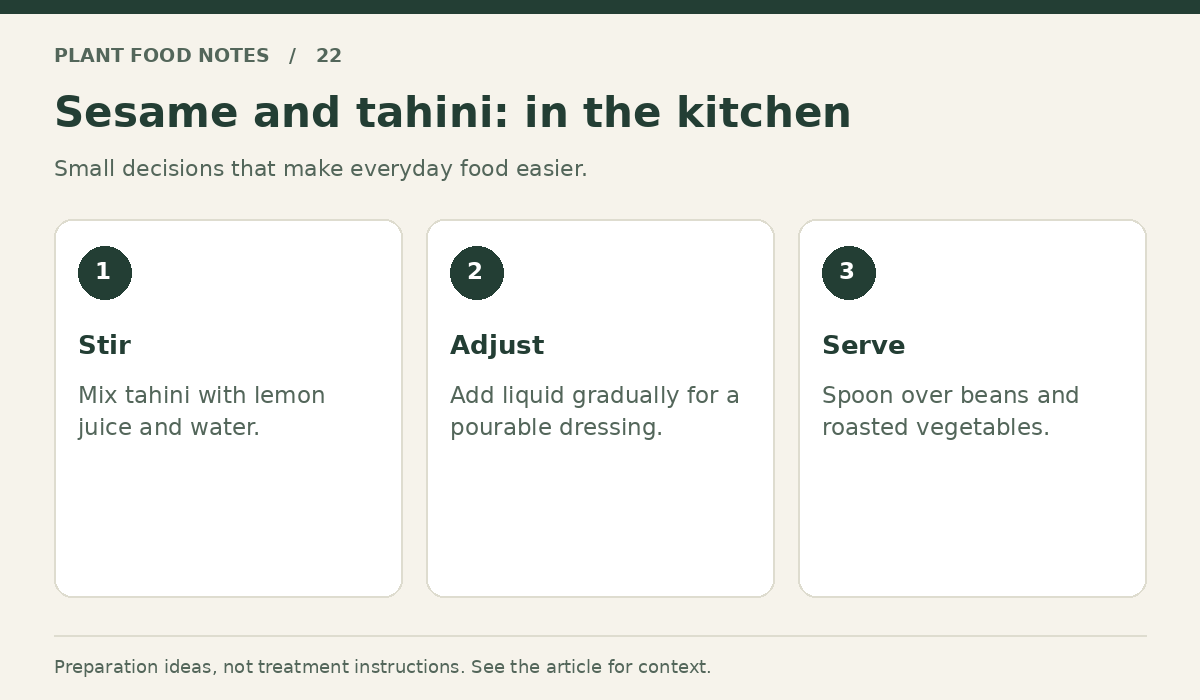
Start with a small amount of tahini in a bowl. Stir in a little lemon juice, then add water gradually while mixing. The paste may become thicker before it loosens into a smooth sauce. Continue patiently rather than immediately adding large amounts of oil. Taste and adjust with herbs, a little garlic if tolerated, or a small amount of seasoning.
This method lets you control the consistency: thicker for a dip, thinner for drizzling over roasted vegetables. Keep the ingredients simple until you know how the tahini tastes. Different jars vary in bitterness and roast flavour. A sauce that seems too strong may need a different balance of water and acidity, not a large amount of sweetener to hide the sesame.
Use the seeds for flavour rather than decoration alone
Whole sesame seeds can add a pleasant finish to cooked vegetables, noodles, or bread. Gentle toasting intensifies their aroma, but the small seeds can burn quickly. Use moderate heat, stay nearby, and move them around the pan. Add them to a finished dish when their texture is part of the appeal, rather than letting them disappear into a large pot unnoticed.
Black and pale sesame seeds can both be useful in cooking. Colour is not a reliable shortcut for deciding which product will deliver superior health outcomes. Choose according to taste, availability, and how you intend to use it. A small packet that you finish while fresh is often a better purchase than a premium blend bought for an unverified promise.
Fit tahini into a balanced lunch
A practical lunch begins with a base such as cooked grains or bread, adds beans or another protein food, and includes vegetables. Tahini sauce can connect those components. For instance, roasted carrots, chickpeas, parsley, and a lemon-tahini dressing make a coherent combination. Adjust the amounts to appetite rather than following a photograph as though it were a nutrition prescription.
If you use tahini on toast, consider what else you need until the next meal. Fruit, yogurt, or another suitable food may make breakfast more substantial. Sesame paste is neither forbidden because it contains fat nor unlimited because much of that fat is unsaturated. The most useful approach is to enjoy its flavour while noticing the role it plays in the meal.
Buy, stir, and store thoughtfully
Oil separation in a jar can be normal; follow the manufacturer’s instructions for stirring and storage. Use clean utensils and keep water from being introduced into the remaining paste. Once you make a sauce with water, lemon, or other fresh ingredients, treat it as a prepared food requiring appropriate refrigeration rather than assuming it has the same keeping qualities as the unopened jar.
Sesame’s value is easy to appreciate without turning it into a cure. It adds useful nutrients and makes simple foods more enjoyable, especially in the form of a versatile tahini sauce. Pay attention to calcium differences between products, take allergies seriously, and use the amount that makes sense for your meal. A well-used pantry ingredient can be more valuable than a long list of exaggerated benefits.
General nutrition information; not personalised medical advice. Sources checked on 16 September 2026.