Beetroot has a strong personality in the kitchen: earthy flavour, vivid colour, and a texture that changes from crisp to tender when cooked. It also has a reputation as a blood-pressure food and an exercise aid. Those claims often come from research using beetroot juice or a defined nitrate preparation, rather than the ordinary roasted wedges that appear beside dinner. The distinction is essential for an honest account of its benefits.
There are good reasons to enjoy beetroot as a vegetable even without expecting a measurable change in performance or blood pressure. It adds variety and works in both warm and cold meals. The scientific interest is worth explaining, but it should help readers make informed choices rather than persuade them that a particular drink can replace treatment or compensate for the rest of their lifestyle.
Nitrate is central to the research
Beetroot contains dietary nitrate, which can participate in a pathway leading to nitric oxide, a substance involved in blood-vessel function. A randomised trial in people with hypertension tested daily nitrate-rich beetroot juice over four weeks and reported blood-pressure reductions. That result provides a reason for research interest, but the study used a specific intervention in a defined group.
It does not tell us that every serving of cooked beetroot delivers the same nitrate amount or the same effect. Growing conditions, preparation, and product composition can vary. A study beverage should therefore not be translated into an instruction that everyone needs a daily beetroot shot. Normal food use and a deliberate intervention for hypertension are different decisions.
Not every trial finds the same result
Another randomised trial in people already treated for hypertension found no improvement in home or ambulatory blood pressure after a week of nitrate-rich beetroot juice compared with a nitrate-depleted version. Differences between studies can reflect participants, treatment, duration, and other factors. Presenting only the favourable finding would give an incomplete impression.
The practical conclusion is not that beetroot is useless, nor that it is proven to work for everyone. It is that results depend on context and remain unsuitable for a universal promise. If you have high blood pressure, continue the care and monitoring recommended for you. Discuss concentrated products with your clinician rather than changing medicine on the basis of a food headline.
Whole beetroot and juice have different roles
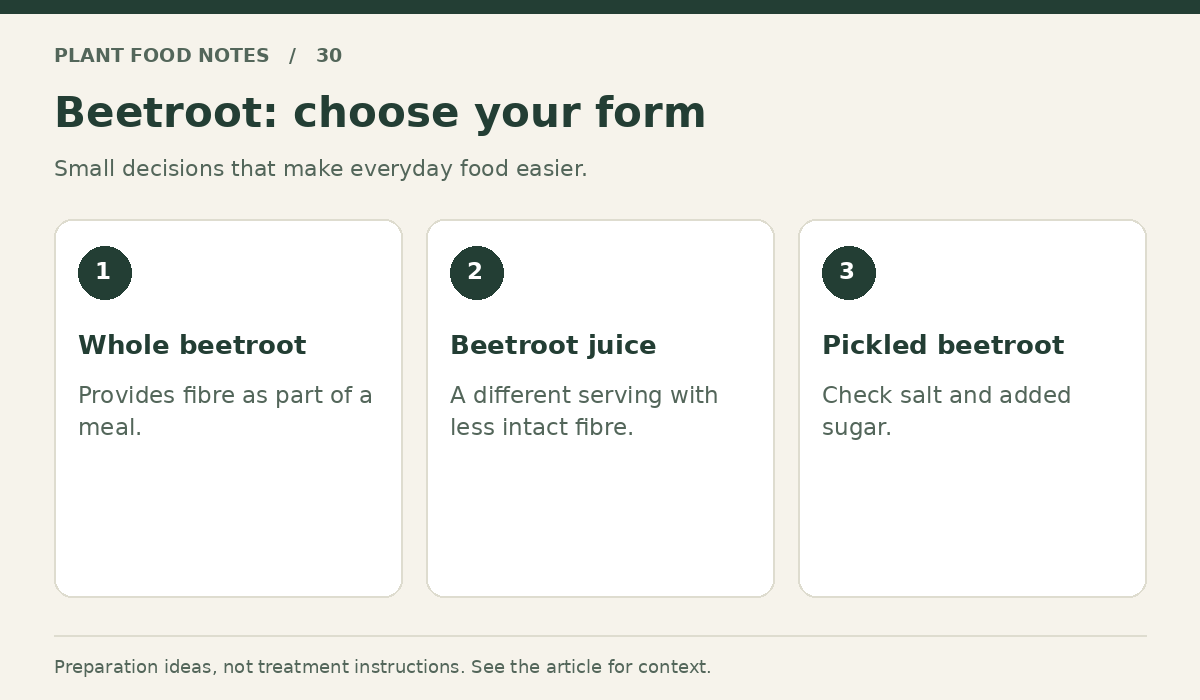
Whole beetroot retains more of the vegetable’s structure and fibre than a strained juice. It can be part of a meal, with the amount visible on the plate. Juice is easier to consume quickly and may represent a different quantity of the original vegetable. Both need to be assessed as the actual product rather than grouped together under a single health label.
For everyday cooking, whole or plain cooked beetroot is often the simplest option. Ready-cooked packs can save time; check whether they contain only beetroot or also include vinegar, sugar, or other ingredients. Pickled beetroot has its own flavour and recipe, which may be exactly what you want, but it is not identical to an unseasoned cooked vegetable.
Roast it for a useful meal component
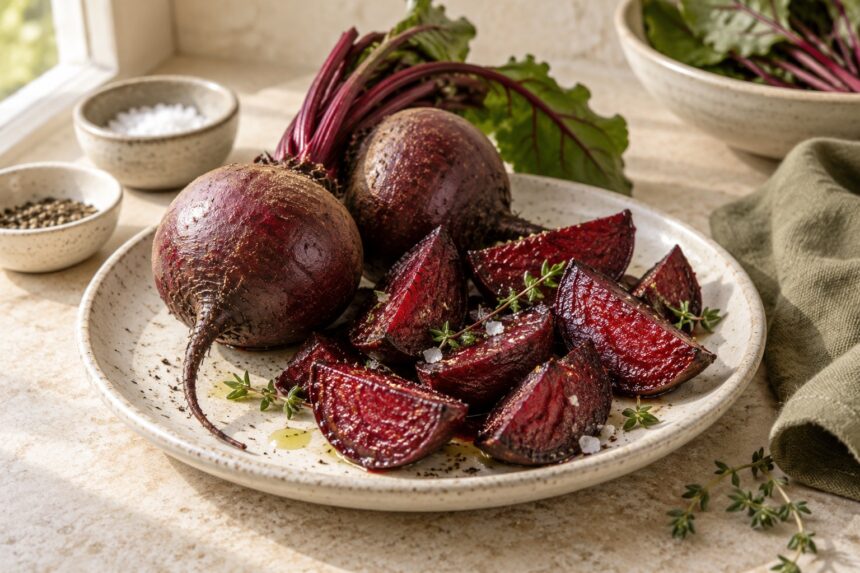
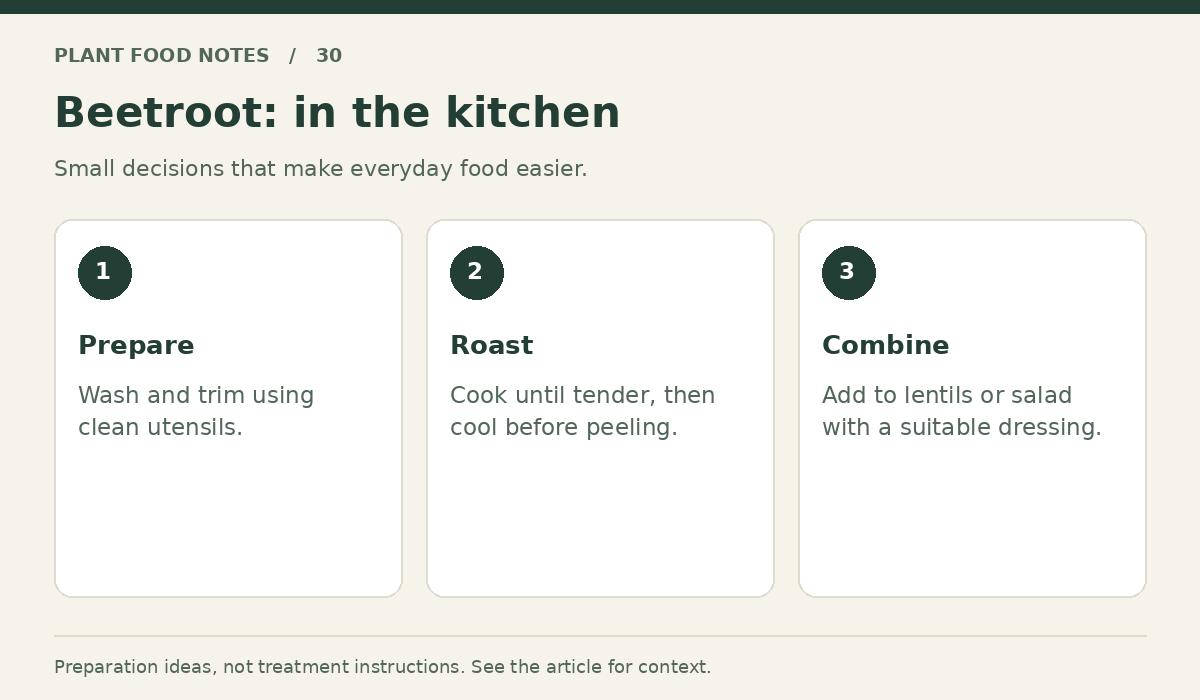
Wash and prepare beetroot carefully, then cut it into pieces suitable for roasting. Use a little oil and cook until tender, following a reliable method for the size of the pieces. Protect surfaces if staining is a concern. Smaller pieces cook differently from whole roots, so judge doneness rather than assuming one timing suits every preparation.
Serve with lentils, grains, or another substantial part of the meal. A little citrus, herbs, or a suitable creamy dressing can balance the earthy flavour. The beetroot does not have to dominate the plate. A modest amount that makes the meal more appealing is useful, especially if you are introducing it to someone who finds its flavour unusually strong.
Try a cold combination without making it complicated
Cooked beetroot can be sliced into a salad with beans and leafy vegetables, or combined with a familiar staple for a packed lunch. Add a dressing shortly before serving if that helps preserve the texture you like. Its colour will spread to neighbouring ingredients, so decide whether you enjoy that effect rather than expecting every component to remain visually separate.
A salad based mainly on beetroot may still need more protein or energy to serve as a meal. Think about what will sustain you until the next eating opportunity. A few seeds or a spoonful of yogurt can add interest, but the complete amount matters. Colourful food is attractive; it is not automatically a complete lunch simply because it photographs well.
Concentrated products call for individual judgement
If you take blood-pressure medicines, have low blood pressure, or have been given a specific dietary plan, discuss regular concentrated beetroot products before treating them as a health intervention. Their potential physiological effect is the reason for that conversation. It is different from occasionally enjoying a beetroot side dish with dinner.
People with a history of certain kidney stones may also need advice about high-oxalate foods and portions. Do not self-impose a broad restriction without knowing what kind of stone or dietary issue is involved. Beetroot can sometimes colour urine or stool, but unexpected or persistent red discolouration should not automatically be dismissed as food-related, especially when accompanied by pain or other symptoms.
Let the food have an ordinary place
Start with a small ready-cooked pack or a few fresh roots and plan one dish. If you like it, add another use rather than immediately committing to a daily juice routine. Keep prepared beetroot refrigerated as directed, use clean utensils, and treat leftovers with normal food-safety care. A vegetable’s health reputation does not change its storage needs.
Beetroot offers an enjoyable way to diversify meals, with scientifically interesting nitrate research that deserves careful explanation. The evidence supports attention, not a guarantee. Use whole beetroot where its flavour and texture fit, understand that juice studies involve specific preparations, and keep blood-pressure treatment decisions within your medical care. That approach preserves both the pleasure of eating it and the accuracy of the health discussion.
General nutrition information; not personalised medical advice. Sources checked on 16 September 2026.