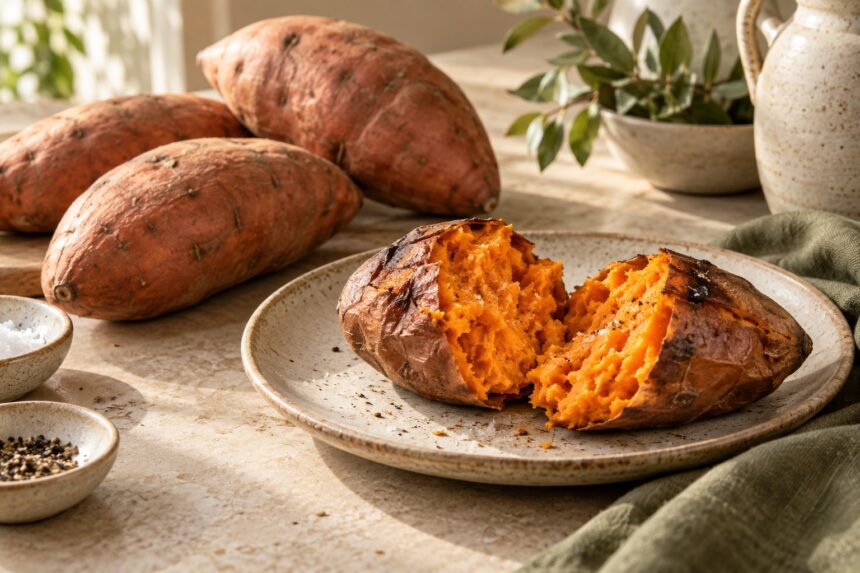
Sweet potatoes are often promoted as the virtuous alternative to ordinary potatoes, rice, or bread. That framing is unnecessary. They are a useful starchy food with a distinctive flavour, and orange-fleshed varieties are notable for beta-carotene. Their value comes from what they contribute and how they fit a meal, not from making other staple foods look bad. A roasted sweet potato can be a satisfying base for lunch without being described as a cure or a carbohydrate loophole.
Preparation matters to enjoyment. Some people like the soft sweetness of a baked whole root; others prefer wedges or a savoury mash. The best method is the one that makes the ingredient useful in your kitchen. There is no reason to force it into desserts or smoothies if you prefer a straightforward plate of food.
Beta-carotene and normal vitamin A function
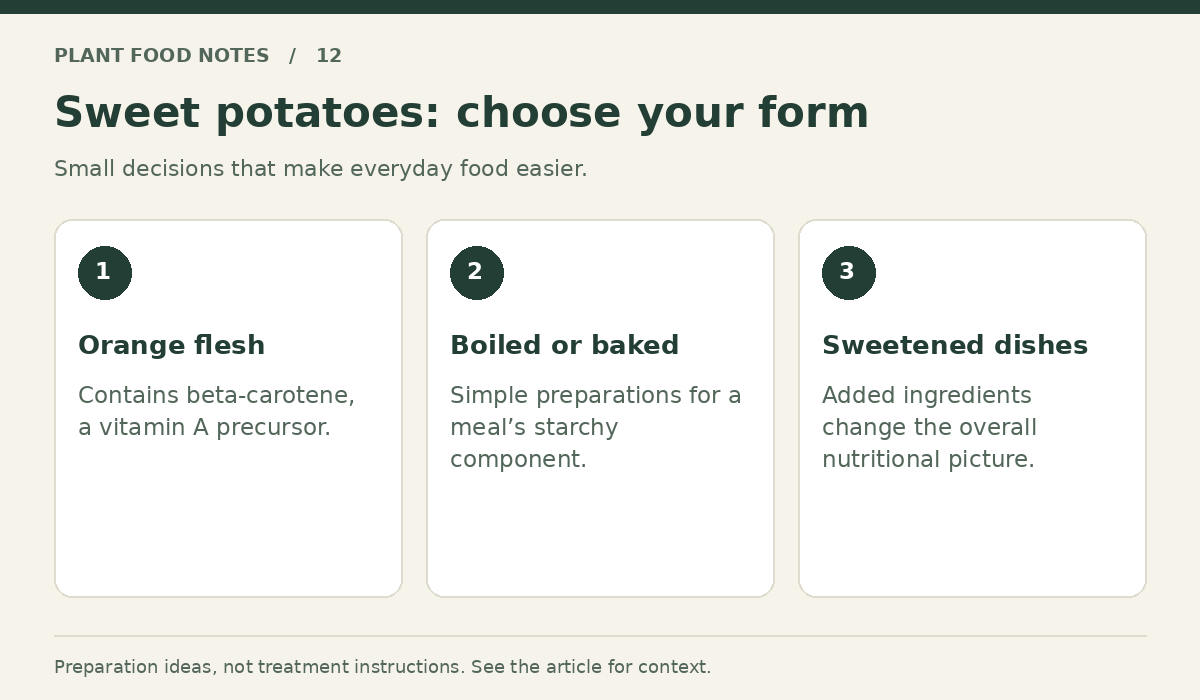
Orange sweet potatoes contain beta-carotene, which the body can convert into vitamin A. Vitamin A supports normal vision, immune function, and other processes. The NIH vitamin A overview explains the difference between preformed vitamin A and provitamin A carotenoids. Supporting normal function is not the same as giving someone superhuman night vision or preventing every infection.
The Harvard guide to sweet potatoes describes their nutritional contribution and variety. Flesh colour can reflect differences in plant pigments, but it is not a complete health ranking. Orange, purple, and pale varieties can all have culinary value. Choosing a food you can obtain and prepare well is more important than chasing a colour described online as the ultimate option.
Sweet potatoes still contain carbohydrate
The name “sweet potato” does not make the food unsuitable, and the label “healthy carbohydrate” does not make the portion unlimited. If you manage diabetes, consider the amount and preparation together with the rest of the meal. A whole roasted root with beans and vegetables is different from a large sweetened casserole or a bowl of fried chips.
Do not make treatment decisions from a single glycaemic-index number found online. Cooking, variety, portion, and accompanying foods all affect how a meal behaves. Use your established carbohydrate-planning or monitoring approach if you have one. A nutritious staple can still raise blood glucose, and that does not mean it has failed as a food.
Build a meal around it
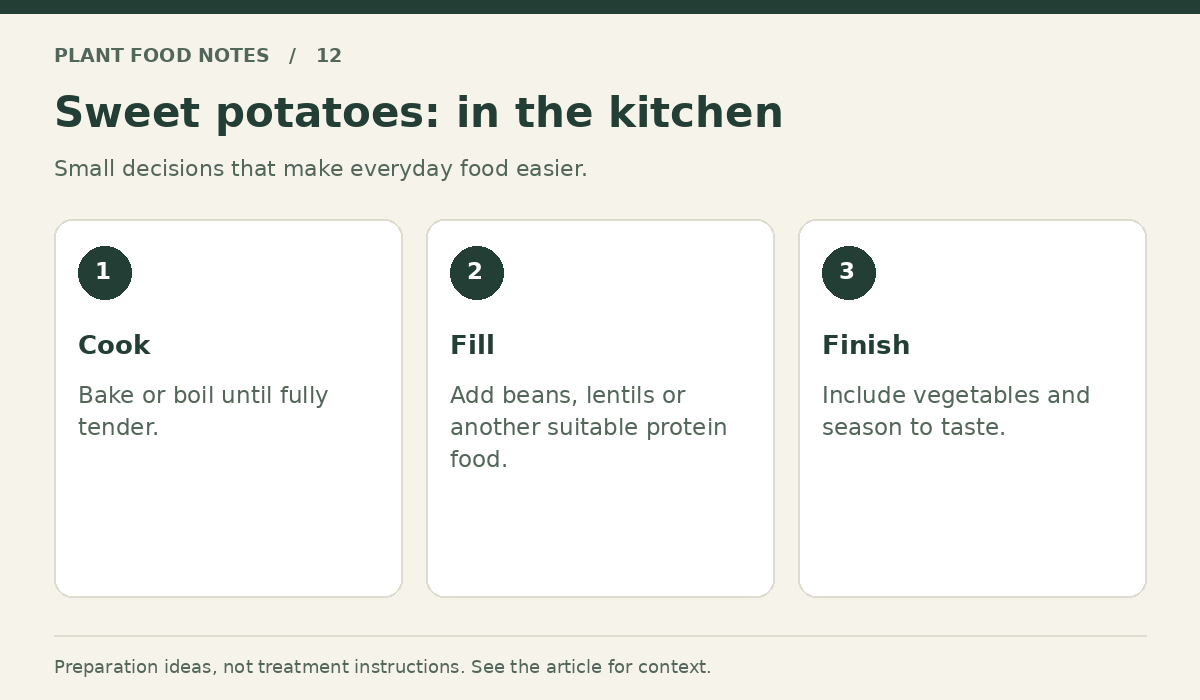
Think of a baked sweet potato as a starting point rather than the complete dinner. Add a filling or side that supplies protein, such as beans, lentils, fish, tofu, or another preferred food. Include vegetables for variety and season the meal so the sweetness feels balanced. A squeeze of lemon or a sharp yogurt-based topping can be useful if you find the flavour too sweet on its own.
For a simple option, split a cooked sweet potato and fill it with warm black beans, chopped tomato, and herbs. For another, serve wedges with a lentil stew and greens. These combinations are suggestions rather than fixed prescriptions. Adapt them to your appetite, cultural preferences, and available ingredients instead of trying to copy an exact photograph.
Cooking for texture rather than perfection
Wash the root and remove damaged areas. Cook according to a reliable method until the centre is tender. Whole roots vary substantially in size, so checking doneness is more useful than trusting one universal cooking time. Cutting similarly sized pieces helps them cook more evenly, especially if you prepare wedges or cubes.
If roasting, use enough space on the tray that pieces do not simply steam in a crowded pile. Turn or rearrange them as needed. If boiling for mash, drain well and season gradually. These ordinary kitchen adjustments can improve the result more than buying a specialised product marketed as preserving every antioxidant. A meal you enjoy is easier to repeat.
Toppings can change the dish dramatically
Butter, sugar, syrup, cream, and oil all change the nutritional profile. None must be treated as a forbidden ingredient, but a dish with several rich additions is not equivalent to a plain cooked sweet potato. The vegetable’s reputation should not hide the recipe. Be particularly cautious with “guilt-free” language that encourages unlimited portions of a heavily sweetened product.
Try savoury toppings first if you want the natural sweetness to be enough. Herbs, paprika, cumin, lemon, or a modest amount of a tangy sauce can provide contrast. Keep a topping separate when feeding several people so each can adjust the meal. This is often easier than trying to create one strongly seasoned version that suits everyone.
Skin, fibre, and tolerance
The skin can be eaten when properly cleaned and cooked, but you do not have to keep it if texture or a medical diet makes that unsuitable. Removing it does not turn the remaining food into something worthless. Fibre intake depends on the overall pattern, and there are many other ways to include fibre across meals.
If a large serving causes digestive discomfort, reduce the amount and consider the other foods eaten with it. Do not assume the problem proves all starchy foods should be removed. People with specific bowel conditions or restricted diets may need individual guidance. A general article can offer context but cannot determine which portion will suit every reader.
Avoid confusing foods with high-dose supplements
Beta-carotene in food should not be treated as a reason to take large supplemental doses. The NCCIH discussion of antioxidant supplements explains why antioxidant biology does not translate into a blanket benefit from pills. More of a compound is not automatically better, and studies of supplements cannot simply be read as studies of sweet potatoes.
The same principle applies to immunity. Meeting nutritional needs supports normal immune function; no individual food guarantees that you will not become ill. Sweet potatoes are a practical ingredient, not a substitute for vaccination, medical care, or a varied diet. Keeping that distinction clear makes the article more useful than a long list of dramatic promises.
A sustainable way to use them
Buy enough for one or two planned meals, store according to produce guidance, and check regularly for spoilage. Cook an extra portion only if you have a clear use for it, then cool and refrigerate leftovers promptly. A leftover portion can become part of a lunch bowl or a savoury mash. Their real strength is helping you make a satisfying, nutrient-containing meal with ordinary ingredients.
General nutrition information; not personalised medical advice. Sources checked on 15 September 2026.