Pistachios have a distinctive advantage as a snack: their flavour is interesting enough that they rarely need much decoration. The green kernels can also add colour and texture to a grain dish, yogurt, or a vegetable topping. They are often more expensive than peanuts or sunflower seeds, so the useful question is not whether everyone must eat them. It is whether they fit your preferences and budget while adding something worthwhile to your meals.
Their health reputation includes claims about cholesterol, weight, blood sugar, and even sleep. Some areas have more evidence than others, and a favourable result in a study does not establish every claim on a packet. Looking at the measured outcome, the amount used, and the comparison diet gives a more reliable picture than treating pistachios as an all-purpose health food.
There is evidence for modest changes in blood lipids
A systematic review of randomised trials on pistachios and blood lipids pooled twelve trials and found reductions in total cholesterol, LDL cholesterol, and triglycerides, without a clear change in HDL cholesterol. This supports a possible role in improving some cardiovascular risk markers. It does not prove that a particular snack portion prevents heart attacks or replaces medical treatment.
The effects should be understood within the trial diets. Participants were not simply handed a universal cure in a bowl. Different studies used different amounts and conditions, and the review called for further research. For a shopping decision, the sensible interpretation is that pistachios can fit a heart-conscious eating pattern, while expectations about the size and certainty of benefit should remain modest.
Consider the whole food, not one nutrient
Pistachios contribute plant protein, fibre, and mostly unsaturated fats. This combination helps explain why they are nutritionally different from a sweet or highly refined snack with a similar crunch. The Harvard guide to protein foods discusses why the accompanying nutrients matter when comparing protein sources. No single number tells the whole story of a food.
A small garnish is still a small garnish, however. If you scatter a few kernels over a meal, appreciate the flavour without assigning them the nutritional impact of a much larger serving. If pistachios are part of a substantial snack, consider what else you need until the next meal. The same ingredient can serve several roles without every use being nutritionally identical.
Shells can change the pace of eating
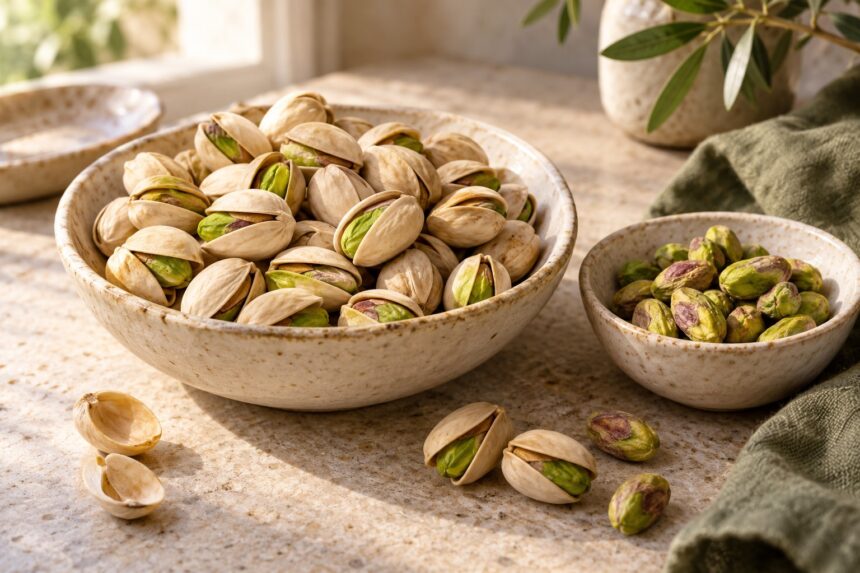
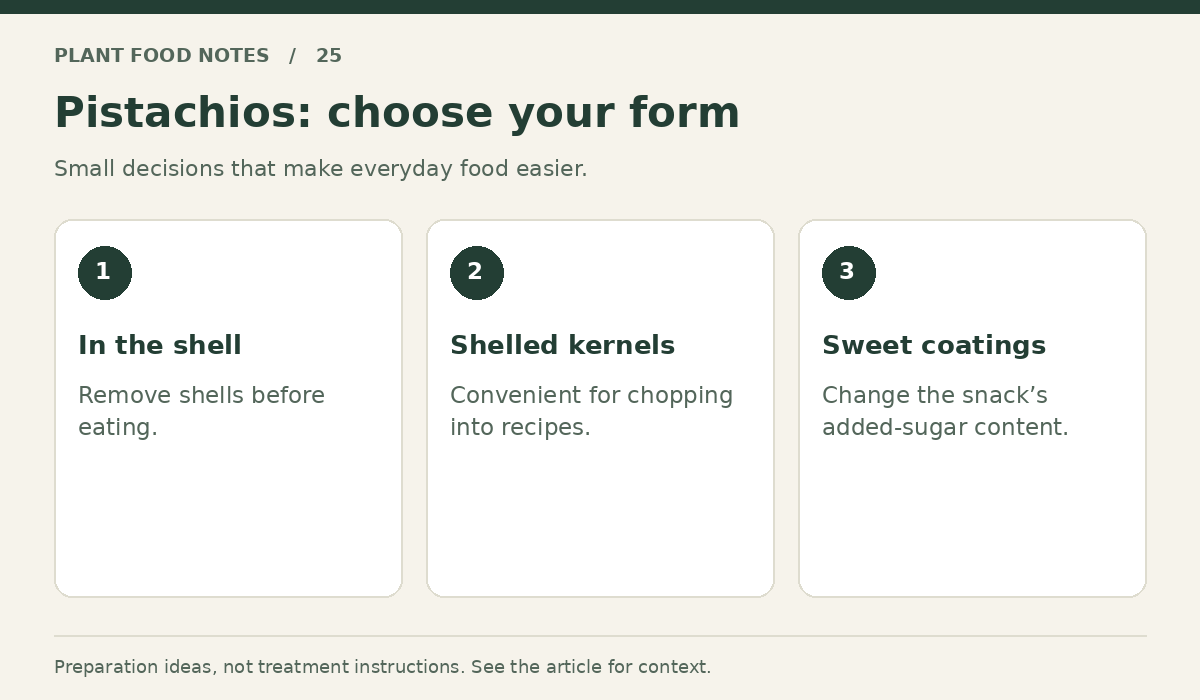
In-shell pistachios require more handling than ready-shelled kernels, which some people enjoy. The shells also make it easier to see that you have been eating. That is a practical observation rather than a guarantee of weight loss. If shelling is uncomfortable for your hands or inconvenient at work, shelled nuts may be the better choice.
Compare prices by edible quantity where possible. A bag that includes shells contains less food than an equal-weight bag of kernels. Choose the format for the setting: in-shell nuts for a relaxed snack, kernels for cooking, and a suitable finely ground preparation if texture needs require it. Convenience often determines whether a food is used consistently, so it belongs in the decision.
Salted, sweetened, or plain?
Plain pistachios are flexible enough for both breakfast and savoury meals. Salted versions can also be enjoyable, but compare sodium information if that is relevant to your dietary advice. Sweet coatings and confectionery add another set of ingredients. A pistachio dessert should be appreciated as the complete dessert, not treated as equivalent to a serving of plain nuts.
The same applies to pistachio spreads. Some are largely ground nuts; others contain substantial added sugar and fat. The front label may feature a large green kernel even when the product is mostly something else. Read the ingredient list and choose according to how you intend to use it. A distinctive colour or premium price is not a substitute for that information.
Use a little flavour to improve a simple meal
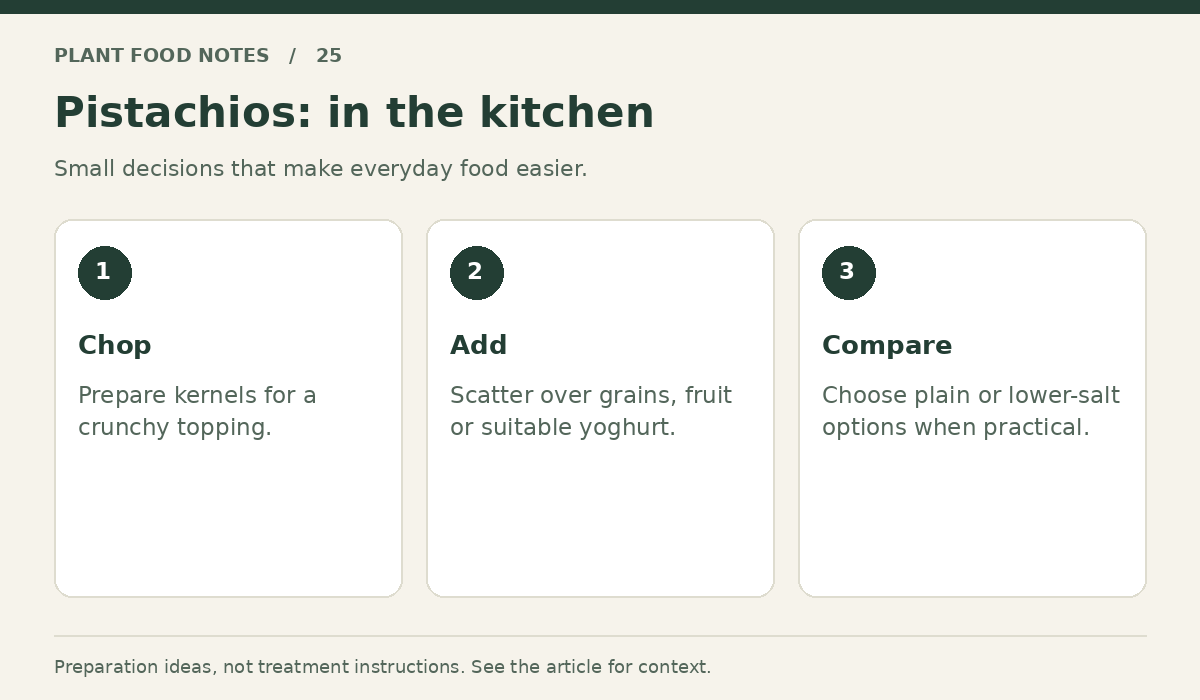
Chop pistachios and combine them with parsley, lemon zest, and a small amount of oil for a textured topping. Spoon it over roasted vegetables, beans, or a grain dish. The nuts provide contrast, while the herbs and citrus keep the topping lively. Start with a modest batch so the ingredients remain fresh and you can adjust the balance next time.
For breakfast, try a small amount over plain yogurt with fruit, or use them in porridge when you want a different texture. They do not need to appear in every bowl. Alternating with other nuts or seeds can control cost and keep meals varied. The purpose is to create a routine you enjoy, not to commit to one expensive ingredient as a daily obligation.
Weight and blood sugar claims need perspective
Pistachios contain energy, and no food makes total intake irrelevant. At the same time, reducing a food to its calorie count ignores its texture, nutrients, and role in the meal. A useful question is whether the snack satisfies the need you actually have. If it leaves you hungry because the portion is tiny, adjust the overall snack rather than assuming restraint is always the healthier choice.
People managing diabetes should consider the whole meal and their individual care plan. A favourable research finding does not make pistachios a treatment for high glucose or give permission to disregard other foods and medicines. Use them as an ordinary food that may fit well, and ask for personalised guidance when trying to make substantial changes around a diagnosed condition.
Make freshness and suitability part of the choice
Pistachios are tree nuts and are unsuitable for someone with a relevant allergy. Whole kernels also require appropriate chewing ability. Store them according to the packet, protect them from moisture and excessive heat, and discard nuts that smell rancid or show spoilage. Buying less can be more economical if a large bag takes too long to finish.
Their strongest case is a combination of enjoyable flavour, useful nutrients, and evidence for modest improvements in some lipid measures. That makes pistachios a reasonable option, not an essential purchase for everyone. Choose a form you will use, keep the amount connected to your appetite and meals, and let the research inform your expectations without turning a snack into a promise of disease prevention.
General nutrition information; not personalised medical advice. Sources checked on 16 September 2026.