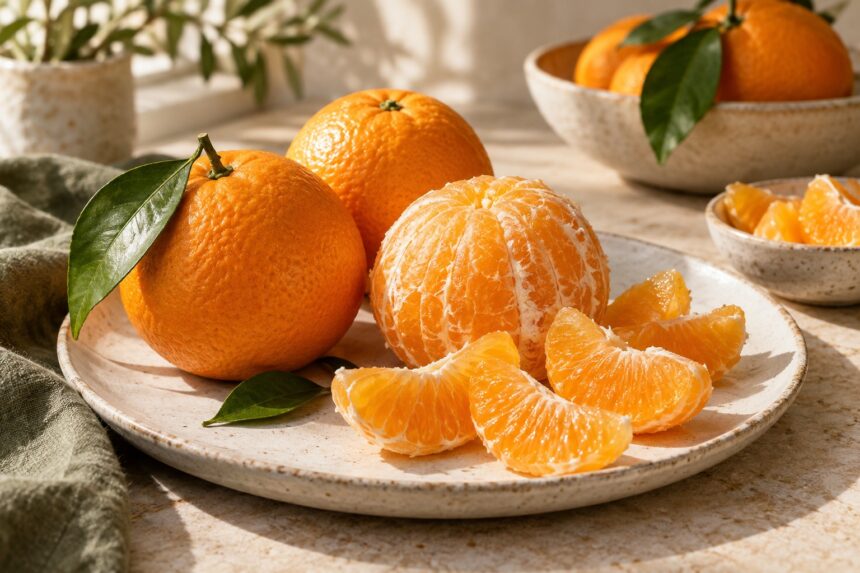
An orange can be a convenient piece of fruit for breakfast, a refreshing finish to lunch, or an ingredient that makes a savoury salad more interesting. Its association with vitamin C is well deserved, but that familiar connection often expands into claims about preventing every cold or instantly strengthening immunity. A better explanation starts with normal nutritional needs and the difference between a whole orange and products that only share its flavour.
Whole fruit, juice, sweetened orange drinks, marmalade, and vitamin tablets are not interchangeable. They differ in fibre, concentration, ingredients, and how they are eaten. Understanding those differences helps you use oranges well without turning them into a compulsory daily ritual. Their value is that they can be enjoyable, accessible fruit, not that they guarantee protection against illness.
Vitamin C supports normal functions
The NIH vitamin C fact sheet identifies citrus fruit as a useful source and explains vitamin C’s roles in collagen formation, antioxidant systems, and normal immune function. Getting enough matters. That does not mean consuming progressively larger amounts makes the immune system progressively stronger or removes the need for other aspects of health care.
Research on vitamin C supplements and colds is more nuanced than common advertising suggests. A nutrient can be essential without acting as a reliable prevention or cure for a particular infection. For most food decisions, an orange can simply help contribute to adequate intake alongside other fruit and vegetables. There is no need to make every snack a medical intervention or chase the highest possible number on a supplement label.
Pair citrus with plant-source iron
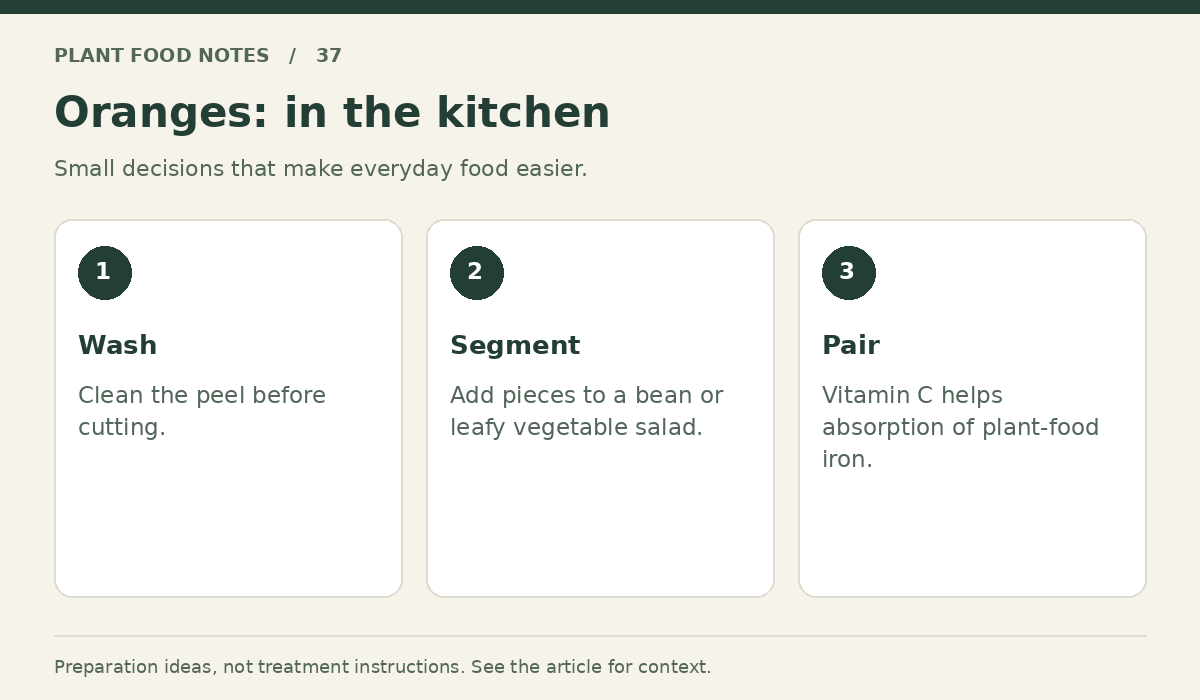
Vitamin C can improve the absorption of non-haem iron from plant foods. The NIH guide to iron explains this interaction. A practical application is to include orange segments with a bean or lentil meal, or enjoy an orange afterwards. This is a useful meal-planning idea rather than proof that fruit alone can correct iron deficiency.
If you have low iron, the cause and any recommended treatment still need attention. Blood loss, intake, absorption, and other factors can be relevant. Do not replace a prescribed supplement or an investigation with extra oranges. The fruit can support the meal while medical care addresses the problem. Keeping those roles distinct makes the advice both useful and realistic.
Whole oranges and juice are different experiences
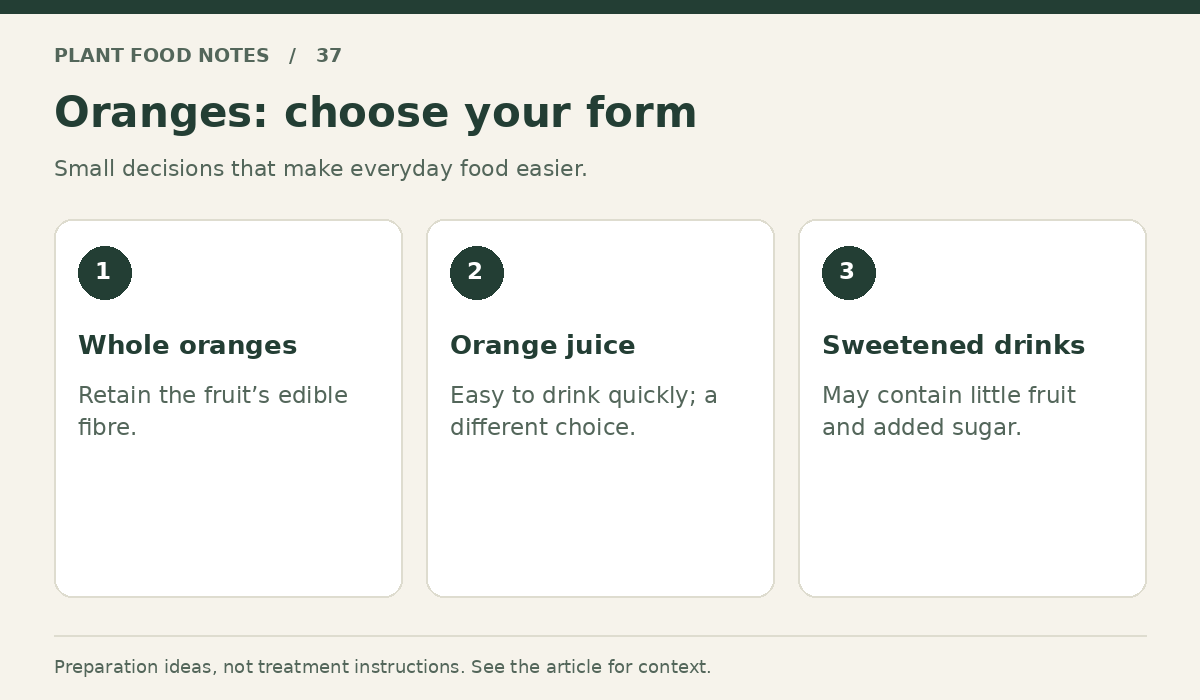
Eating orange segments retains the fruit’s structure and fibre and takes time to chew. Juice provides a different experience and is easy to consume quickly. A glass may represent more fruit than you would sit down and eat whole. This does not make juice forbidden, but it is a reason not to assume it fills every role of whole fruit in the diet.
For a routine snack, a whole orange is often a straightforward choice. If you prefer juice, notice the serving and the ingredients. An orange-flavoured drink may contain little fruit, while a label saying no added sugar does not make the drink nutritionally identical to an intact orange. The product description provides more useful information than a picture of citrus on the bottle.
Make oranges work in savoury food
Orange segments can add sweetness and acidity to a salad with beans, leafy vegetables, and herbs. Remove seeds and prepare pieces that are comfortable to eat. A little of the juice released during cutting can become part of a dressing, rather than being discarded. Taste the complete dish before adding more acidic or sweet ingredients so the flavours stay balanced.
This approach is helpful if you rarely remember fruit as a separate snack. The orange becomes part of a meal you already plan to eat. It can also accompany roasted vegetables or a grain dish, depending on your preferences. There is no requirement to follow a special wellness recipe; the fruit’s ordinary flavour can do useful work in familiar food.
Breakfast needs more than a vitamin reputation
An orange alongside porridge, toast, or yogurt can add variety to breakfast. If the meal must sustain you for several hours, consider whether it also contains enough energy and protein. An orange and a hot drink may be pleasant but insufficient for some people. The right breakfast depends on appetite, routine, and the time until the next meal.
Similarly, adding a few orange pieces does not transform an otherwise large sweet breakfast into a treatment. Avoid assigning the fruit a magical balancing role. It contributes something useful, while the rest of the meal still counts. Thinking in terms of the complete breakfast is more informative than labelling one ingredient healthy and assuming it determines everything around it.
Reflux and individual tolerance matter
Citrus can aggravate reflux symptoms in some people. The NIDDK advice on eating with reflux discusses foods that may be relevant and the importance of identifying personal triggers. If oranges repeatedly cause discomfort, another fruit may be a better choice. You do not need to force citrus into the diet to obtain vitamin C.
Individual medicine instructions also deserve attention when they mention fruit juices. Do not generalise advice about one citrus fruit to every other one, but do follow the label and ask a pharmacist when uncertain. A specific restriction is more useful than a blanket assumption that all fruit is either safe in unlimited amounts or incompatible with medication.
Buy for taste and actual use
Choose sound fruit and store it appropriately. Wash the exterior before cutting, even though the peel is usually discarded, and use clean utensils. If peeling at work is inconvenient, prepare a suitable portion at home and keep it safely chilled until needed. Small practical changes can determine whether fruit becomes part of lunch or remains an item you keep forgetting.
Oranges offer a useful vitamin C source, whole-fruit fibre, and a way to complement plant-source iron in meals. Those benefits are enough without promising immunity from illness. Prefer the form that fits your purpose, distinguish juice from whole fruit, and respect individual tolerance. A regular fruit habit built around enjoyment is more sustainable than treating every orange as a dose of medicine.
General nutrition information; not personalised medical advice. Sources checked on 16 September 2026.