Cocoa has an unusually appealing health story because it connects a familiar pleasure with serious scientific research. Headlines about flavanols and blood vessels can make a square of chocolate sound like a prescription. The problem is that unsweetened cocoa powder, a chocolate bar, a sweetened drink, and a standardised cocoa extract are different products. Evidence about one should not be assigned casually to all the others.
There is a perfectly reasonable place for cocoa and chocolate in an enjoyable diet. You do not need to prove that every food prevents disease before eating it. A useful discussion instead asks what the research actually measured, what the product contains, and how it fits the rest of the meal. That approach leaves room for pleasure without turning it into a misleading health guarantee.
Flavanols explain the scientific interest
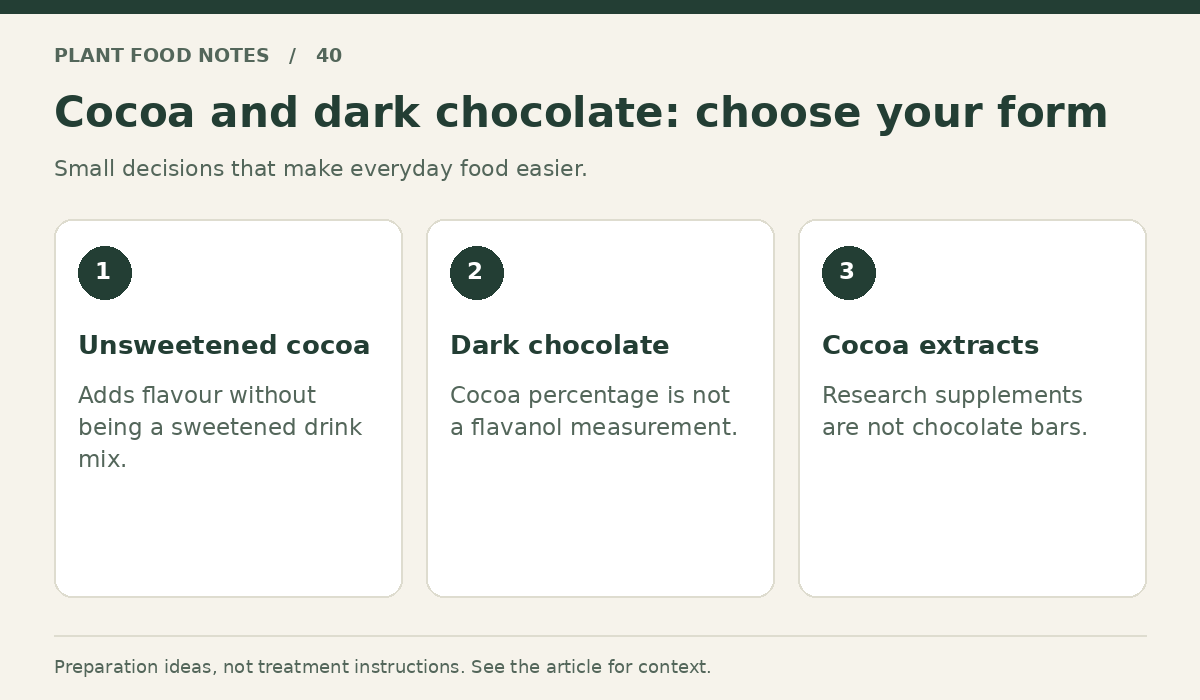
Cocoa contains flavanols, plant compounds studied for effects on vascular function and cardiovascular risk factors. Processing and product formulation affect what remains in the food. The Harvard Nutrition Source guide to dark chocolate explains why cocoa-containing products differ. A cocoa percentage is not a direct measurement of the flavanol dose used in a clinical trial.
This matters when comparing bars or powders. A darker colour or more bitter taste does not establish a particular medical effect. The amount of sugar, cocoa butter, and other ingredients also varies. Read the product as a food, not as a disguised medicine. Research interest can justify careful study without supplying a universal instruction to eat the highest-cocoa product available every day.
A major trial did not give a simple yes-or-no answer
The COSMOS randomised trial of cocoa extract studied a standardised supplement in more than twenty thousand older adults. It did not find a statistically significant reduction in its primary outcome of total cardiovascular events. A reduction in cardiovascular deaths appeared among secondary outcomes, which makes the findings interesting but more nuanced than a headline claiming that chocolate prevents heart disease.
The intervention was an extract, not an ordinary chocolate bar. That distinction is essential even before considering the outcome. The trial therefore cannot be translated into a prescribed number of chocolate squares. A responsible interpretation acknowledges the primary result, the potentially encouraging secondary finding, and the need for further research rather than selecting only the most attractive part of the report.
Choose cocoa powder for its culinary role
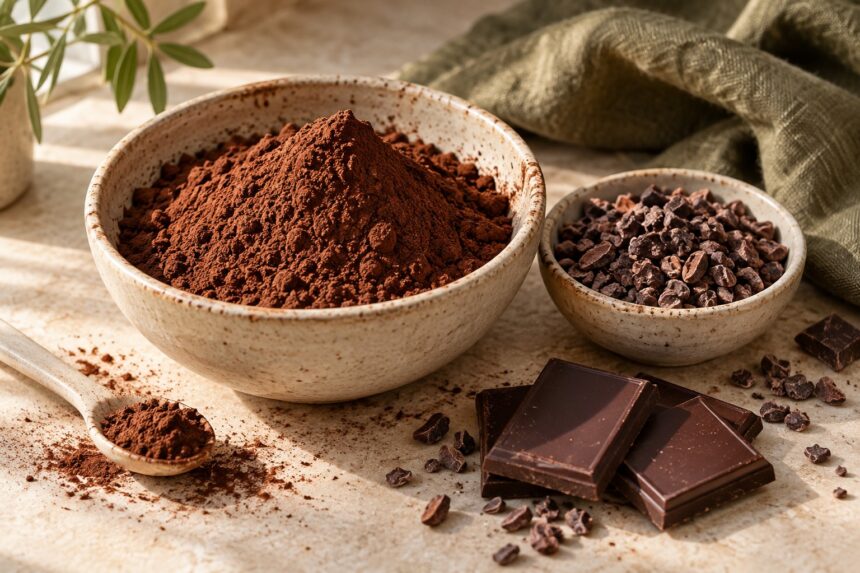
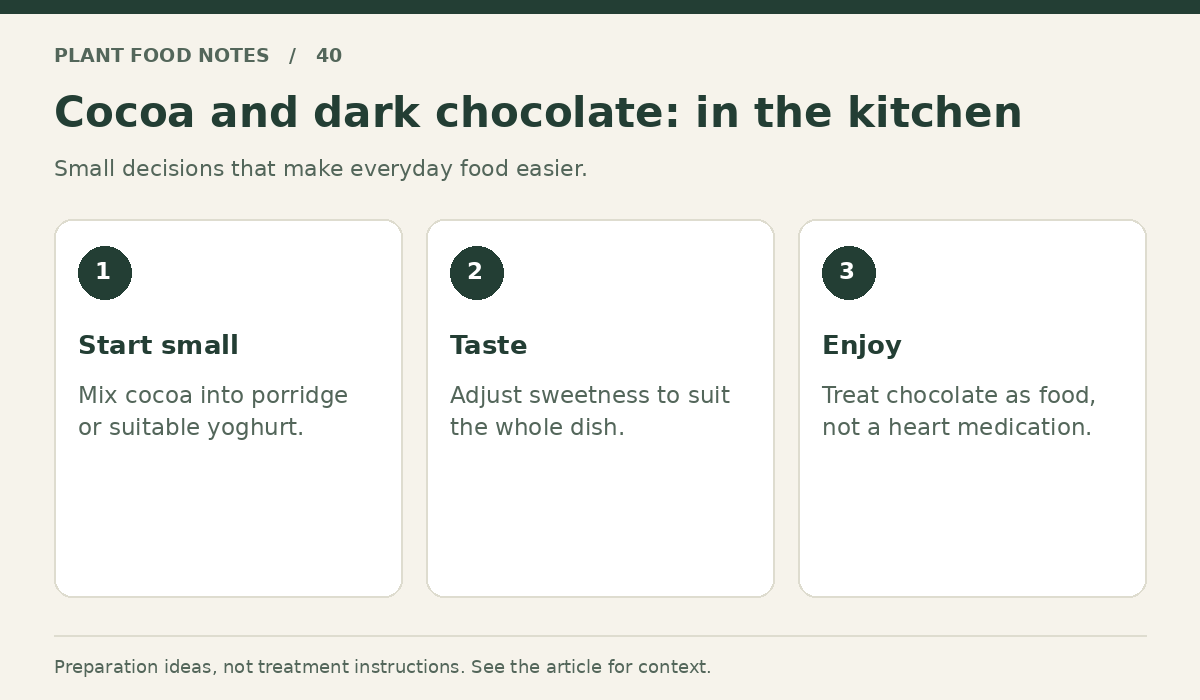
Unsweetened cocoa powder can add chocolate flavour to porridge, yogurt-based mixtures, or a homemade drink without requiring a large amount of chocolate confectionery. It is naturally bitter, so begin with a small amount and taste. Mix it thoroughly with a little liquid before adding more if you want to avoid dry lumps in a drink or breakfast bowl.
Natural and alkalised powders behave differently in some recipes, particularly baking, so follow a recipe suited to the product. There is no need to choose solely by a vague antioxidant promise. The powder that works reliably in your kitchen may be the more useful purchase. If you rarely bake or make cocoa drinks, a small container can prevent waste and preserve quality.
A cocoa drink depends on the complete recipe
A drink made with cocoa and milk or a suitable plant-based alternative can be enjoyable, but its nutritional character depends on the base and additions. Protein and fortification differ among plant-based drinks, while sweeteners and toppings can change the final product substantially. The word cocoa alone does not describe the entire cup.
Taste before adding sweetness and use an amount that suits you. A rich café drink can still be enjoyed as such, but it should not be presented as equivalent to the standardised extract used in research. If your aim is a simple everyday drink, keep the preparation manageable. An elaborate list of wellness additions is not necessary to justify a flavour you already like.
Dark chocolate remains chocolate
Dark chocolate generally contains cocoa solids and cocoa butter, often with sugar and other ingredients. It provides energy and should not be described as unlimited because some components are scientifically interesting. At the same time, a small amount does not need to be treated as a dietary failure. The useful question is whether the portion and frequency fit your overall eating pattern and preferences.
Choose a bar you genuinely enjoy rather than forcing yourself to eat one that is unpleasantly bitter for a supposed medical advantage. If a little chocolate after a meal is satisfying, that may be a comfortable routine. If you use it in a dessert, assess the dessert as a whole. A high cocoa percentage does not erase the other ingredients in the recipe.
Caffeine and reflux can affect the choice
Cocoa and chocolate contain stimulant compounds, including caffeine, so timing and quantity may matter for sensitive individuals. If an evening cocoa habit seems to interfere with sleep, consider an earlier time or another drink. The effect depends on the product, amount, and person; there is no need to assume every serving will affect everyone identically.
Chocolate can also be a reflux trigger for some people. The NIDDK guidance on eating with reflux discusses identifying foods that worsen symptoms. If you repeatedly notice discomfort, adjust the habit and seek advice when needed. A food’s possible cardiovascular research interest does not require you to tolerate symptoms whenever you eat it.
Keep supplement decisions separate
A cocoa extract product may contain a defined amount of particular compounds, but that does not automatically make it necessary or appropriate. Consider the evidence for the actual product and discuss supplements when you take medicines or have a medical condition. Avoid using a supplement to compensate for smoking, uncontrolled blood pressure, or other issues that need more direct attention.
For ordinary food use, the strongest approach is straightforward: choose a product you like, understand what is in it, and keep the role proportionate. Cocoa can add flavour to a useful breakfast, and chocolate can provide enjoyment within a varied diet. The science is interesting precisely because it is being tested carefully; it should not be simplified into a promise that a favourite treat is a proven treatment.
General nutrition information; not personalised medical advice. Sources checked on 16 September 2026.