A bag of frozen peas can rescue a meal that otherwise contains very little vegetable. A packet of split peas can become a substantial soup from inexpensive ingredients. These foods share a name and a botanical connection, but they behave differently in the kitchen. Understanding that difference makes it easier to appreciate their nutritional value without treating every pea product as interchangeable.
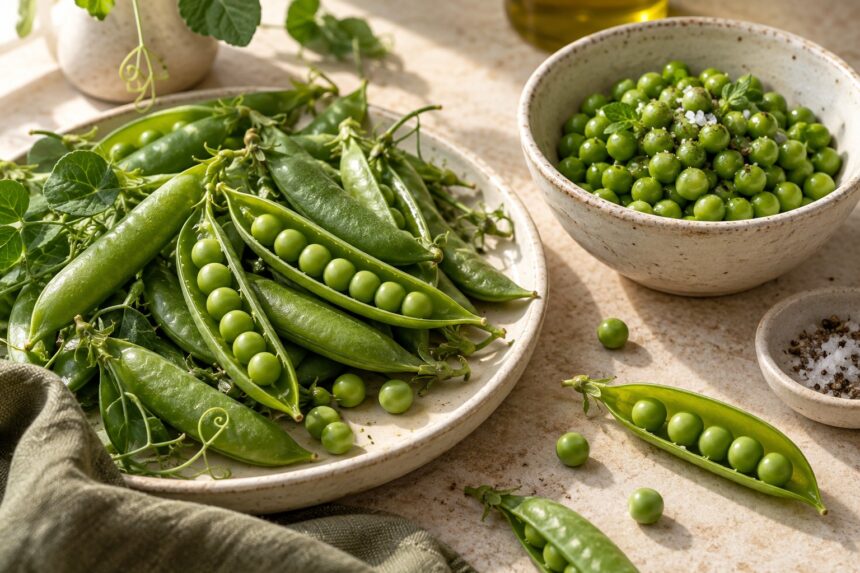
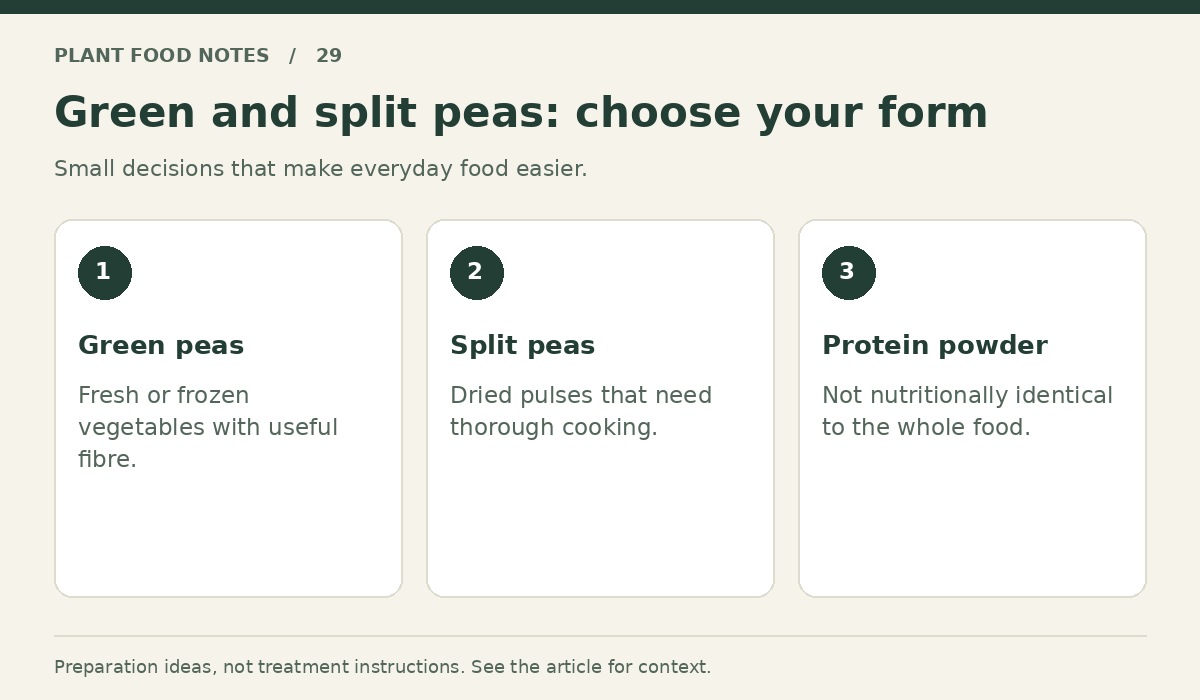
Green peas are usually eaten as immature seeds, while split peas are dried mature peas with the outer skin removed and the seed split. Both can contribute useful nutrients, but their water content, portions, and cooking methods differ. Comparing a spoonful of cooked green peas with the same weight of dry split peas would therefore be misleading. Always notice which form a nutrition figure describes.
Peas contribute more than colour
Peas supply carbohydrate, fibre, and plant protein. The Harvard Nutrition Source guide to legumes and pulses places peas within the broader legume family and explains the nutritional role of pulses. Their usefulness is not limited to vegetarian diets. They can complement many eating patterns and add substance to dishes that otherwise rely heavily on one refined staple.
A small spoonful on the side of a plate is still a small contribution. A generous portion in a meal or a soup based on split peas plays a larger role. Rather than asking whether peas count as protein or vegetables in every possible system, look at what the meal contains and what it needs. Food categories are planning tools, not a substitute for the actual portion.
Fibre supports the overall digestive pattern
Peas can help increase fibre intake across the day. The NIDDK guidance on eating for constipation explains the importance of fibre and appropriate fluids. That supports including fibre-containing foods regularly, but it does not mean a bowl of pea soup is a guaranteed remedy for every digestive symptom.
Some people notice gas when they suddenly eat much larger amounts of legumes. Start with a portion that suits you and increase gradually if needed. A food that is useful in general can still require adjustment for an individual. Persistent symptoms, significant pain, or a new change in bowel habits deserve medical attention rather than an endless cycle of adding more fibre and hoping for the best.
Frozen peas solve a practical problem
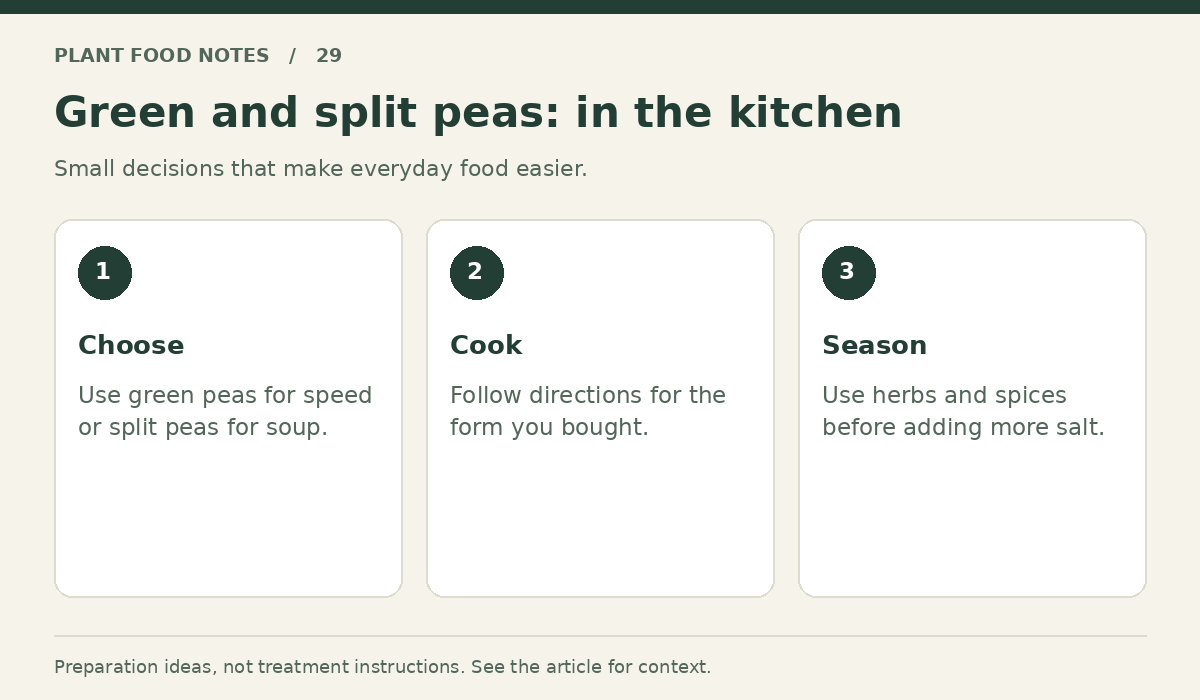
Frozen green peas are convenient because you can cook the amount you need and keep the rest frozen. Follow the packet’s cooking instructions rather than assuming frozen means ready to eat. Their speed makes them useful near the end of preparing rice, pasta, soups, or a mixed vegetable dish, where they can add colour and texture without a separate shopping trip.
They also reduce the pressure to use fresh produce immediately. If fresh peas are available and you enjoy shelling them, that is another option, but it is not a requirement for healthy eating. Choose the form that fits your budget and routine. A freezer ingredient that is actually used can be more helpful than fresh produce bought with good intentions and repeatedly wasted.
Make green peas part of the meal
Add cooked peas to a rice bowl with other vegetables and a suitable protein source. They can also be mashed lightly with herbs and a little oil or yogurt for a side dish, according to your preferences. Start with familiar flavours so the peas feel integrated rather than added solely to satisfy a health rule.
If a meal is otherwise small, a scattering of peas may not make it adequate. Consider the staple, protein foods, vegetables, and overall amount together. Conversely, there is no need to make every pea dish elaborate. A simple side of properly cooked peas can be useful alongside a complete main meal, especially when time or cooking energy is limited.
Split peas need a different plan
Sort and rinse dried split peas as directed, then cook them fully according to the packet. They soften and thicken the cooking liquid, which makes them particularly useful for soup. Keep an eye on the pot and stir when necessary so the thick mixture does not catch on the bottom. Add more liquid as needed to reach a texture you enjoy.
For a basic soup, use onion, carrots, herbs, and a suitable stock or water. A smoky spice can add depth without making a processed meat ingredient essential. If you do use meat, consider the complete recipe, including salt and portion size. The split peas already contribute substance, so the additional ingredients should support the dish rather than overwhelm it.
Pea protein products are another category
Pea protein powder and foods made from isolated pea protein are not nutritionally identical to whole peas. Processing concentrates some components and removes others, including much of the structure that makes whole legumes useful. Such products may have a role for particular needs, but their label and intended use deserve their own assessment.
Do not assume a snack is high in fibre simply because it contains pea protein, or that it offers the same meal experience as a bowl of peas. Check the complete ingredients and nutrition information. If you are considering supplements because you struggle to eat enough or have a medical condition, individual guidance may be more useful than selecting a product solely from its plant-based branding.
Use leftovers safely and avoid repetition fatigue
Split pea soup often thickens as it stands, so add a little suitable liquid when reheating if needed. Cool and refrigerate leftovers promptly, and portion them so you can use them safely. Freeze appropriate portions if that suits your routine. A large pot is only convenient when storage and later meals have been considered before it is made.
Rotate the flavours: one batch with herbs, another with mild curry spices, or green peas used in a different dish altogether. Peas offer affordable fibre, plant protein, and considerable convenience, especially when you choose the right form for the job. Their everyday benefit is helping make regular meals more complete. That is a stronger foundation than expecting a single packet to deliver dramatic health changes on its own.
General nutrition information; not personalised medical advice. Sources checked on 16 September 2026.