A bowl of vegetable soup can be nourishing yet still feel unfinished. A scattering of pumpkin seeds changes its texture immediately, adding a crisp contrast without requiring another pan or an elaborate side dish. That small kitchen role is a useful starting point for understanding their health value. Pumpkin seeds contribute nutrients in a form that can fit ordinary meals; they do not need to be treated as a daily remedy or an expensive wellness ritual.
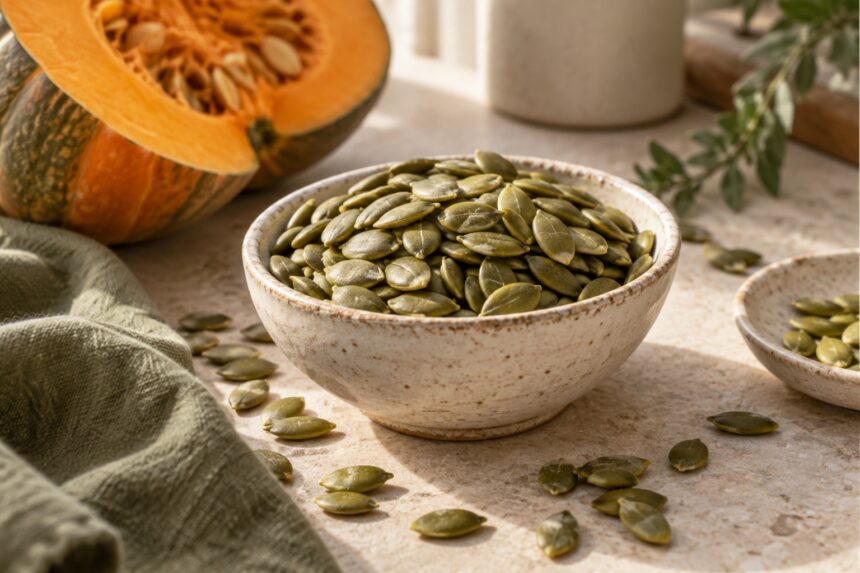
The green kernels usually sold as pepitas are easier to use than seeds with a tough outer shell. Product labels matter because roasted, salted, sweetened, and plain versions serve different purposes. Before buying a large bag, decide whether you want a snack, a salad topping, or an ingredient for a sauce. That decision helps you use the seeds consistently instead of leaving them forgotten behind the spice jars.
Magnesium is a real contribution, not a miracle claim
Pumpkin seeds are a concentrated food source of magnesium. The NIH magnesium fact sheet includes roasted pumpkin seeds among its food examples and explains magnesium’s roles in muscle and nerve function, energy production, and other normal processes. Getting enough of an essential nutrient matters. It does not follow that extra seeds will cure cramps, insomnia, anxiety, or every symptom attributed online to low magnesium.
If you suspect a deficiency, the cause and the appropriate response deserve attention. Medicines, digestive conditions, and other factors may matter. Meanwhile, including magnesium-containing foods such as seeds, beans, and whole grains is a sensible way to diversify intake. Think of pumpkin seeds as one contributor to that pattern, with a useful combination of nutrients rather than a single ingredient that must carry the entire diet.
Protein and unsaturated fats work together
The kernels also contribute plant protein and mostly unsaturated fats. Their composition makes them more substantial than a decorative herb garnish, although the actual contribution depends on how much you use. A teaspoon scattered over a large serving is not equivalent to a generous portion incorporated into the meal. Avoid judging the nutritional value solely from a photograph with a few seeds arranged on top.
The American Heart Association’s guide to fats in foods provides context for choosing unsaturated fat sources in place of some saturated fats. For pumpkin seeds, the practical question is what they replace or accompany. Using them for crunch instead of a heavily salted topping is a different change from adding them to every meal without considering the rest of the food.
Choose kernels that fit the job
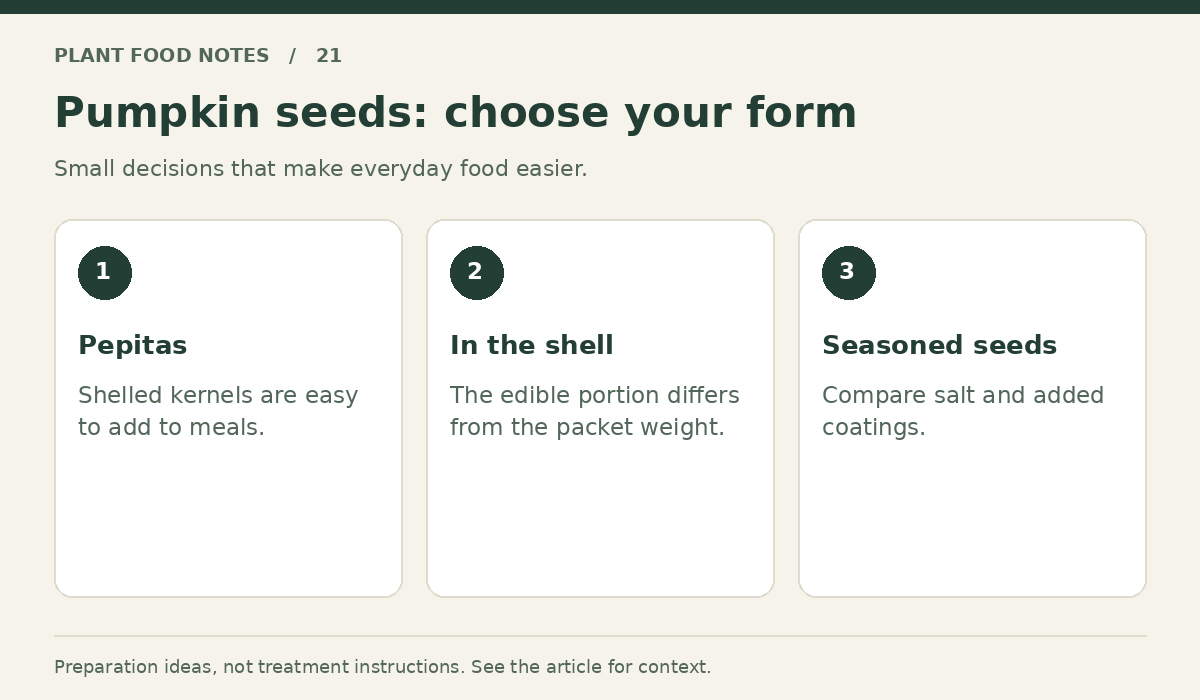
Plain shelled seeds are the most flexible option because you can season them for sweet or savoury dishes. Roasted seeds are convenient when you want immediate crunch. Salted varieties can still be enjoyable, but check the label if reducing sodium is important to you. Honey-coated seeds and seed confectionery should be assessed as complete products, including their added ingredients.
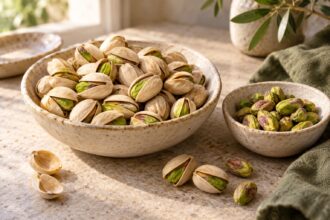
When comparing prices, compare the edible amount rather than only the size of the bag. Seeds in shells can be enjoyable to eat slowly, but they create waste and are less convenient for cooking. If chewing is difficult, a suitable smooth seed spread or finely ground preparation may work better. That is a texture decision, not evidence that one form is inherently virtuous and another is not.
Turn a small amount into a useful topping
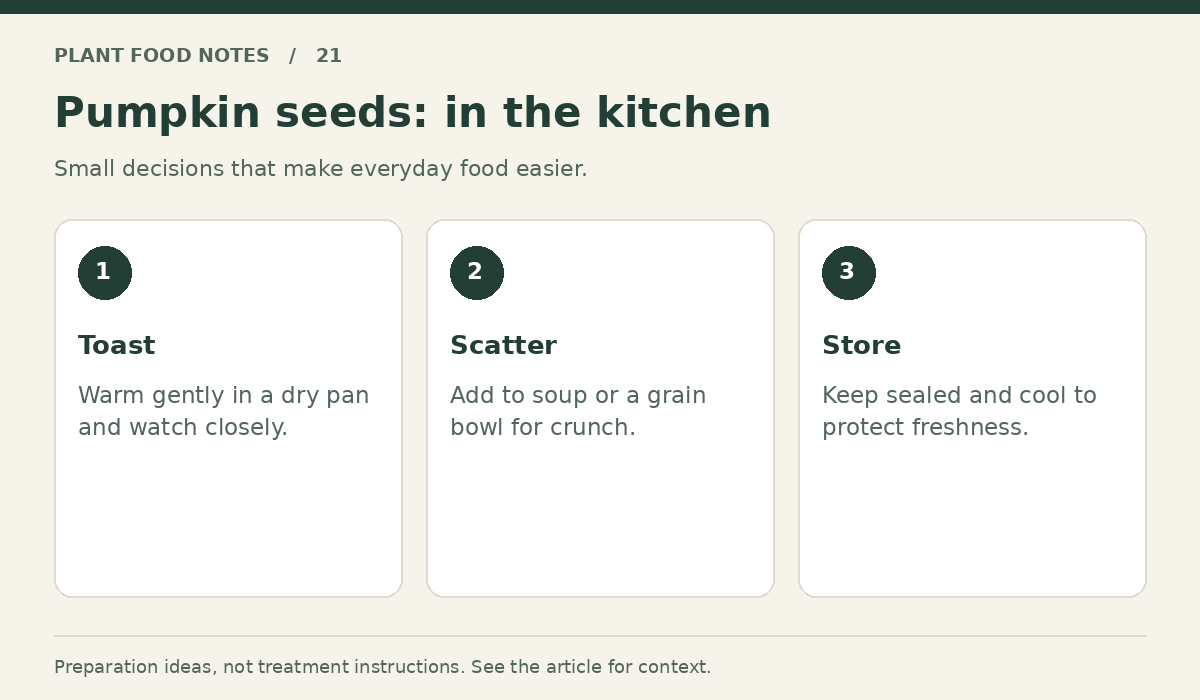
For a quick topping, warm plain kernels gently in a dry pan, moving them regularly and watching closely. Stop before they scorch, and let them cool enough to handle. Add a little smoked paprika, ground cumin, or another seasoning you enjoy. Prepare only what you need at first, because a modest amount of freshly toasted seeds often has more flavour than a large quantity added absent-mindedly.
Try the topping on a carrot soup, a grain bowl, or roasted vegetables. Add it at serving time so it stays crisp. If the meal needs more substance, include beans, tofu, eggs, fish, or another protein food rather than expecting a light seed garnish to do everything. The seeds improve the meal most when they have a clear role alongside the other ingredients.
A seed sauce can make vegetables easier to enjoy
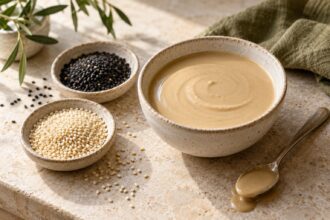
Pumpkin seeds can also be blended into a sauce with water, herbs, a little oil, and an acidic ingredient such as lime juice. Use a blender suited to the task and adjust the liquid gradually until the texture works for your dish. Start with a small batch. An intensely thick sauce may need more liquid rather than more oil to become pleasant to spoon over food.
Serve it with cooked vegetables, beans, or a familiar staple. The benefit here is partly practical: a sauce you like can make a basic meal more appealing and repeatable. It is unnecessary to call the sauce a detox dressing or a hormone-balancing blend. Its flavour, texture, and nutrient contribution are enough to explain why it belongs in the kitchen.
Portions, tolerance, and storage
Seeds are energy-dense, which can be useful when someone needs a compact source of food energy. It also means eating directly from a large bag makes the amount easy to overlook. Put a suitable portion into a small bowl and see how it fits your appetite. There is no universal spoonful that treats disease or guarantees a particular health outcome.
A sudden large increase in seeds and other fibre-containing foods may be uncomfortable. Increase gradually if your usual diet contains little fibre. Seed allergies are possible, and a known allergy takes priority over general nutrition advice. Store kernels according to the packet, protect them from heat and moisture, and discard seeds that smell rancid or show spoilage rather than hiding their flavour in a strong sauce.
Make the purchase earn its place
Choose two uses before buying: perhaps soup toppings and a weekend seed sauce. Keep the bag where you will remember it, close it properly, and note whether a smaller pack would suit your household better next time. A food that is routinely thrown away has little practical nutritional value, regardless of how impressive its nutrient table looks.
Pumpkin seeds are worthwhile because they combine magnesium, plant protein, unsaturated fats, and an adaptable texture. Their strongest everyday contribution is straightforward: they help make varied meals satisfying and interesting. Use them in amounts that suit the meal, pay attention to the product you actually bought, and leave medical claims to evidence about the specific condition and preparation involved.
General nutrition information; not personalised medical advice. Sources checked on 16 September 2026.