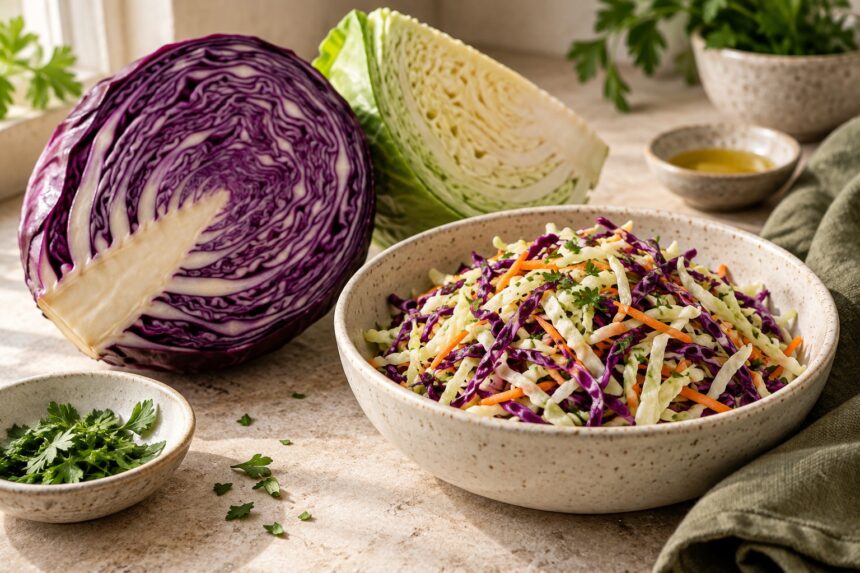
A single cabbage can stretch across several meals, which makes it one of the most practical vegetables for a household trying to eat well on a budget. One portion can become a crunchy salad, another can be cooked into a warm side dish, and the rest can contribute to soup. The challenge is usually not finding an impressive health claim. It is planning enough variety that the last wedge does not become an unwanted refrigerator resident.
- The cruciferous connection is interesting, not a cancer guarantee
- Fibre and vitamin C contribute to the everyday case
- Make slaw without letting the dressing dominate
- Cooking can change the reputation of cabbage
- Fermented cabbage needs a more precise discussion
- Comfort matters more than winning a fibre contest
- Plan the whole cabbage before buying it
Green, red, and other cabbage varieties offer different textures and appearances. They all deserve to be considered as ordinary vegetables rather than ingredients reserved for a restrictive diet. Cabbage soup does not need to be marketed as a weight-loss programme, and fermented cabbage should not be assumed to cure digestive problems. There are more reliable reasons to eat it: fibre, useful nutrients, affordability, and versatility.
The cruciferous connection is interesting, not a cancer guarantee
Cabbage belongs to the cruciferous vegetable family. The National Cancer Institute’s review of cruciferous vegetables discusses their compounds and the research interest in cancer prevention. Laboratory findings provide possible mechanisms, but studies in people have not established a simple promise that eating cabbage prevents cancer.
That distinction should not make the vegetable seem disappointing. A food can be a useful part of a varied diet without being a treatment. The practical decision remains straightforward: if cabbage is affordable and you enjoy it, it can help increase vegetable variety. There is no need to prescribe a special daily dose or to describe ordinary cooking as a cancer-prevention protocol.
Fibre and vitamin C contribute to the everyday case
Cabbage supplies fibre and vitamin C, with amounts depending on the variety, portion, and preparation. The NIH vitamin C guide explains the nutrient’s roles in collagen formation, normal immune function, and the absorption of iron from plant foods. Those are normal biological functions, not evidence that a bowl of cabbage stops infections or replaces treatment.
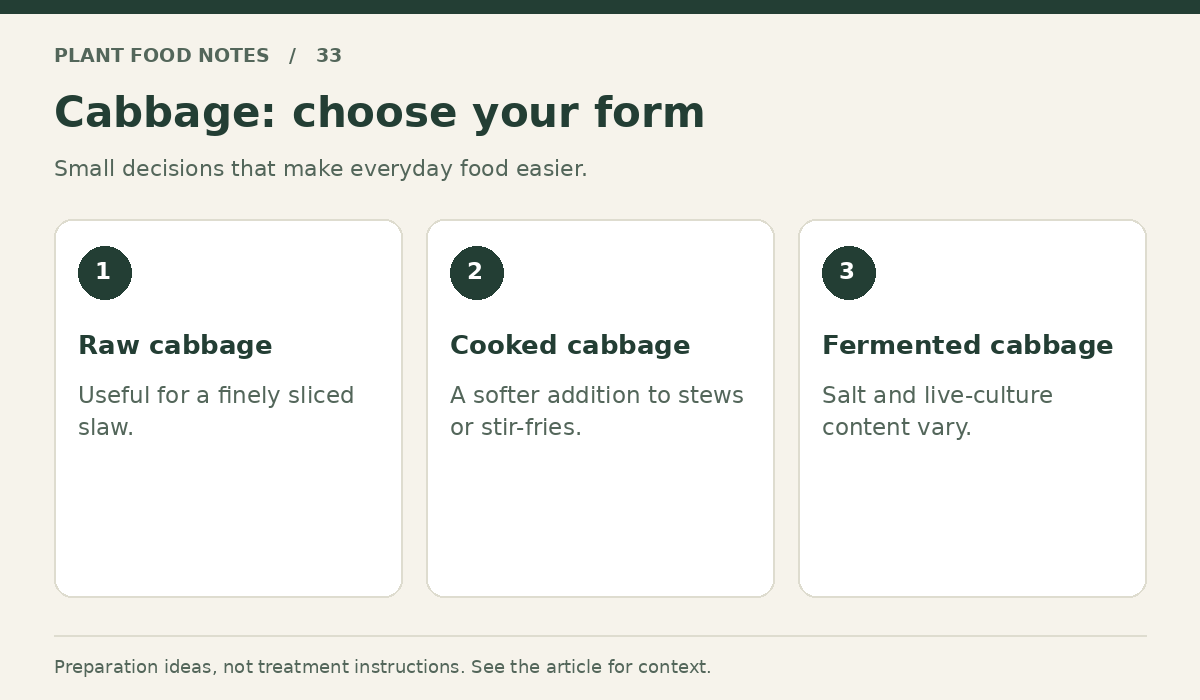
Raw and cooked cabbage can both fit. A raw slaw offers crunch; cooked cabbage may be more comfortable or appealing for some people. Choosing the preparation you will actually eat is usually more useful than insisting on one method for every meal. The whole diet can provide nutrients through several foods, so one cooking decision does not determine whether you are eating well.
Make slaw without letting the dressing dominate
Slice cabbage thinly enough for comfortable eating, and combine it with another vegetable or fruit if you enjoy the contrast. A dressing based on yogurt, oil and vinegar, or another suitable mixture can work. Add it gradually and taste. The goal is to make the cabbage pleasant, not to assume that either a completely dry salad or a heavily dressed one is the only option.
If slaw is part of lunch, pair it with enough other food to make the meal substantial. Beans, a sandwich, a grain dish, or another main component can fit. A large bowl of raw cabbage may provide volume without meeting your energy or protein needs. The usefulness of a vegetable side should not be confused with the adequacy of an entire meal.
Cooking can change the reputation of cabbage
If your main memory is overcooked cabbage, try a different method. Sauté thin slices until they reach a texture you like, roast wedges using an appropriate recipe, or add chopped cabbage to a soup near the stage that gives it enough time to soften. Seasoning and cooking time make a considerable difference to the eating experience.
For a simple warm meal, combine cooked cabbage with beans and a familiar staple. Use herbs, spices, or a little acidity to balance the flavour. There is no requirement to hide the vegetable under a rich sauce, but there is also no virtue in serving it bland. Enjoyment is part of what makes a dietary change repeatable over more than a few enthusiastic days.
Fermented cabbage needs a more precise discussion
Sauerkraut and other fermented cabbage foods differ from plain cabbage in flavour, preparation, and often salt content. Some contain live microorganisms, while heat treatment and storage can change that. The NCCIH overview of probiotics explains that effects depend on the particular microorganisms and situation. Fermented does not automatically mean a product has a proven benefit for your digestive condition.
Enjoy such foods in suitable amounts if they agree with you, and read the label when sodium or other ingredients matter. If making fermented cabbage at home, use a tested food-safety method rather than improvising from a health headline. A jar with uncertain preparation or signs of spoilage should not be consumed because someone has described fermentation as inherently protective.
Comfort matters more than winning a fibre contest
Large amounts of cabbage can cause gas or discomfort for some people, especially when intake changes suddenly. Try a smaller portion or a cooked preparation if that suits you better. A nutritious food is not a test of how much discomfort you can tolerate. Individual digestive conditions may need tailored guidance rather than a general instruction to eat more vegetables of one kind.
If symptoms persist, discuss them with a qualified professional. Do not use a cabbage-only diet to investigate them, and do not assume the food is harmful to everyone because it does not suit you. Other vegetables can provide variety. A flexible approach preserves the goal of eating well while allowing different people to reach it through different foods.
Plan the whole cabbage before buying it
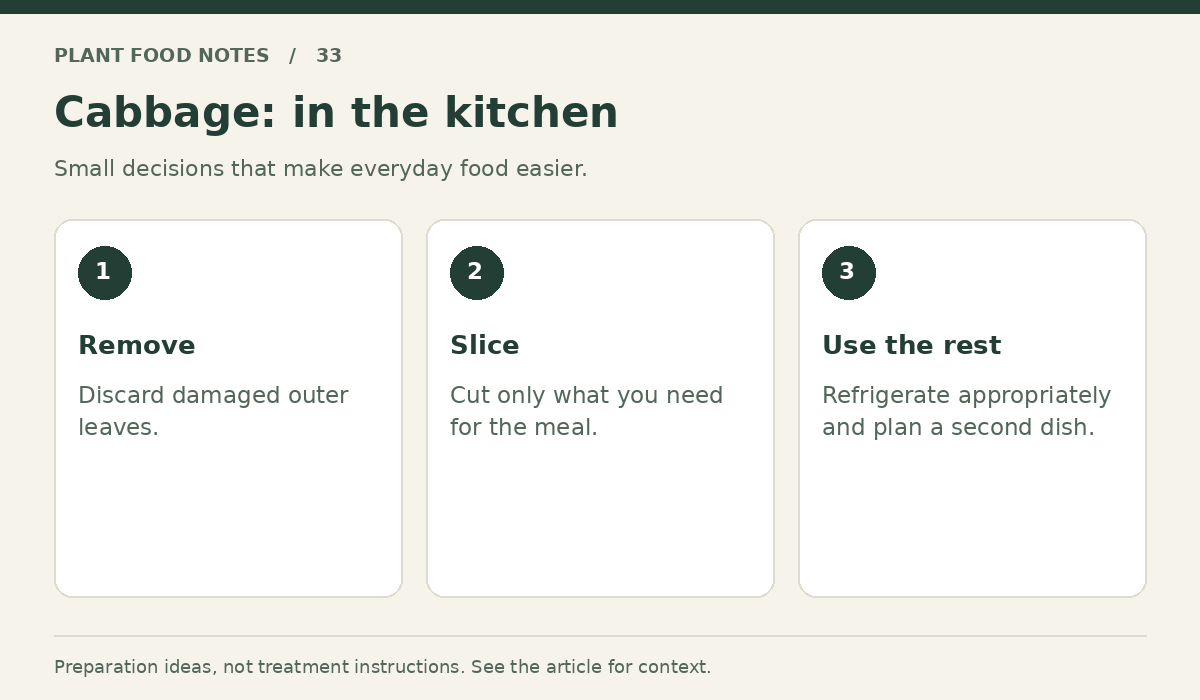
Think of two or three uses: slaw for one meal, sautéed cabbage for another, and a soup if there is still some left. Store the cut vegetable appropriately and keep prepared dishes refrigerated as needed. If a whole head is too much for your household, a smaller portion may be better value despite a higher price per kilogram.
Cabbage’s benefits are grounded in its role as an accessible, adaptable vegetable. It can contribute fibre and nutrients while helping meals stretch further. Keep cancer and probiotic claims proportional to the evidence, choose preparations you enjoy, and give the food a realistic job in a complete diet. That approach is more useful than the promise of a dramatic result from a week of cabbage soup.
General nutrition information; not personalised medical advice. Sources checked on 16 September 2026.