
Carrots are one of the most accessible vegetables to build a routine around. They can be eaten crunchy, cooked until soft, blended into soup, or roasted until their edges become sweet and savoury. They also arrive with a famous promise: that eating them improves eyesight. There is a real nutritional connection behind that story, but it is more specific than the idea that extra carrots give everyone sharper vision.
- Beta-carotene explains the link with vision
- Food carotenoids are not a reason to chase supplement doses
- Raw and cooked carrots offer different experiences
- Fibre is another reason to keep the whole vegetable
- Roast a tray that can serve several meals
- Make soup substantial enough for its purpose
- Buy and prepare with less waste
Their everyday value extends beyond that single claim. Carrots contribute fibre and provide a convenient way to add vegetables to meals that might otherwise contain little produce. They are often inexpensive and adaptable, which matters when healthy eating needs to work on an ordinary weekday. The aim is to use those strengths without making one vegetable responsible for preventing every eye problem or correcting a medical condition.
Beta-carotene explains the link with vision
Orange carrots contain beta-carotene, which the body can convert into vitamin A. The NIH guide to vitamin A and carotenoids explains that vitamin A is needed for normal vision and other functions. Inadequate vitamin A can cause serious problems, including difficulty seeing in low light. Meeting nutritional needs is therefore important.
That does not mean increasing carrots beyond an adequate diet will correct short-sightedness, remove the need for glasses, or treat all eye diseases. A nutrient’s role in normal function is not evidence that more of the food improves every person’s vision. If you notice a change in eyesight, arrange appropriate assessment rather than using carrots or supplements as a substitute for finding the cause.
Food carotenoids are not a reason to chase supplement doses
Carrots can contribute to vitamin A intake as part of food, but concentrated beta-carotene supplements are a different exposure. The NIH fact sheet discusses risks associated with high-dose supplements in some groups, including smokers. It is inappropriate to move from a positive statement about vegetables to the assumption that the largest available capsule must offer even more benefit.
For most everyday meal planning, the task is simpler: include a variety of vegetables and other nutrient sources. You do not need to calculate an aggressive carrot target or drink large quantities of juice to demonstrate commitment. If supplements are being considered for a diagnosed problem, the choice should reflect individual medical advice rather than the reputation of the food from which a nutrient’s name is familiar.
Raw and cooked carrots offer different experiences
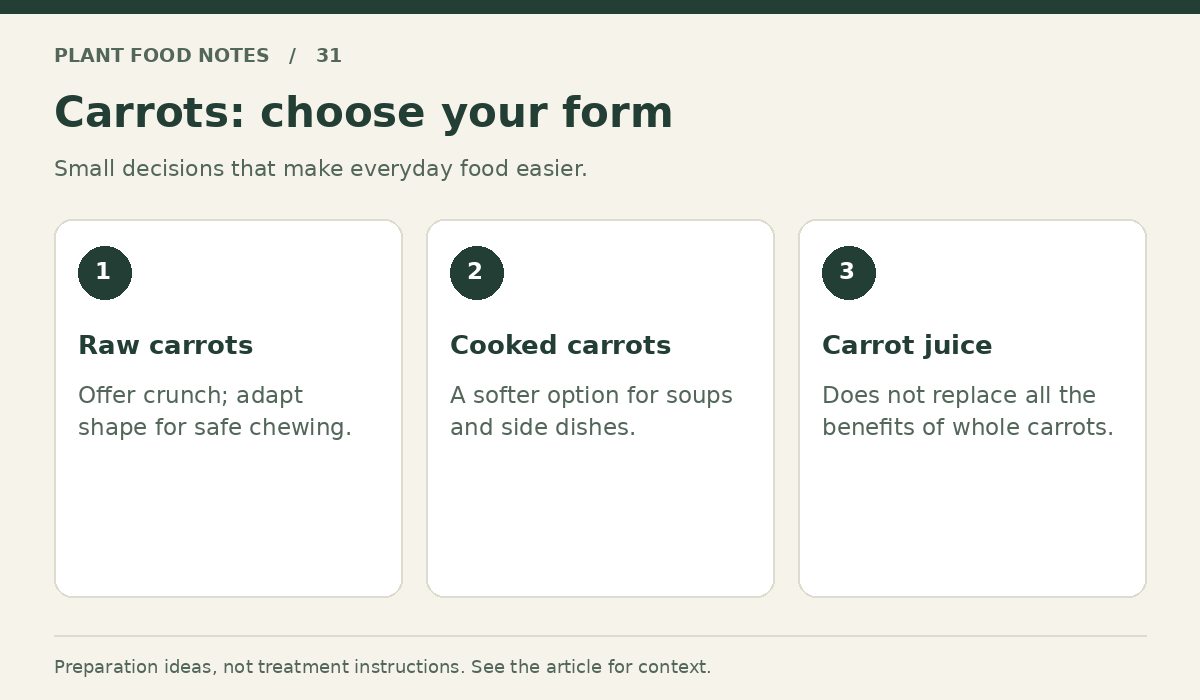
Raw carrots provide a firm crunch that can be useful in snacks and salads. Cooked carrots are softer and may be easier for some people to enjoy or manage. There is no need to make every serving raw out of fear that cooking makes it worthless. Preparation changes texture and nutrient availability in different ways, while the overall diet remains more important than perfection in one dish.
Choose the form for the person eating it. Hard raw pieces can be unsuitable for young children or people with swallowing difficulties, so follow appropriate guidance on texture and shape. Grating, soft cooking, or blending may offer alternatives. A food’s health reputation should never distract from whether it can be eaten comfortably and safely at the table.
Fibre is another reason to keep the whole vegetable
Whole carrots retain their fibre, while strained juice has a different composition. The NIDDK explanation of fibre and constipation places vegetables among useful fibre-containing foods. Carrots are one way to contribute to the day’s total, not a guaranteed cure for constipation or a reason to ignore persistent digestive symptoms.
If you enjoy carrot juice, assess it as a drink rather than assuming it replaces every role of the whole vegetable. It is easy to consume a larger amount quickly without the same chewing experience. For a regular snack or side dish, raw or cooked carrots are often the more straightforward choice. The best option also depends on personal needs, appetite, and the complete meal.
Roast a tray that can serve several meals
Cut washed carrots into reasonably even pieces, coat lightly with oil, and roast until tender using a reliable method for their size. Add spices that fit the rest of the meal, such as cumin or a mild paprika. Avoid overcrowding if you want more browning. The aim is a flavour and texture you enjoy, not the darkest possible surface.
Use some with dinner and store any planned leftovers safely. They can later accompany beans or grains, or be added to a soup. Thinking ahead makes a tray of vegetables more useful than preparing a large amount without a second meal in mind. If leftovers tend to be forgotten, cook a smaller quantity and repeat the method when needed.
Make soup substantial enough for its purpose
Carrots blend easily into soup with onion, ginger, and a suitable liquid. Cook until soft before blending with equipment designed for hot food, following the appliance’s safety instructions. Adjust the consistency gradually. A smooth soup can be a pleasant way to eat vegetables, particularly for someone who finds a plate of separate cooked pieces unappealing.
If the soup is the main meal, consider adding lentils, beans, or an appropriate accompaniment for protein and energy. A bowl containing mostly vegetables and water may not sustain you for long. Carrot soup does not become a complete lunch simply because it is homemade. Give the meal enough substance to match its role in your day.
Buy and prepare with less waste
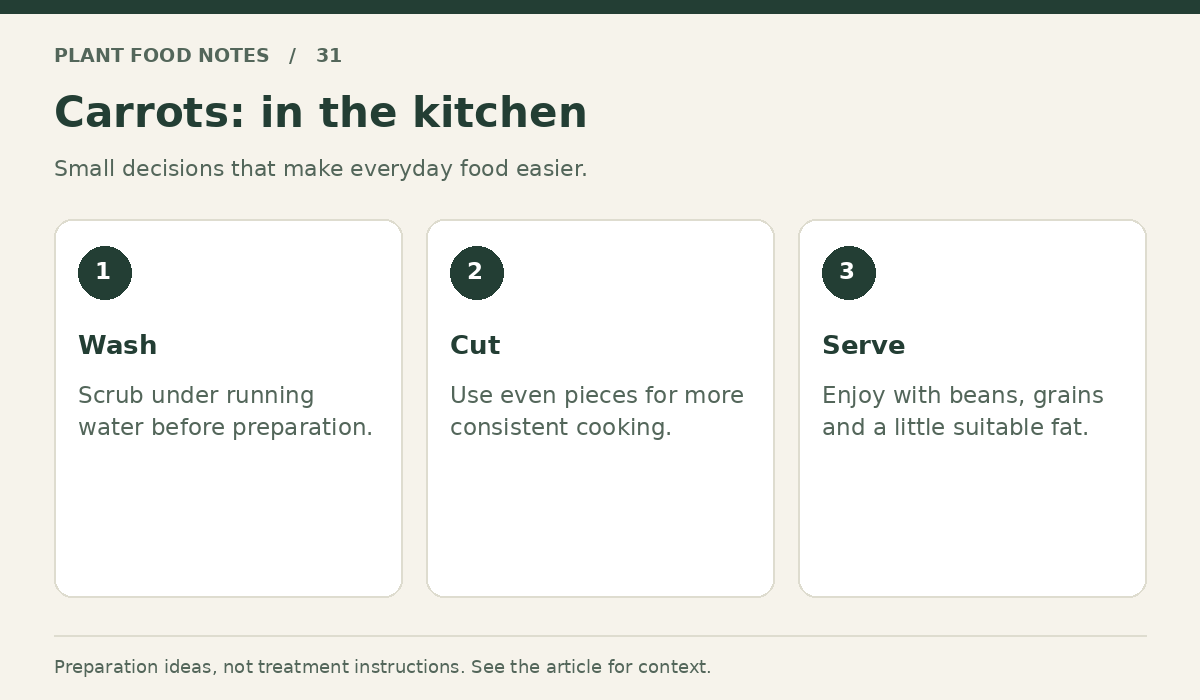
Choose sound carrots, store them appropriately, and wash them under running water before preparation. The FDA produce-safety advice recommends water rather than soap for washing produce. Peeling can be a preference rather than an obligation for every carrot, provided the food is cleaned and suitable to eat.
Carrots deserve their place because they are versatile, accessible, and a useful source of beta-carotene and fibre. Their connection to normal vision is real, but it should be explained without suggesting superhuman eyesight or a replacement for eye care. Keep a few preparations you enjoy, choose suitable textures, and use carrots as one reliable part of a varied eating pattern.
General nutrition information; not personalised medical advice. Sources checked on 16 September 2026.