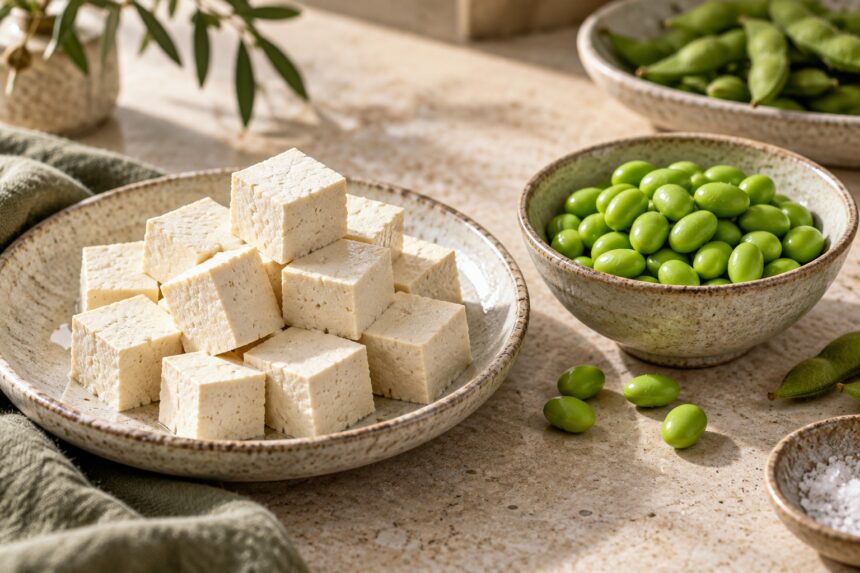
Soy often arrives at the table with more controversy than dinner needs. One headline calls it a miracle protein; another warns that it disrupts hormones. Meanwhile, tofu, edamame, and soy drinks are simply useful foods for many households. A better discussion starts with the product you actually plan to eat. A block of tofu, a salty soy sauce, and an isoflavone capsule share an association with soybeans but do not have the same nutritional role or evidence behind them.
For an ordinary eater, the main attraction is straightforward: soy foods offer a practical source of plant protein. They can help someone build a meatless meal, find a dairy alternative, or add variety. You do not need to believe every wellness claim about soy to benefit from learning how to cook it well.
Separate food from concentrated extracts
The Harvard Nutrition Source review of soy examines the complexity behind its reputation. Soy contains isoflavones, compounds that can interact with oestrogen receptors, but they are not identical to human oestrogen. The effects of ordinary soy foods cannot be inferred simply by calling them “plant hormones.” Nor should conclusions about concentrated supplements be transferred automatically to a tofu dinner.
This distinction is especially useful when evaluating social-media advice. Ask whether a claim concerns whole soy foods, isolated soy protein, or an extract, and whether the research involved people. Without those details, a dramatic assertion about “soy” is too vague to guide a purchase. Product form is part of the question, not a technical detail that can be ignored.
Protein is the practical starting point
Tofu can serve as the main protein ingredient in a meal, but amounts and products vary. A few cubes floating in soup contribute less than a generous tofu portion with rice and vegetables. Look at the nutrition label and the quantity you intend to eat. The same applies to soy drinks: compare protein per serving rather than assuming all plant drinks are nutritionally interchangeable.
The Harvard Nutrition Source guide to protein discusses soy foods among plant protein choices. That is useful context for a balanced plate, not a requirement to replace every animal food. Someone who enjoys eggs, fish, or dairy can still use tofu occasionally. A varied pattern allows different foods to contribute different nutrients without making dinner an ideological contest.
Choose tofu according to the cooking method
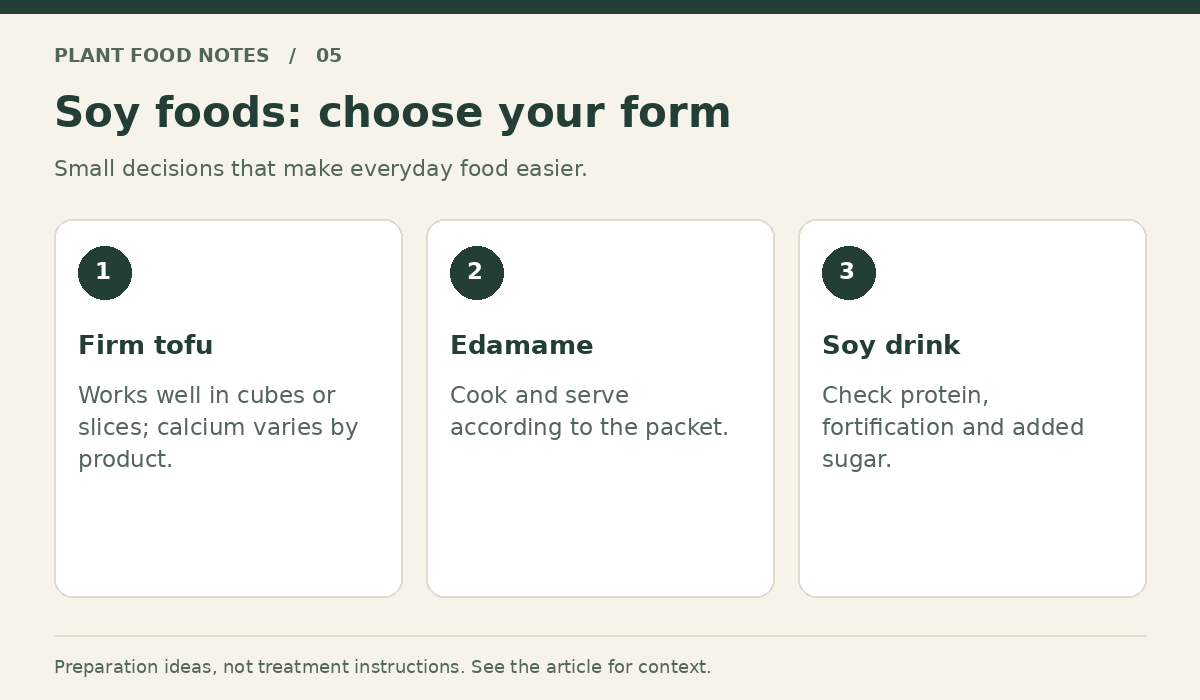
Firm tofu works well when you want pieces that hold their shape in a pan. Softer or silken tofu suits dishes where a smooth texture is welcome. Buying the wrong type for a recipe is a common reason for disappointment. A delicate tofu broken apart during vigorous frying has not failed nutritionally; it was simply asked to do the wrong kitchen job.
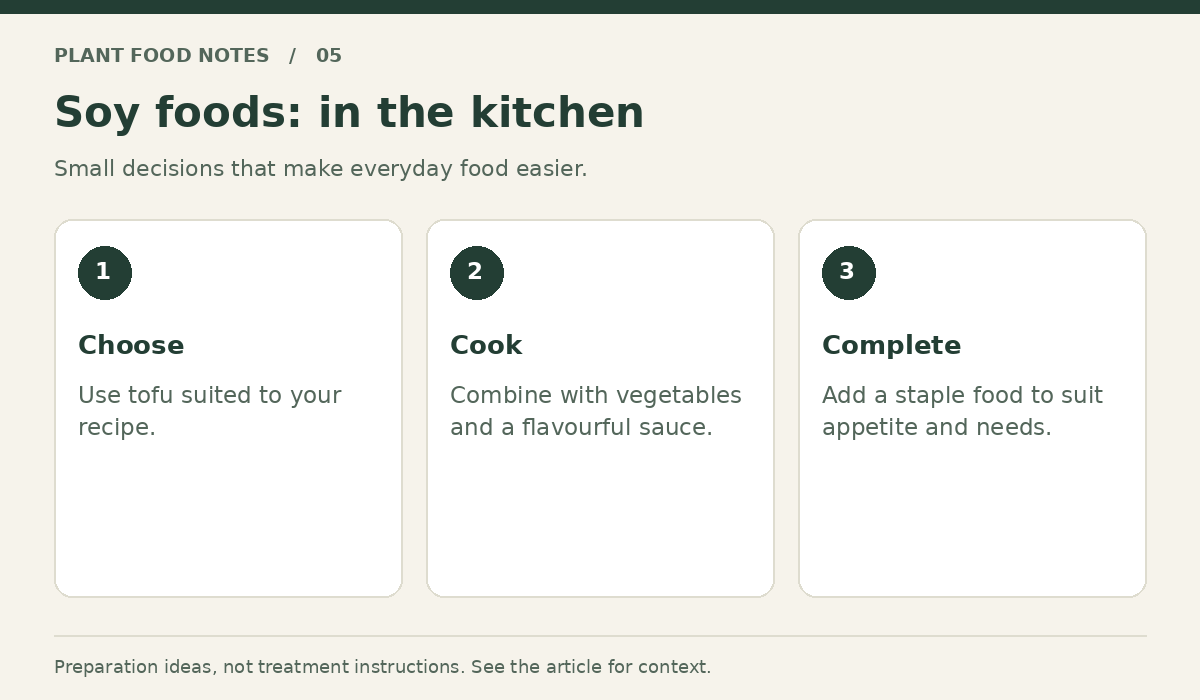
For a first experiment, drain firm tofu and pat it dry. Cut it into manageable pieces, season it, and cook it in a pan with a little oil until the surface has some colour. Add a sauce near the end rather than drowning it immediately. Serve with vegetables and your preferred staple. This makes texture and seasoning the focus, which is generally more helpful than trying to make tofu imitate every feature of meat.
Calcium depends on the product
Some tofu is made with calcium-containing coagulants and can contribute useful calcium; other tofu contains much less. A label is more reliable than a blanket statement that all tofu is “high calcium.” Fortified soy drinks can also contribute calcium, but check the product and follow any shaking directions. Fortification is a property of the manufactured drink, not an automatic feature of every homemade soy beverage.
The NIH calcium fact sheet provides context for dietary calcium and its sources. If you replace dairy regularly, consider the overall replacement rather than just matching colour and texture. Protein, calcium, vitamin D, and vitamin B12 may need attention across your diet. A suitable fortified drink can be useful, but no single beverage makes a restricted eating pattern complete.
Edamame makes plant protein less formal
Cooked edamame can become a side dish, a salad ingredient, or part of a packed lunch. Follow the packet’s cooking instructions; shelled frozen beans are especially convenient. Add them to rice with chopped vegetables and a dressing, or serve a small bowl alongside another meal. Their appeal is that they require little preparation and have a texture quite different from tofu.
Keep sauces in proportion to the dish. A large amount of salty dressing can dominate a meal that began with fairly plain ingredients. Try acidity, herbs, chilli, ginger, or toasted spices to broaden the flavour instead of relying only on salt. If serving edamame in pods, make clear that the beans inside are the part to eat; this is worth explaining to somebody trying them for the first time.
Where caution is sensible
Soy allergy requires avoidance of relevant products and careful label reading. A general article cannot determine whether a reaction is an allergy or another intolerance. People taking thyroid medicine should ask their pharmacist about consistent medication timing around food, including soy, rather than stopping the medicine or banning soy based on an internet claim. A prescribed routine takes priority over generic meal advice.
Anyone using soy supplements for menopausal symptoms or another medical concern should discuss that specific product with a clinician. A food article is not evidence for a concentrated capsule. Similarly, a history of hormone-sensitive cancer calls for advice from the treating team about supplements and individual circumstances, not fear-driven decisions based on the word “oestrogen.”
A useful way to start
Choose one soy product with one clear purpose: firm tofu for a stir-fry, shelled edamame for lunch, or an unsweetened fortified soy drink for porridge. Buy only what you will use, follow storage directions, and judge the result by taste and convenience. Soy’s realistic contribution is a versatile protein option within a varied diet. It does not need to be either a miracle or a threat.
General nutrition information; not personalised medical advice. Sources checked on 15 September 2026.